On this day in military history…
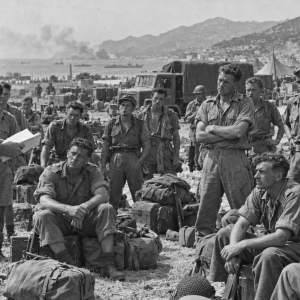
On 16 September 1943, as Allied troops fought desperately to hold their bridgehead at Salerno in southern Italy, an extraordinary confrontation began involving hundreds of experienced British soldiers. The incident became known as the Salerno Mutiny, although there was no violence, no attempt to overthrow military authority and no refusal to fight the enemy. At its heart were battle-weary veterans who believed they had been deceived and who refused to be separated permanently from the regiments with which they had fought across North Africa.
The men principally belonged to the 50th Northumbrian and 51st Highland Infantry Divisions, two distinguished formations of the British Eighth Army. Many had fought through the gruelling desert campaigns against Italian and German forces, enduring years of heat, dust, illness and heavy casualties. Some had been wounded, taken ill or detached from their units and had subsequently been left behind while their divisions moved elsewhere.
Around 1,500 men assembled at Tripoli in September 1943. They understood that they were being sent to Sicily to rejoin their original units, which were expected eventually to return to Britain in preparation for the invasion of occupied Europe. For soldiers who had already spent years overseas, the promise of returning to familiar comrades and perhaps finally going home carried enormous importance.
Once aboard their transport ships, however, the men discovered that they were not sailing to rejoin their divisions. They were being sent to Salerno, where the Allied invasion of mainland Italy was in danger of being driven back into the sea.
Operation Avalanche had begun on 9 September 1943 when the United States Fifth Army landed along the coast south of Salerno. British X Corps held the northern part of the bridgehead while American troops fought farther south. The Germans reacted swiftly, bringing armoured and infantry formations against the invasion beaches. Their counter-attacks drove deeply into the Allied positions and inflicted serious losses on the British 46th and 56th Infantry Divisions.
Reinforcements were urgently needed. To senior commanders, the veterans arriving from North Africa represented a valuable source of experienced fighting men who could be sent directly into depleted units. To the soldiers themselves, the decision appeared to be a betrayal of the assurances they had received before leaving Tripoli.
Confusion and poor administration made matters worse. When the men arrived at Salerno, many were left waiting in exposed and uncomfortable conditions without clear information about their future. Approximately 1,000 recently trained reinforcements accepted postings to other formations, but several hundred veterans resisted. They insisted that they were willing to fight, but wanted to do so with their own battalions and alongside the comrades with whom they had already served.
Their objection was not cowardice. Many possessed impressive records of front-line service and had already faced the Afrika Korps in some of the hardest battles of the war. What they refused to accept was being scattered among unfamiliar units after believing they were being returned to their original formations.
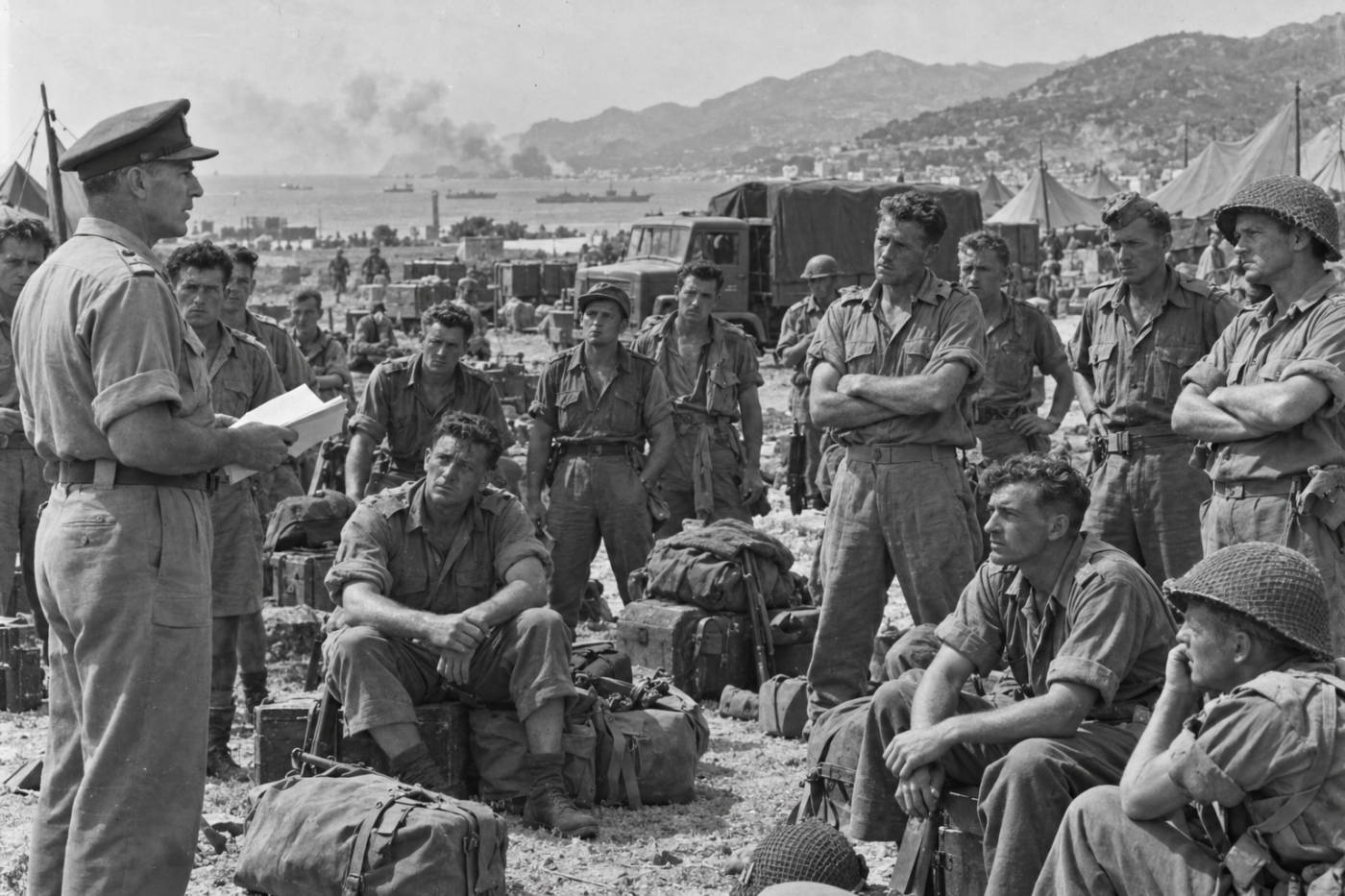
The situation became increasingly serious as orders were repeated and the men continued to refuse them. Lieutenant-General Richard McCreery, commander of British X Corps, addressed the assembled soldiers personally. He acknowledged that mistakes had been made and attempted to persuade them that the crisis at Salerno required every available man. He warned them that refusing a lawful order in wartime could be treated as mutiny, one of the gravest offences under military law.
His intervention persuaded many to return to duty. Others remained determined. By 20 September, a hard core of 192 men still refused to accept postings to unfamiliar units. They were arrested and charged with mutiny under the Army Act.
The prisoners were transported to French Algeria, where their courts-martial began the following month. All were found guilty. Sentences varied, but three sergeants regarded as ringleaders were condemned to death. Their sentences were later commuted to 12 years’ penal servitude, while the punishments imposed on the other men ranged from several years’ imprisonment to periods of detention.
The authorities faced an uncomfortable dilemma. Discipline had to be maintained, particularly while British forces remained engaged in a difficult campaign. Allowing soldiers to choose where and with whom they would serve could have undermined the Army’s ability to reinforce damaged units. Yet many senior officers recognised that the men had genuine grievances and had been badly handled.
Most of the sentences were eventually suspended, allowing the soldiers to return to active service. Many fought again before the war ended, despite having been branded mutineers only months earlier.
The Salerno Mutiny remains one of the largest instances of British soldiers collectively refusing orders during the Second World War. It was not a conventional mutiny driven by rebellion or political agitation. The men did not threaten their officers, seize weapons or abandon the battlefield. They maintained that they were willing to fight but believed the Army had broken its promise to return them to their own regiments.
Decades later, attempts were made to secure official pardons for the surviving men and to clear their names. Supporters argued that they had been misled, exhausted by years of service and punished for demanding that an undertaking made to them should be honoured. The government declined to overturn the convictions, maintaining that whatever the circumstances, soldiers serving in wartime could not be permitted to refuse lawful orders.
The events at Salerno revealed the immense strain placed upon ordinary soldiers during a global war. These were not inexperienced recruits shrinking from battle, but veterans who had already given years of service and believed that loyalty should work in both directions. Their stand brought them into direct conflict with the demands of military discipline, leaving a controversial legacy that continues to divide opinion.