On this day in military history…
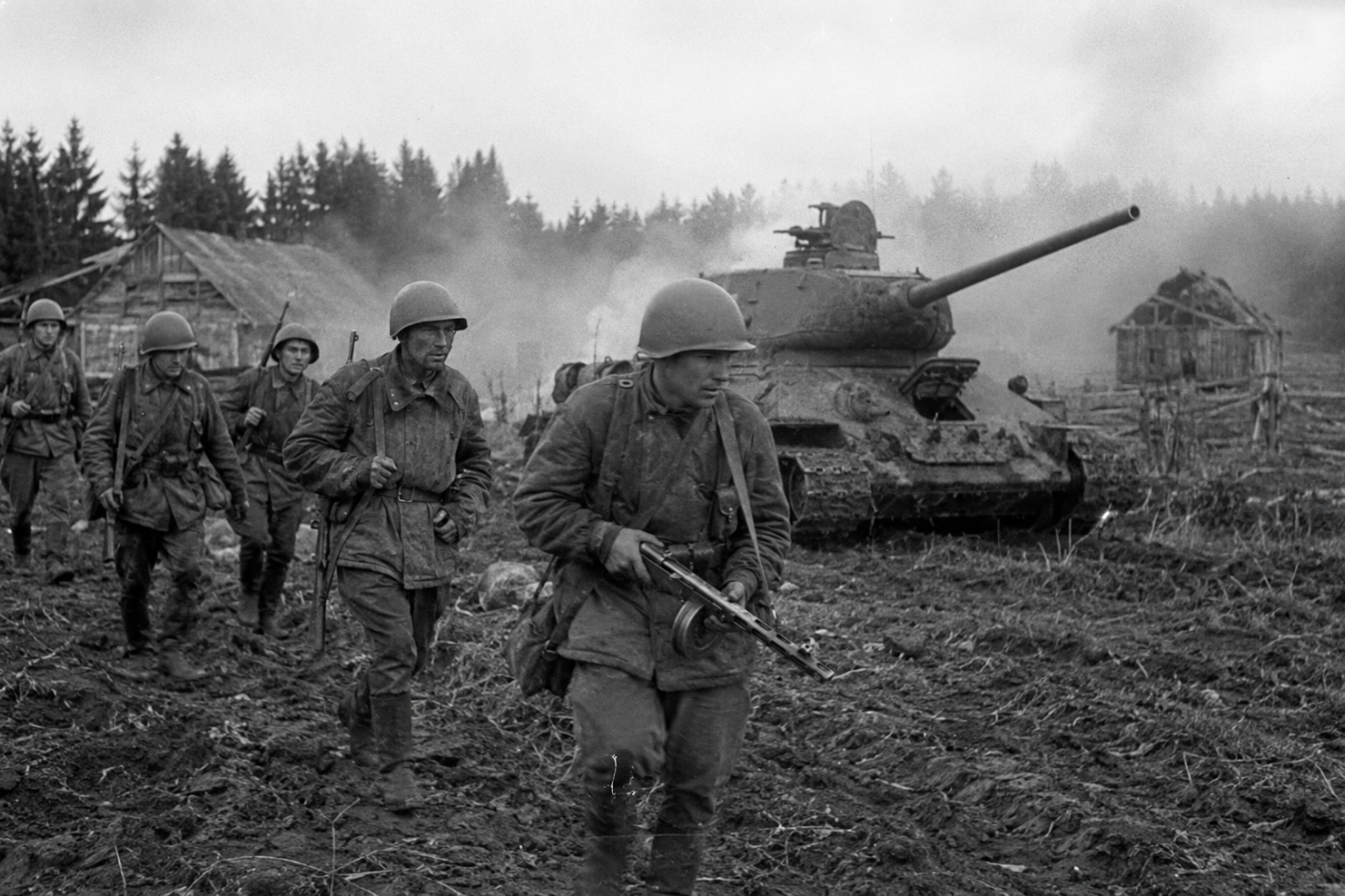
On 14 September 1944, the Red Army launched the Baltic Offensive, a vast series of operations intended to drive German forces from Estonia, Latvia and Lithuania, regain control of the eastern Baltic coast and isolate Germany’s powerful Army Group North. It became one of the largest and most important Soviet campaigns of the final year of the Second World War, involving several army fronts, thousands of guns and tanks, and extensive support from the Soviet Baltic Fleet.
The offensive came only weeks after Operation Bagration had destroyed much of Germany’s Army Group Centre in Belarus. Soviet forces had advanced hundreds of miles and were now approaching the borders of East Prussia and the Baltic Sea. Army Group North, however, still occupied much of Estonia and Latvia, while maintaining land communications with other German forces through Lithuania. Adolf Hitler refused repeated requests to withdraw the formation while an organised evacuation was still possible, believing that the Baltic territories must be held to protect German naval training areas and bases.
The main attack was conducted by the 1st, 2nd and 3rd Baltic Fronts, commanded respectively by General Ivan Bagramyan, General Andrei Yeremenko and General Ivan Maslennikov. Farther north, the Leningrad Front under Marshal Leonid Govorov prepared to strike into Estonia. Their combined objective was to overwhelm the German defensive lines, capture Riga and Tallinn, reach the Baltic coast and cut Army Group North off from East Prussia.
The fighting began against deeply prepared German positions supported by forests, rivers, marshland and narrow roads that favoured the defender. Soviet artillery opened gaps in the front, but German troops resisted fiercely and launched local counterattacks using infantry, assault guns and tanks. Progress towards Riga was initially slower than Soviet commanders had expected, and the Red Army suffered heavy casualties forcing its way through successive defensive belts.
Events moved more rapidly in Estonia. The Soviet Tallinn Offensive began on 17 September, striking against German forces already preparing to withdraw. German troops attempted to escape southwards or leave through Baltic ports as Soviet formations pushed west. Tallinn was entered by the Red Army on 22 September, and fighting then continued across the Estonian islands during the Moonsund Landing Operation. German units defended Saaremaa and the Sõrve Peninsula stubbornly, delaying Soviet control of the islands until late November.
The decisive move came farther south when Bagramyan’s 1st Baltic Front turned westwards towards Memel, now Klaipėda. The attack began on 5 October and rapidly broke through the German lines. Soviet tanks and infantry reached the Baltic coast near Memel on 10 October, severing the main land route between Army Group North and East Prussia. Riga fell three days later, forcing the surviving German armies to withdraw into western Latvia.
Army Group North was now trapped in what became known as the Courland Pocket. Although surrounded on land and dependent upon supply by sea, the German force remained heavily armed and continued to resist repeated Soviet attacks. Hitler again refused to authorise its complete evacuation, and the formation, later renamed Army Group Courland, remained in Latvia until Germany surrendered in May 1945. Its isolation removed a major German force from the decisive battles taking place in Poland and on the approaches to Berlin.
For the Soviet Union, the Baltic Offensive was a major strategic victory. German control of Estonia, Latvia and most of Lithuania was broken, important ports and naval bases were recovered, and the Red Army gained access to the Baltic coast. Germany lost territory, communications and hundreds of thousands of troops who were either killed, captured, evacuated or left isolated in Courland.
For the Baltic peoples, however, the outcome was far more complicated. German occupation had brought mass murder, persecution and destruction, particularly against Jewish communities, but the return of the Red Army did not restore the independence of Estonia, Latvia or Lithuania. Soviet authority was reimposed, followed by arrests, deportations and decades of occupation. Thousands continued to resist as armed partisans, known as the Forest Brothers, long after the conventional fighting had ended.
The offensive that opened on 14 September 1944 therefore represented both a crushing military defeat for Nazi Germany and the beginning of another difficult period for the Baltic nations. Within little more than a month, the Red Army had transformed the strategic position along the Baltic coast, isolated an entire German army group and opened the northern approaches to Germany itself.