On this day in military history…
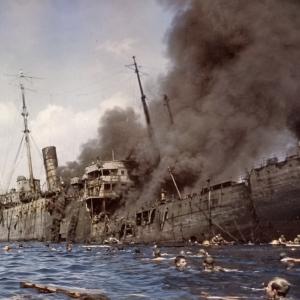
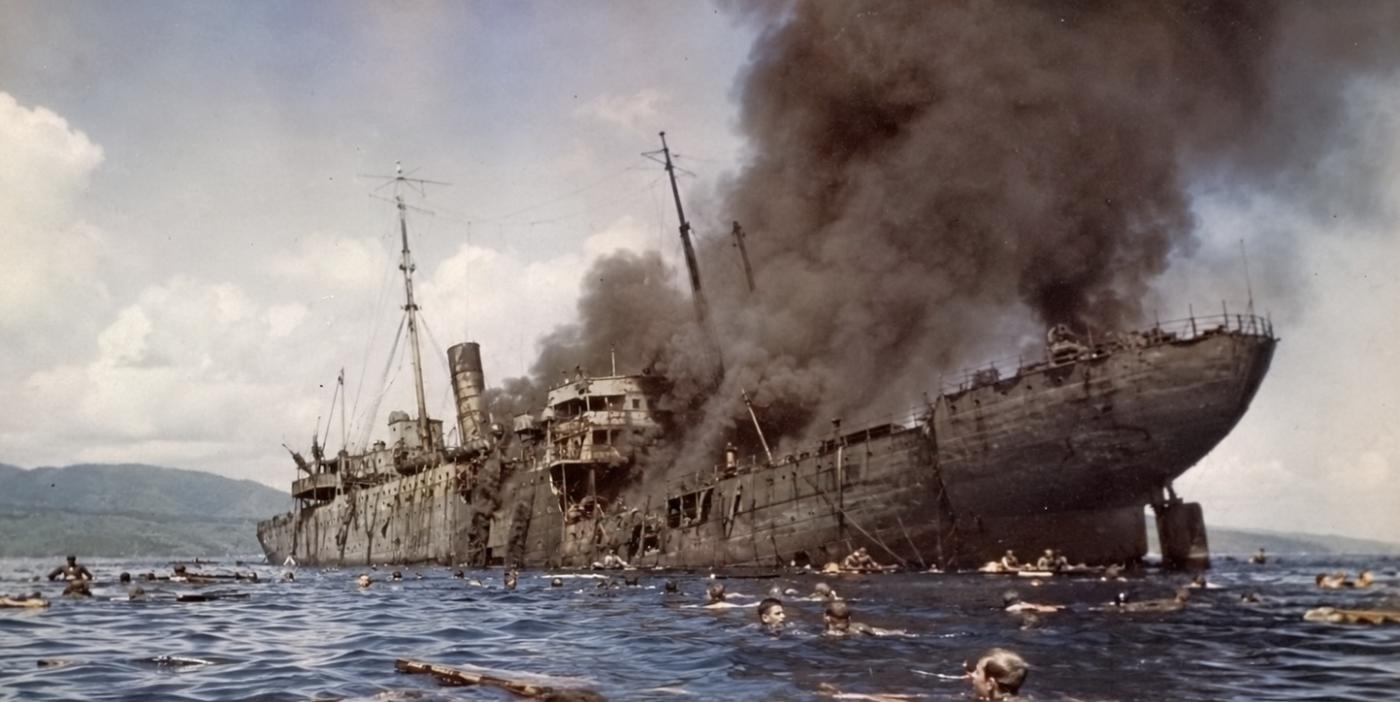
On 7 September 1944, one of the most horrifying tragedies involving Allied prisoners of war in the Pacific took place off the western coast of Mindanao in the Philippines. The Japanese transport Shinyo Maru, carrying hundreds of American prisoners in appalling conditions, was torpedoed by the American submarine USS Paddle. The submarine’s crew had no way of knowing that their target contained Allied prisoners. What followed was not simply a maritime disaster, but a desperate fight for survival as Japanese guards opened fire on prisoners attempting to escape the sinking ship.
The men aboard Shinyo Maru had already endured years of captivity. Many had been captured during the Japanese conquest of the Philippines in 1942 and survived the brutal conditions following the surrender of Bataan and Corregidor. By 1944, hundreds were being held in prisoner-of-war camps around Davao on Mindanao, where they were forced to work on airfields and other military projects. As American forces advanced back towards the Philippines, the Japanese began moving prisoners away from threatened areas aboard merchant vessels that became infamous as “hell ships.” These ships carried no markings identifying them as POW transports, meaning that to Allied submarines and aircraft they appeared to be legitimate enemy targets.
In August 1944, approximately 750 American prisoners were assembled for transport from the Davao area. Around 650 had been working at Lasang airfield, while about 100 came from other sites south of Davao. On 19 August they were marched to the docks, many barefoot, and the following day forced into the holds of a transport vessel. Conditions quickly became unbearable. Crowded tightly below decks in extreme tropical heat, the prisoners suffered from heat exhaustion, disease and dehydration. Sanitation was almost nonexistent, with latrine buckets carried to the upper deck when permitted. Occasionally the men were allowed brief access to seawater hoses, but for most of the voyage they remained sealed below decks.
After several days the vessel reached Zamboanga, where the prisoners remained until 4 September before being transferred to Shinyo Maru, a Japanese merchant transport requisitioned for wartime service. The prisoners were again packed into the cargo holds and by this point had been confined aboard ships for more than two weeks. On 7 September the hatches were secured even more tightly as Shinyo Maru joined Japanese convoy C-076 heading towards Cebu and Manila. Intercepted Japanese communications described the approximately 750 men aboard as “troops,” a misidentification that would have catastrophic consequences.
That afternoon the convoy was detected by USS Paddle, commanded by Lieutenant Commander Byron H. Nowell. At approximately 4.37pm near Sindangan Point, Paddle moved into attack position. Shinyo Maru carried no markings or other indication that prisoners were aboard, and from the submarine it appeared to be another enemy transport travelling within a Japanese convoy. Paddle fired its torpedoes.
Inside the ship the prisoners had no warning. Survivor Lieutenant John J. Morrett later described massive explosions tearing through the vessel, throwing men against collapsing beams and debris. Smoke, dust and panic filled the holds as the ship began to break apart. Those who managed to reach the upper deck encountered dead and wounded Japanese soldiers, but almost immediately another horror began. Japanese guards opened fire on escaping prisoners, shooting men climbing from the holds and firing at others as they jumped into the sea.
Some prisoners escaped through sections of the hull damaged by the explosions, while others leapt directly overboard, knowing that remaining aboard meant almost certain death. Morrett managed to dive into the water and swim away before hearing the vessel break apart behind him with a tremendous cracking sound. Around him, hundreds of men struggled towards the nearby coast while gunfire continued from Japanese personnel. The shoreline offered their only chance of survival, but many prisoners were killed by the torpedo explosions, collapsing structures, drowning or bullets before they could reach it.
Filipino civilians and local guerrillas played a decisive role in saving those who did make it ashore. Resistance groups operating in western Mindanao hid, fed and protected the exhausted Americans despite the enormous risk of Japanese reprisals. Some survivors reached land almost naked, wounded and severely weakened after years of captivity, forced labour, disease and starvation. Japanese troops searched for the escaped prisoners, but guerrilla networks gradually moved them through friendly territory and kept them concealed until they could eventually be returned to Allied control.
The scale of the disaster soon became apparent. Exact casualty figures vary because of incomplete Japanese records, but estimates generally place the number killed at between approximately 654 and 667 men. Only around eighty survived, with some records giving a figure of about eighty-three. Whatever the precise total, fewer than one in eight of the prisoners aboard Shinyo Maru survived the sinking and subsequent shootings.
The crew of USS Paddle initially had no idea that they had torpedoed a vessel carrying American prisoners. From their perspective they had attacked a legitimate Japanese transport sailing in an enemy convoy. Although Allied intelligence had intercepted communications mentioning around 750 men aboard Shinyo Maru, the reference was interpreted as enemy troops rather than prisoners. Only later did intelligence officers realise the terrible significance of the intercepted message.
The tragedy exposed one of the greatest dangers surrounding Japan’s use of prisoner transports. Unlike hospital ships, the so-called hell ships were normally unmarked and frequently travelled alongside military vessels. Allied submarines and aircraft therefore had no reliable means of knowing that hundreds or sometimes thousands of prisoners were concealed below decks. Shinyo Maru formed part of this wider history in which tens of thousands of Allied prisoners and forced labourers were transported in horrific conditions, with many dying from disease, starvation, abuse or Allied attacks on vessels believed to be carrying enemy troops and supplies.
What made the destruction of Shinyo Maru particularly disturbing was the testimony that Japanese guards deliberately shot prisoners after the torpedo attack. The men had already survived battle, captivity and years of forced labour, only to find themselves trapped inside a sinking ship while those attempting to escape were fired upon. Without the assistance of Filipino guerrillas and civilians along the coast, it is likely that even fewer would have survived.
After the war, investigators struggled to reconstruct a complete account because Japanese documentation was incomplete and casualty figures differed between records. Survivor testimony, however, established the essential events of that afternoon and provided important evidence about conditions aboard Japanese prisoner transports and the treatment of captives during the sinking.
Today, the destruction of Shinyo Maru remains one of the most tragic episodes involving American prisoners of war in the Pacific. USS Paddle had unknowingly attacked an apparently legitimate enemy transport, while Japanese authorities had provided no warning that hundreds of prisoners were locked inside its holds. For the men below decks there was no opportunity to signal their presence or prevent the attack.
For most of those aboard, 7 September 1944 marked the end of years of suffering. They had survived combat, surrender, disease, starvation and forced labour only to die within sight of the Philippine coast. For the small number who escaped, survival depended upon extraordinary endurance and the courage of Filipino civilians and guerrillas who risked their own lives to protect them.
The story of Shinyo Maru remains both a tragedy and a testament: a reminder of the brutality endured by prisoners in Japanese captivity, the terrible dangers created by unmarked POW transports and the humanity shown by those who chose to help the survivors. On 7 September each year, the men who died aboard Shinyo Maru are remembered alongside the few who survived against overwhelming odds.