On this day in military history…
On 1 September 1950, the Korean War entered one of its most dangerous and violent phases as the North Korean People’s Army launched a massive offensive against the United Nations forces holding the Pusan Perimeter. After weeks of retreat down the Korean peninsula, American, South Korean and other UN troops had been compressed into a relatively small defensive area in the south-east of the country. Behind them lay the vital port of Pusan, through which reinforcements, ammunition, vehicles and supplies were arriving. If the perimeter collapsed, there was a very real possibility that the UN forces could be driven from Korea altogether.
The North Koreans understood that time was beginning to work against them. American reinforcements were arriving in increasing numbers, UN air power was dominating the skies and enormous quantities of equipment were being unloaded through Pusan. North Korean commanders therefore prepared one final major effort to break the defensive line before the balance of strength turned decisively against them. The operation became known as the Great Naktong Offensive and involved coordinated attacks across much of the Pusan Perimeter.
The offensive began during the night of 31 August and the early hours of 1 September. North Korean troops moved forward under darkness, crossing rivers, infiltrating through gaps in the defensive line and striking American and South Korean positions with considerable determination. Thousands of soldiers were committed to the assault, supported where possible by artillery, mortars and the remaining North Korean armour. Rather than concentrating on a single breakthrough, the attackers struck across several sectors in an attempt to overwhelm the defenders and prevent UN commanders from moving reserves to threatened areas.
Some of the fiercest fighting took place along the Naktong River, which formed a major natural barrier on the western side of the perimeter. North Korean troops crossed the river using boats, rafts and improvised means, often under cover of darkness. Once across they established bridgeheads and moved rapidly towards American defensive positions. In several areas the attacks achieved considerable surprise, with communications disrupted and individual units suddenly finding themselves surrounded or cut off.
The American 2nd Infantry Division faced particularly severe pressure around what became known as the Naktong Bulge. North Korean troops broke through parts of the defensive line and fighting became confused and extremely close. Small groups of American soldiers were forced to defend isolated positions while commanders attempted to understand the scale of the penetration. Roads and supply routes were threatened, and artillery batteries sometimes found themselves dangerously close to enemy infantry.
Further north, attacks were launched towards Taegu, an important communications centre and a key objective for the North Koreans. South Korean troops of the Republic of Korea Army were subjected to repeated assaults as enemy forces attempted to penetrate the mountains and valleys surrounding the city. The terrain made the fighting especially difficult. Steep ridges, narrow tracks and heavily wooded hills meant that control of individual high ground could determine whether an entire defensive sector remained secure.
The North Korean offensive was aggressive and, during its opening stages, extremely dangerous. Some UN positions were overrun and others were abandoned as units withdrew to avoid encirclement. There were moments when the defensive line appeared dangerously thin. North Korean soldiers frequently infiltrated behind front-line positions, attacking command posts, road junctions and supply areas. The resulting confusion made it difficult for American and South Korean commanders to determine exactly where the main enemy strength was concentrated.
Yet the defenders possessed important advantages. UN artillery could deliver enormous concentrations of fire against North Korean assembly areas and advancing troops. American aircraft operated almost continuously during daylight, attacking vehicles, troop concentrations, bridges and supply routes. North Korean soldiers who had crossed the Naktong during the night often found themselves exposed once daylight arrived, with their supply lines vulnerable to air attack and artillery fire.
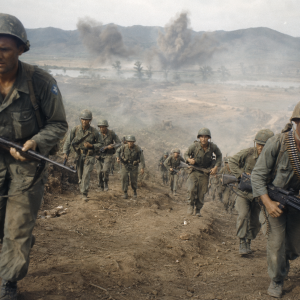
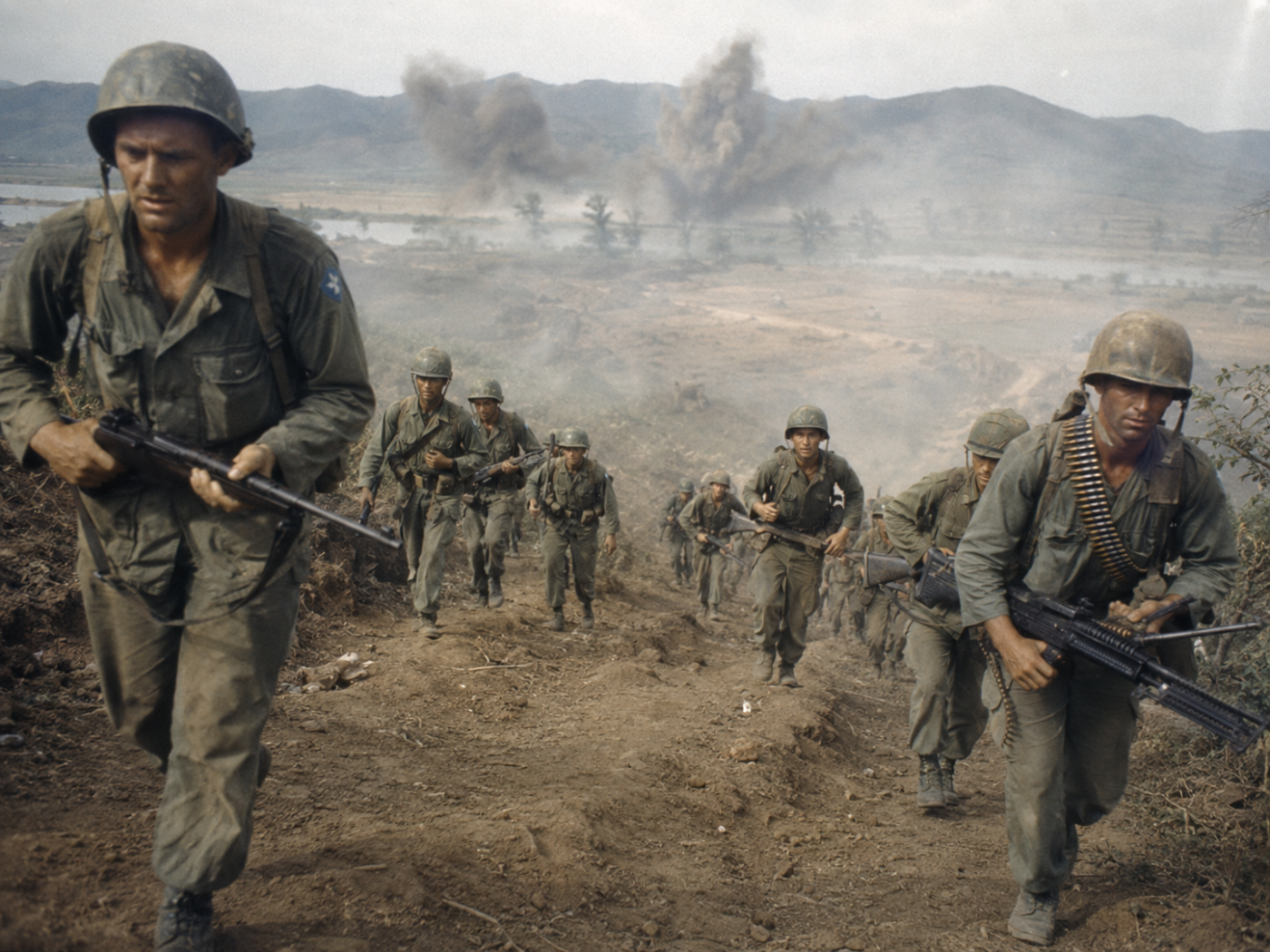
The fighting was frequently brutal and at very close range. Infantrymen fought across hills, rice paddies and small Korean villages, sometimes losing and retaking the same positions several times. Machine guns, grenades, mortars and artillery caused heavy casualties on both sides. Tanks were used where the terrain permitted, although Korea’s mountainous landscape often forced armour onto narrow roads where vehicles became vulnerable to ambush or air attack.
One of the major problems facing the North Koreans was supply. Their advance from the north had already stretched their transport system almost to breaking point. UN aircraft had destroyed many bridges, railway lines and vehicles, making it increasingly difficult to deliver ammunition, fuel and food to front-line units. Many North Korean formations entering the September offensive had already suffered serious losses during the earlier advance down the peninsula.
Despite these difficulties, the attacks continued with remarkable determination. North Korean commanders knew that the capture of Pusan could potentially end the war before the growing American military presence became overwhelming. Their troops therefore pressed forward repeatedly, sometimes accepting very heavy casualties in attempts to force gaps in the UN line.
For the men defending the perimeter, there was little room for further retreat. Behind them lay Pusan and the sea. American commanders repeatedly emphasised that the perimeter had to be held. Reinforcements were rushed to threatened sectors, artillery was repositioned and local counter-attacks were launched to restore broken sections of the line. Units that had been exhausted by weeks of combat were often returned almost immediately to the fighting.
The Great Naktong Offensive continued through the first half of September. Although the North Koreans succeeded in creating several dangerous penetrations, they were unable to achieve the decisive breakthrough they needed. UN forces gradually stabilised the front and began pushing the attackers back. North Korean casualties mounted, while their ability to replace lost men and equipment was becoming increasingly limited.
The timing proved disastrous for the North Korean army. While its best remaining formations were being consumed in attempts to break the Pusan Perimeter, General Douglas MacArthur was preparing a completely different operation hundreds of miles behind the front. On 15 September 1950, UN forces carried out the amphibious landings at Inchon near Seoul. The landing threatened the North Korean army’s communications and supply routes and transformed the strategic situation almost overnight.
At the same time, the defenders of the Pusan Perimeter began their own breakout. North Korean units that had spent weeks fighting desperately in the south suddenly faced the danger of being trapped between advancing UN forces. Many formations disintegrated during the retreat north, abandoning equipment and attempting to escape through the mountains.
The offensive that began on 1 September was therefore the North Korean army’s final great attempt to destroy the UN position in southern Korea. For several days its outcome was far from certain. Had the North Koreans achieved a major breakthrough and captured Pusan, the course of the Korean War could have been dramatically different.
Instead, the Pusan Perimeter held. The defensive battles of September 1950 exhausted much of the North Korean army’s remaining offensive strength and bought the time needed for UN reinforcements to arrive and for the Inchon landing to be launched. What had begun as a desperate defensive struggle soon became the starting point for one of the most dramatic reversals of the Korean War.
The Great Naktong Offensive remains one of the most important and often overlooked episodes of the conflict. On 1 September 1950, soldiers across the Pusan Perimeter were fighting not simply for another hill or village, but for the survival of the entire UN position in Korea. For those caught in the fighting along the Naktong River and the surrounding hills, it was a battle in which there was virtually nowhere left to retreat.