On this day in military history….
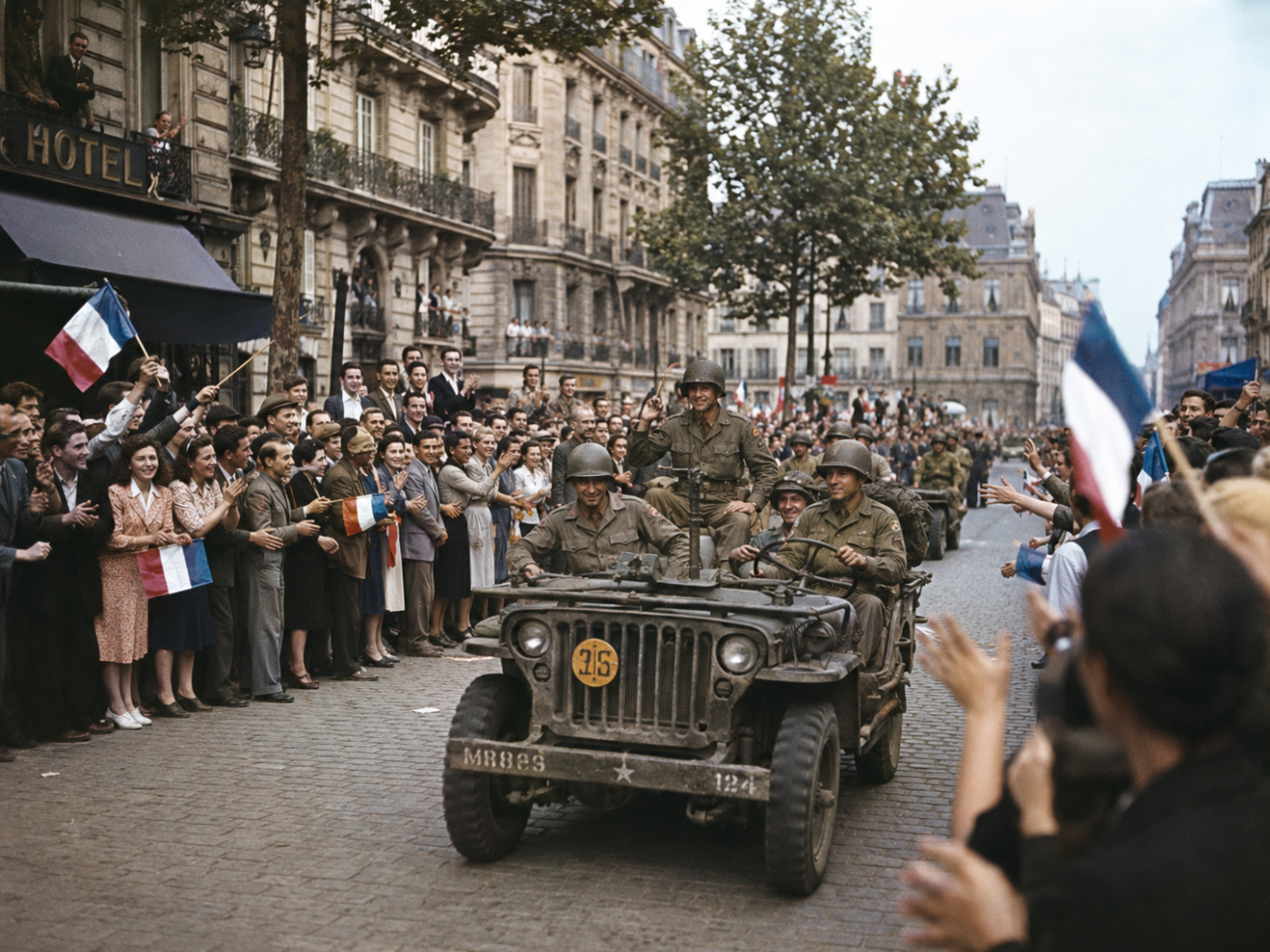
On 25 August 1944, after more than four years beneath German occupation, Paris was being liberated. French tricolours appeared from windows and rooftops, church bells rang across the capital and enormous crowds poured into the streets to welcome the soldiers who had finally arrived. To many of the civilians embracing troops, climbing onto vehicles and showering them with flowers, the war in Paris appeared to be over. Yet behind the scenes of celebration was a far more dangerous reality. Across parts of the capital, shots were still being fired, German troops remained in isolated strongpoints and snipers continued to operate from windows, rooftops and upper floors. Paris was celebrating its freedom while men were still fighting and dying for it.
The battle for the French capital had effectively begun several days earlier. On 19 August the French Resistance, organised principally through the Forces Françaises de l’Intérieur, rose openly against the occupying forces. Police officers seized the Préfecture de Police, barricades appeared in the streets and Resistance fighters attacked German patrols, vehicles and positions. The uprising was courageous but dangerous. Many Resistance fighters possessed little more than rifles, pistols, captured German weapons and homemade explosives, while the German garrison still controlled armoured vehicles, machine guns and fortified buildings. Barricades constructed from overturned vehicles, paving stones, furniture and anything else available transformed parts of Paris into a battlefield.
Outside the city, Allied armies were advancing rapidly following the collapse of much of the German position in Normandy. Although the original Allied strategy did not require an immediate battle for Paris, the developing uprising made it increasingly difficult to leave the capital behind enemy lines. General Philippe Leclerc's French 2nd Armoured Division was therefore directed towards the city. Late on 24 August an advance force entered Paris and reached the Hôtel de Ville shortly before midnight. News spread almost immediately. Bells began ringing and thousands realised that liberation was finally at hand.
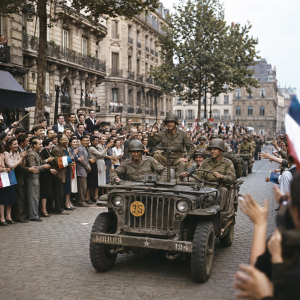
The main advance came on the morning of 25 August. Leclerc's armour and infantry pushed deeper into Paris while American troops of the US 4th Infantry Division entered the capital as part of the Allied operation. French tanks and half-tracks moved through streets packed with civilians. Soldiers found themselves surrounded by cheering crowds desperate to shake hands, kiss them, offer wine or simply touch the vehicles that represented the end of occupation. After years of German uniforms dominating their streets, Parisians suddenly saw French and American soldiers advancing beneath the Tricolour.
Yet the cheering could be dangerously deceptive. Paris was not completely secure. German soldiers remained scattered throughout the city, some cut off from their commanders and others apparently determined to continue fighting. Buildings that only moments earlier had been surrounded by celebrating civilians could suddenly become battlefields when rifle or machine-gun fire erupted.
Snipers presented a particularly disturbing threat because it was frequently difficult to determine where the shots were coming from. A rifleman firing from an attic, rooftop or upper-storey window could overlook an entire street filled with civilians and soldiers. A few carefully aimed shots could send hundreds of people diving for doorways and behind vehicles. French Resistance fighters responded by searching buildings, firing towards suspected windows and rooftops and attempting to clear isolated positions one by one.
The image of Paris on liberation day is therefore misleading if remembered only through photographs of smiling civilians sitting on tanks. Contemporary accounts and photographs show civilians suddenly running for cover as firing broke out. Armed Resistance fighters crouched behind walls, vehicles and windows searching neighbouring buildings for snipers. Soldiers who had been surrounded by joyful crowds moments before were forced to take firing positions.
Some of the hardest fighting centred around important German-held buildings and strongpoints. The German command had established itself around major government buildings, hotels and communications centres, and these positions could not simply be ignored. French armour moved through narrow streets where enemy fire could come from almost any direction. Tanks fired directly into buildings while infantry and Resistance fighters entered adjoining properties to clear them room by room.
The area around the Rue de Rivoli and the Tuileries was particularly tense. German positions remained around buildings overlooking some of the most important streets in central Paris, and gunfire continued even as liberation spread through neighbouring districts. The Hôtel Meurice on the Rue de Rivoli had served as headquarters for the German military governor of Paris, General Dietrich von Choltitz. Elsewhere German soldiers were positioned around government buildings and defensive points, meaning that anyone moving through the centre could still find themselves exposed to fire.
The danger from snipers did not disappear immediately with the formal German surrender. Photographs taken during the liberation show French fighters firing from windows at suspected German marksmen, and civilians running from sniper fire. Even on 26 August, during the enormous celebrations surrounding General Charles de Gaulle's procession through Paris, shots again caused crowds to scatter for cover. Imperial War Museums records include photographs specifically showing civilians fleeing as German snipers opened fire from buildings during those celebrations.
Whether every shot attributed to a "German sniper" genuinely came from one became difficult to establish in the confusion. Paris was full of armed Resistance fighters, German soldiers, Allied troops and civilians who had obtained weapons during the uprising. Gunfire could trigger answering fire from several directions, creating the impression of a major attack. Nevertheless, surviving German marksmen and isolated groups unquestionably remained active, and contemporary reports repeatedly describe sniper fire during and immediately after the liberation. Associated Press archive material, for example, records French Forces of the Interior engaging German snipers from Parisian buildings on 26 August.
During 25 August, however, organised German resistance was steadily collapsing. Leclerc's forces closed upon the principal German headquarters while Resistance fighters continued attacking isolated positions. General von Choltitz eventually accepted that further resistance was pointless. Adolf Hitler had demanded that Paris should not fall intact into Allied hands, but the destruction Hitler envisaged never occurred. Bridges, monuments and vast areas of the city survived.
Von Choltitz was captured and brought before the French command. The formal capitulation of the German garrison followed on 25 August, with General Leclerc receiving the surrender of the German commander. Official US Army accounts confirm that Paris surrendered that day as French and American forces completed their entry into the capital.
For the people outside, however, military formalities mattered less than the sight of German power disappearing from their streets. German signs were torn down. Flags that had been hidden throughout the occupation appeared from cupboards and attics. Men and women who had endured arrests, shortages, curfews and fear poured into public spaces. Photographs capture people clinging to French vehicles, children being lifted towards soldiers and civilians offering bottles of wine.
There was also a darker side. Suspected collaborators were seized, publicly humiliated or attacked as years of suppressed anger erupted. Women accused of relationships with German soldiers were sometimes dragged through crowds and had their heads shaved. In other cases alleged collaborators were killed without trial. Liberation brought immense relief, but it also released resentment accumulated during four years of occupation.
The scale of the fighting should not be underestimated simply because Paris escaped the physical destruction suffered by cities such as Caen, Warsaw or Stalingrad. The struggle for the capital had produced significant casualties among the Resistance, civilians and soldiers. The National WWII Museum records thousands of German troops killed, wounded or captured during the fighting surrounding the liberation, including approximately 15,000 prisoners taken in Paris as organised German resistance ended.
What makes 25 August particularly remarkable is how celebration and combat existed almost side by side. One street could contain thousands of cheering civilians while several streets away French fighters were advancing cautiously along walls searching windows for German soldiers. A tank might move through flowers and flags before turning a corner and firing its main gun at a defended building. Civilians who had spent years waiting for liberation could find themselves waving to troops one moment and throwing themselves onto the pavement moments later as bullets cracked overhead.
The situation demonstrated one of the realities of urban warfare: there is rarely a precise moment when an entire city suddenly becomes safe. A commander can surrender, headquarters can fall and organised resistance can collapse while isolated individuals continue fighting. Paris was enormous, filled with thousands of buildings containing countless attics, staircases, balconies and rooftops. Searching every possible firing position took time.
The following day, 26 August, General Charles de Gaulle led the famous procession through Paris towards Notre-Dame. Huge crowds again packed the streets. Yet even this defining image of liberation was accompanied by gunfire. Shots around the Place de la Concorde and Notre-Dame caused civilians to throw themselves to the ground while soldiers and Resistance fighters searched rooftops and windows. Contemporary reporting described machine-gun and sniper fire directed towards the crowds, demonstrating how uncertain the situation remained even after the official surrender.
De Gaulle nevertheless continued. His determination to walk openly through the capital had enormous symbolic importance. France was presenting its liberation not simply as the arrival of foreign armies but as the restoration of French authority. The French Resistance, Leclerc's soldiers and the returning French government therefore occupied the centre of the public spectacle, even though the wider Allied campaign had made the liberation possible.
For Allied soldiers entering Paris, the experience must have been extraordinary. Many had fought through Normandy only weeks earlier among hedgerows, destroyed villages and fields filled with wrecked vehicles. Suddenly they found themselves driving through one of Europe's greatest cities surrounded by civilians cheering from balconies and throwing flowers. Yet they still carried loaded weapons because enemy soldiers might be waiting around the next corner.
The German sniper became one of the enduring images of those final hours because he represented the strange contradiction of liberation day. German occupation as a system was collapsing, yet individual German soldiers could still kill. The Tricolour might already be flying from a nearby building while a marksman remained concealed across the street. Liberation therefore did not arrive everywhere in Paris simultaneously. It spread block by block, building by building and strongpoint by strongpoint.
By the end of 25 August the outcome was beyond doubt. German organised resistance had been broken, the military governor had surrendered and the French capital was once again in French hands. The occupation that had begun in June 1940 was finished.
For Paris, it was one of the greatest days in its modern history. Bells rang, strangers embraced in the streets and soldiers disappeared beneath crowds of grateful civilians. Yet the photographs of celebration tell only half the story.
Behind the flags and flowers were barricades, shattered windows, burning vehicles and armed men watching rooftops. While crowds celebrated their freedom, Resistance fighters and Allied troops were still moving cautiously through streets where German soldiers remained concealed. Rifle shots continued to echo between the buildings and the cry of "sniper" could transform celebration into panic within seconds.