On this day in military history…
22 August 1914 – The Bloodiest Day in French Military History
On 22 August 1914, barely three weeks after the outbreak of the First World War, France suffered a catastrophe on a scale almost impossible to comprehend. In a single day, approximately 27,000 French soldiers were killed during a series of battles fought along the frontiers of France, Belgium and Luxembourg. No other day in the history of the French Army would claim so many lives. The losses were greater than those suffered by the French Army on any single day at Verdun, the Somme or during the desperate fighting of 1918. The disaster came during what became known as the Battle of the Frontiers, a vast series of engagements fought as the armies of France and Germany collided during the opening weeks of the war. French commanders entered the conflict with enormous confidence in the offensive spirit of their soldiers. Under Plan XVII, French armies were ordered to advance towards Alsace and Lorraine while other formations moved northwards through the Ardennes to meet the expected German attack.
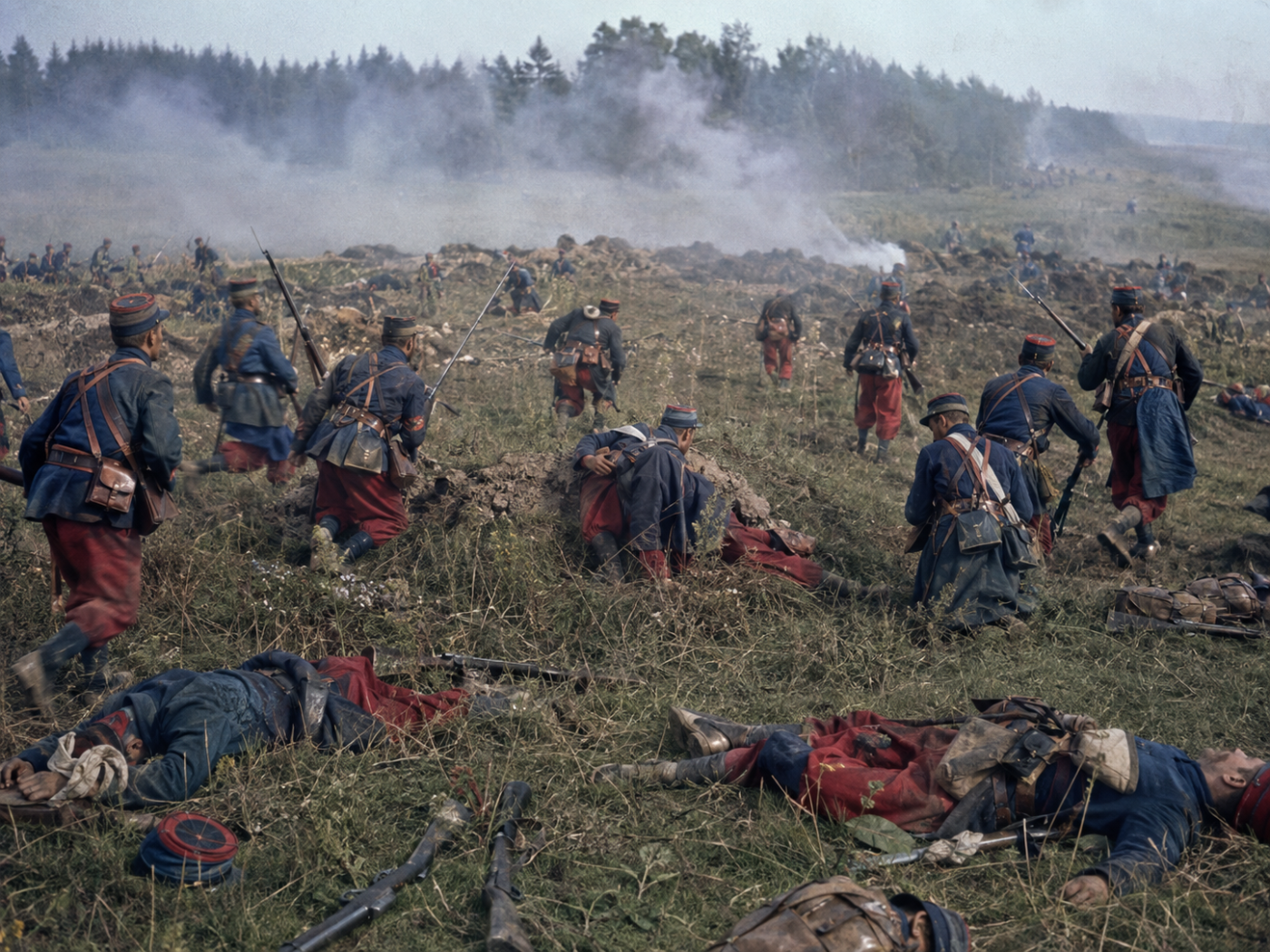
French military doctrine placed enormous importance on élan – aggressive spirit, courage and the determination to attack. Commanders believed that determined infantry assaults could overcome defensive positions through speed and morale, but the battlefield of 1914 was already demonstrating the devastating power of modern artillery, rapid-firing rifles and machine guns. The French infantryman who marched into battle that August looked strikingly similar to soldiers who had fought decades earlier, with many still wearing dark blue tunics and bright red trousers. Although the colour of their uniforms was not itself responsible for the disaster, it became a powerful symbol of an army entering modern industrial warfare with traditions and tactics rooted partly in the nineteenth century.
During the morning of 22 August, enormous French formations advanced through the wooded Ardennes and across open countryside. Thick forests, rolling ground and morning mist severely restricted visibility, while French reconnaissance was often inadequate and commanders frequently had little idea of the strength or exact location of the German forces ahead of them. In numerous locations French columns suddenly encountered German infantry positioned behind ridges, in villages or along the edges of forests. German machine-gun teams and field artillery opened fire as French units attempted to deploy from marching columns into fighting formations. Battalions advanced into sheets of rifle and machine-gun fire while artillery shells exploded among tightly packed troops. Officers attempted to maintain momentum by ordering further attacks, sometimes against German positions they could barely see, and soldiers disappeared into smoke, woodland and fields where entire companies could be destroyed within minutes.
Some of the most terrible fighting took place around Rossignol in southern Belgium, where the French Colonial Corps advanced northwards and encountered powerful elements of the German Fourth Army. French troops found themselves fighting in confused woodland terrain where communication between units became extremely difficult. French colonial infantry launched repeated attacks while German artillery pounded their positions, units became isolated and surrounded, and attempts to break through German lines failed as casualties mounted. By the end of the fighting, formations that had entered battle only hours earlier had been shattered. Among those devastated was much of the French 3rd Colonial Infantry Division, with thousands of men killed, wounded or captured around Rossignol and neighbouring villages.
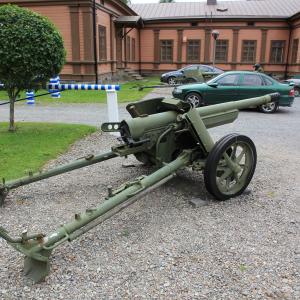
Elsewhere the situation was equally grim. Around Virton, Longwy, Neufchâteau and other towns across the Ardennes, French troops collided with German formations advancing westwards. Individual battles developed almost independently as commanders struggled to understand events across the enormous battlefield. French artillery batteries fought desperately to support the infantry, often firing over open sights as German troops approached. Gun crews remained at their positions until enemy infantry came dangerously close, while horses were killed, ammunition wagons destroyed and guns abandoned as units were forced to retreat. The fighting was not entirely one-sided, and German formations also suffered heavy casualties, particularly when advancing against determined French resistance. French infantry repeatedly demonstrated extraordinary bravery, with numerous units continuing to attack despite losing officers and entire sections within minutes, but courage could not compensate for poor intelligence, confused command and the enormous defensive power of modern weapons.
One of the greatest problems facing the French Army was that many commanders underestimated the strength of the German forces opposing them. German reserve formations had been deployed much more extensively than French planners expected, meaning that instead of encountering weak screening forces, French units often discovered complete German corps waiting ahead of them. Communications made matters worse. Orders travelled slowly between headquarters and front-line formations, telephone wires were frequently cut by artillery fire and mounted messengers could take hours to reach commanders. As a result, generals sometimes continued ordering attacks after the tactical situation had already changed completely. By afternoon the scale of the disaster was becoming clear. Across the battlefield French infantry formations were withdrawing southwards, often under continued German artillery fire, while roads became crowded with wounded men, artillery pieces, supply wagons and exhausted infantry. Some regiments had lost hundreds of men within hours and others had effectively ceased to exist as organised fighting formations.
The statistics from 22 August 1914 remain horrifying. Approximately 27,000 French soldiers were killed during the day's fighting and tens of thousands more were wounded, missing or captured. The exact total can never be known with complete certainty, but historians widely regard the date as the deadliest single day ever suffered by the French Army. To place the figure in perspective, France lost roughly the same number of men killed on 22 August 1914 as the British Army lost during the entire first day of the Somme in 1916, when around 19,000 British soldiers were killed. Yet unlike the Somme, Verdun or Passchendaele, the battles of 22 August are comparatively little known outside France.
The disaster demonstrated how dramatically warfare had changed. The combination of modern artillery, smokeless powder, magazine-fed rifles and machine guns had created defensive firepower capable of destroying infantry formations with terrifying speed. The belief that courage and offensive spirit alone could overcome such weapons was exposed as dangerously flawed. French commanders quickly began adapting, and as the war continued the bright pre-war uniforms disappeared in favour of horizon blue, infantry tactics evolved, artillery became increasingly important and armies learned to dig trenches whenever possible. Those lessons, however, came at an extraordinary human cost.
The defeat did not mean France had lost the war. The French armies withdrew towards the interior while Germany continued its enormous sweep through Belgium and northern France, but only weeks later, in September 1914, French and British forces would halt the German advance during the First Battle of the Marne. Many of the soldiers who survived 22 August would therefore fight again at Verdun, the Somme, Champagne and countless other battlefields that became synonymous with the First World War. For France, however, 22 August 1914 remained a day of almost unimaginable sacrifice. Across villages and towns throughout the country, telegrams began arriving informing families that fathers, husbands, sons and brothers would never return home. Thousands had left their barracks only days earlier believing the war might be short, yet by nightfall on 22 August approximately 27,000 of them were dead. It remains one of the most devastating twenty-four hours suffered by any army in modern military history and a brutal example of what happened when the tactics and expectations of an earlier age collided with the weapons of industrial warfare.