On this day in military history…
The Battle of Pozières was one of the most violent and costly actions fought during the Somme campaign of 1916. Beginning before dawn on 23 July, the struggle centred on a small French village positioned on a high ridge overlooking the surrounding battlefield. Although Pozières itself had been reduced to ruins by artillery fire, its location gave the German Army a commanding view over British and Commonwealth positions. Capturing the village and the higher ground beyond it became essential if the Allied advance was to continue.
Pozières stood astride the main road between Albert and Bapaume, close to the strongest sections of the German defensive system. The village was protected by deep dugouts, reinforced trenches, machine-gun positions and the remains of buildings that had been turned into strongpoints. Behind it stood the old windmill and a ridge that formed part of the German second defensive line. From these positions, German observers could direct artillery fire across a wide area of the Somme battlefield.
Earlier British attacks had failed to secure the village, and the task was eventually given to the Australian 1st Division. For many of the Australians, Pozières would become their first major experience of fighting on the Western Front after the Gallipoli campaign. The men were determined and experienced, but few could have imagined the scale of the artillery bombardment that awaited them.
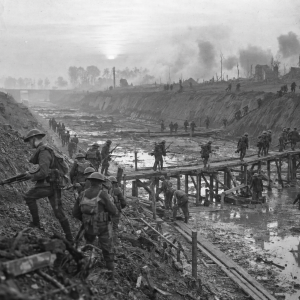
The attack began shortly after midnight on 23 July 1916 following an intense British bombardment. Australian troops advanced towards the southern and eastern edges of the village while British units attacked nearby positions. Moving through darkness, smoke and shattered ground, the Australians crossed the German front line and entered the ruins.
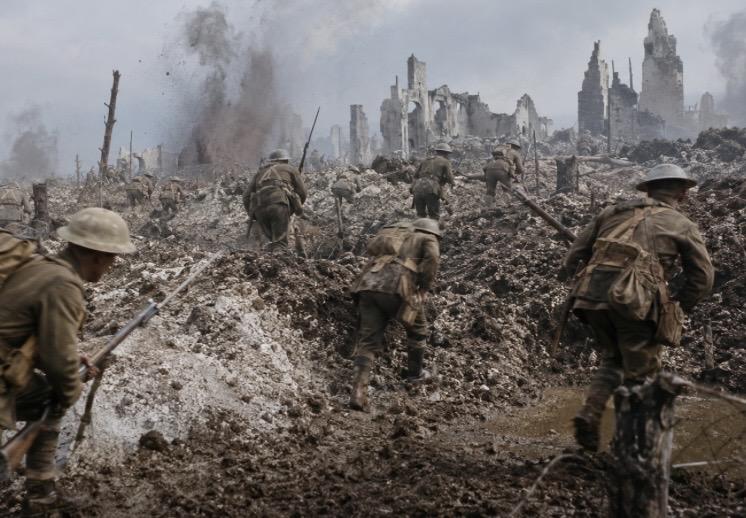
Fighting quickly became confused and brutal. Trenches had been destroyed or buried, familiar landmarks had disappeared and communication between units was extremely difficult. Small groups of soldiers fought among shell holes, ruined walls and collapsed dugouts. German machine-gun teams continued firing from concealed positions, while grenades and bayonets were used during close-quarter fighting.
Despite the confusion, the Australians secured much of the village during the first attack. German troops were driven from several defensive positions, and important sections of the trench system were captured. However, the battle was far from over. The Germans immediately recognised the importance of Pozières and began preparing powerful counterattacks supported by heavy artillery.
Over the following days, the village was subjected to almost continuous shelling. German guns fired thousands of high-explosive and gas shells into the Australian positions. The bombardment destroyed trenches, buried men alive and made the movement of ammunition, water and food extremely dangerous. Soldiers attempting to carry messages or supplies across the open ground were exposed to constant fire.
The remains of Pozières were gradually smashed into dust. Buildings that had survived earlier bombardments disappeared completely, and the roads became almost impossible to identify. The battlefield was transformed into a landscape of deep shell holes filled with debris, mud and the bodies of the dead.
The Australians attempted to improve their positions and push towards the ridge north and east of the village. One of the most important objectives was the German defensive line near the old windmill. Although the structure itself had already been destroyed, the surrounding high ground remained valuable because it offered observation over the battlefield.
Repeated attacks were launched against the German trenches on the ridge. Some failed under machine-gun and artillery fire, while others gained small sections of ground at enormous cost. The fighting often continued through the night, with soldiers digging new trenches while under bombardment and preparing to defend against counterattacks at first light.
The Australian 1st Division remained at Pozières until the end of July, when it was relieved by the 2nd Division. In only a matter of days, the division had suffered thousands of casualties. Many units had been reduced to a fraction of their original strength, and survivors were physically and mentally exhausted.
The arrival of fresh troops did not reduce the intensity of the battle. The Australian 2nd Division continued the attacks towards the ridge and the German second line. On 4 August, Australian troops finally captured the important position around the windmill. This gave the Allies control of the highest ground in the area, but the achievement came at a terrible price.
German artillery continued to bombard the captured positions. Shellfire was so intense that trenches repeatedly collapsed and had to be rebuilt. Soldiers described the bombardment as unlike anything they had previously experienced. The sound of the guns was constant, and the ground shook beneath them as shells exploded across the ridge.
The battle then moved north towards Mouquet Farm, another heavily fortified German position. The farm appeared to be little more than a collection of ruins, but beneath the surface was a network of deep shelters, tunnels and defensive positions. German troops could emerge from concealed entrances, attack advancing forces and then disappear underground.
Australian divisions were repeatedly sent forward towards Mouquet Farm during August and early September. Each attack gained small areas of ground but failed to completely capture the position. The fighting followed a grim pattern of artillery bombardment, infantry assault, German counterattack and further shelling.
The Australian 4th Division joined the struggle after the 2nd Division had suffered severe losses. The 1st Division later returned to the battlefield despite having only recently been withdrawn. By this stage, the men were fighting through ground covered with abandoned equipment, broken weapons and unburied bodies.
Communication remained one of the greatest difficulties. Telephone cables were constantly cut by shellfire, while runners carrying written messages were often killed before reaching their destination. Commanders sometimes had little idea of where their troops were positioned or whether an attack had succeeded.
Medical teams also worked under extremely dangerous conditions. Wounded men had to be carried across exposed ground and through narrow communication trenches that were frequently blocked by debris. Some remained in shell holes for hours or even days before they could be reached. Stretcher-bearers repeatedly risked their lives moving through artillery fire to recover casualties.
The conditions faced by the soldiers were made worse by exhaustion, thirst and the smell of death. Water supplies were unreliable, food often arrived cold and men were unable to sleep properly because of the constant bombardment. Some soldiers suffered from shell shock, while others became completely disorientated by the noise and destruction.
German troops endured many of the same hardships. Their defensive positions were heavily bombarded by British artillery, and many dugouts collapsed during the fighting. German units were repeatedly ordered to counterattack and recover lost trenches, often suffering heavy casualties in the process.
By early September, the Australians had been fighting around Pozières and Mouquet Farm for approximately six weeks. They had captured the village, secured the windmill ridge and pushed the Allied line forward, but Mouquet Farm remained largely in German hands until it was finally taken by Canadian troops later in the Somme campaign.
The Australian divisions involved in the battle suffered more than 23,000 casualties. The losses were greater than those suffered by Australia during the entire Gallipoli campaign. Thousands were killed, wounded or reported missing during the struggle for an area of ground only a few miles wide.
The battle had a lasting effect on the Australian Imperial Force. Pozières became remembered as a place where Australian troops demonstrated extraordinary courage and endurance, but it was also associated with enormous sacrifice. The experience exposed the soldiers to the full industrial power of warfare on the Western Front, where artillery rather than rifles or bayonets caused the majority of casualties.
Australian official war correspondent Charles Bean later wrote that the Pozières ridge was more densely sown with Australian sacrifice than any other place on earth. His words reflected the scale of the losses and the importance the battlefield came to hold in Australian memory.
The capture of the village and ridge provided the Allies with valuable observation positions and removed an important part of the German defensive line. However, the wider Somme offensive continued for several more months without achieving the decisive breakthrough that Allied commanders had hoped for.
Today, little remains of the village that existed in 1916. Pozières was rebuilt after the war, while memorials and cemeteries across the surrounding countryside mark the areas where thousands of soldiers fought and died. The site of the old windmill is now an important Australian memorial, representing the highest point captured during the battle.
The remains of German fortifications can still be found near the village, including sections of the defensive positions known as Gibraltar and the surrounding trench system. Memorials remember the Australian divisions that fought there, while nearby cemeteries contain the graves of men from Britain, Australia and other parts of the Commonwealth.
The Battle of Pozières remains one of the defining Australian actions of the First World War. It was a battle fought among ruins, shell holes and shattered trenches, where small advances were measured in yards and paid for with thousands of lives. The village itself had little military value beyond its position, yet the ridge on which it stood became the scene of a struggle that tested the endurance of every man sent into it.
More than a century later, Pozières continues to symbolise both courage and loss. The battlefield serves as a reminder of the young men who endured weeks of almost continuous bombardment and of the terrible cost of the Somme offensive. Their sacrifice remains deeply connected with the history of Australia and with the wider story of those who fought on the Western Front.