Beutewaffen
On 1 September 1939, Nazi Germany invaded Poland, which marked the start of the Second World War in Europe. It was a massive operation involving millions of men, vehicles, and weapons. In order to provide all troops with equipment and weapons, Germany not only made use of its own domestically produced weapons, but also of so-called Beutewaffen. This meant that when countries were defeated, weapons and vehicles were captured and reused by the German army. One of the earliest examples of this practice can be found before the outbreak of the war itself.
The use of captured weapons began with the annexation of the Sudetenland in 1938. During this, part of Czechoslovakia was occupied and weapons were captured. In the case of the Sudetenland, these were the standard-issue VZ24 carbine and the VZ26 machine gun. The majority of these weapons were used to support the buildup of the Wehrmacht. The remaining small portion of these weapons was used to supply the SS-Verfügungstruppen (SS-VT), which was the predecessor of the Waffen-SS. Because the SS was viewed as a separate political organization at this time, they had much lower priority when it came to arming and equipping than the Wehrmacht. The Czech weapons were therefore extremely useful for still being able to provide the SS-VT with weapons.
However, availability was not the only reason why captured weapons were used. Another common reason was that soldiers preferred to use a captured weapon rather than their own weapon in certain situations. An example of this is the Russian PPSh-41. During Operation Barbarossa, the invasion of the Soviet Union on 22 June 1941, the Germans made a lot of progress. During this, the Soviet Union lost enormous numbers of men, and with them enormous numbers of weapons. One of these weapons was the PPSh-41. This SMG is characterized by its drum magazine and high rate of fire of approximately 900–1000 rounds per minute. This meant that it was a very effective weapon for close combat. And precisely for this reason, the PPSh-41 was also so popular among German troops. Although the German standard-issue K98 was an accurate and reliable weapon, this carbine was not extremely suitable for close combat such as in Stalingrad. Because of this, many German soldiers chose to use a captured PPSh-41. Due to the many fallen Soviet soldiers, this SMG and spare magazines with 7.62×25mm Tokarev cartridges were widely available on the battlefield. The weapon was even so popular that German 9x19mm Parabellum magazines were converted so that they could be used with the PPSh-41.
The PPSh-41 was not the only submachine gun that found its way into German service. Another frequently used Beutewaffe was the Italian Beretta M38/42. This Italian SMG was known as a reliable weapon with good accuracy. A unique feature of the Beretta M38/42 was its 2 triggers, with one being used for automatic fire and the other for semi-automatic fire. After the Italian capitulation in September 1943, a large part of the country was occupied by Germany. During this, not only weapons, but also weapons factories were captured. The German army then began producing Beretta M38/42 SMGs at full capacity in order to supply troops on all fronts. This therefore makes it clear that Germany did not only use captured weapons, but also produced them itself.
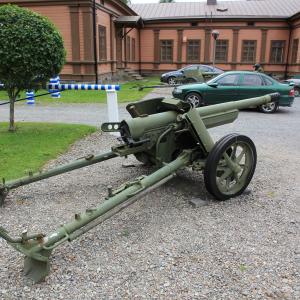
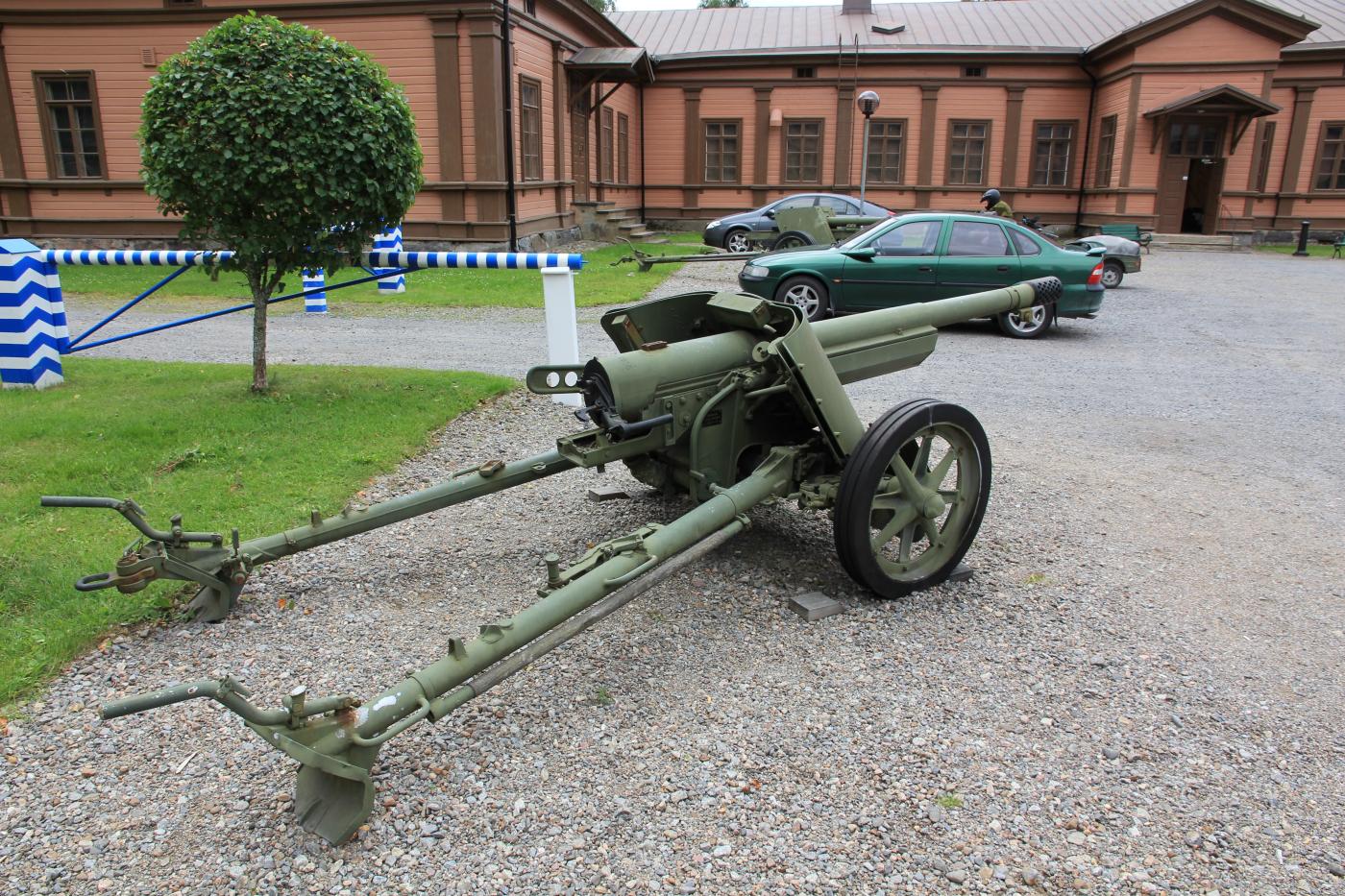
Captured weapons were used across the entire weapons spectrum, and therefore also included cannons. After the fall of France on 25 June 1940, the Germans captured large numbers of French cannons. These ranged from anti-aircraft guns to large artillery pieces such as the Canon de 155 mm GPF, which was used at coastal forts. In addition to using captured artillery in its original form, the Germans also modified and converted captured weapons to better suit their needs. The 7.5 cm Pak 97/38 was an excellent example of this. This cannon combined a German Pak 38 carriage with a French Canon de 75 mle 1897 barrel. This combination was produced to fill the shortage of anti-tank guns on the Eastern Front from 1942 onwards. The cannon was very effective against Soviet tanks. One example was Gerardus Mooyman, a Dutch Waffen-SS volunteer, who destroyed 13 Soviet tanks in a single day in 1943 using a 7.5 cm Pak 97/38.
Besides French cannons, tanks were also captured. These tanks were all given a different function depending on the captured model, with almost all Beutepanzers intended for German use being provided with a Balkenkreuz and often repainted. The Char B2, which was a heavy French tank, was often converted by the Germans into flamethrower tanks. The fast Somua S35 tank was widely used by the Wehrmacht within the cavalry. The lighter French tanks such as the Hotchkiss H35 were often used for training troops or for occupation duties. Captured French tanks were not the only ones that were used. Soviet tanks, such as the T-34, were also captured and reused by the Germans. However, the actual use of captured T-34 tanks was very limited because captured Soviet tanks were often badly damaged and could no longer be used. Together, these examples show the wide variety of ways in which captured equipment was used.
In conclusion, captured weapons and vehicles played an important role within the German army during the Second World War. By reusing, modifying, or even continuing to produce equipment from defeated countries, Germany was able to make up for shortages and arm different units. Examples such as the PPSh-41, Beretta M38, Pak 97/38, and captured French tanks show that Beutewaffen were widely used both out of necessity and because of their practical advantages.
Credit: Tom Hankers, Historian - Arnhems Oorlogsmuseum 40-45