

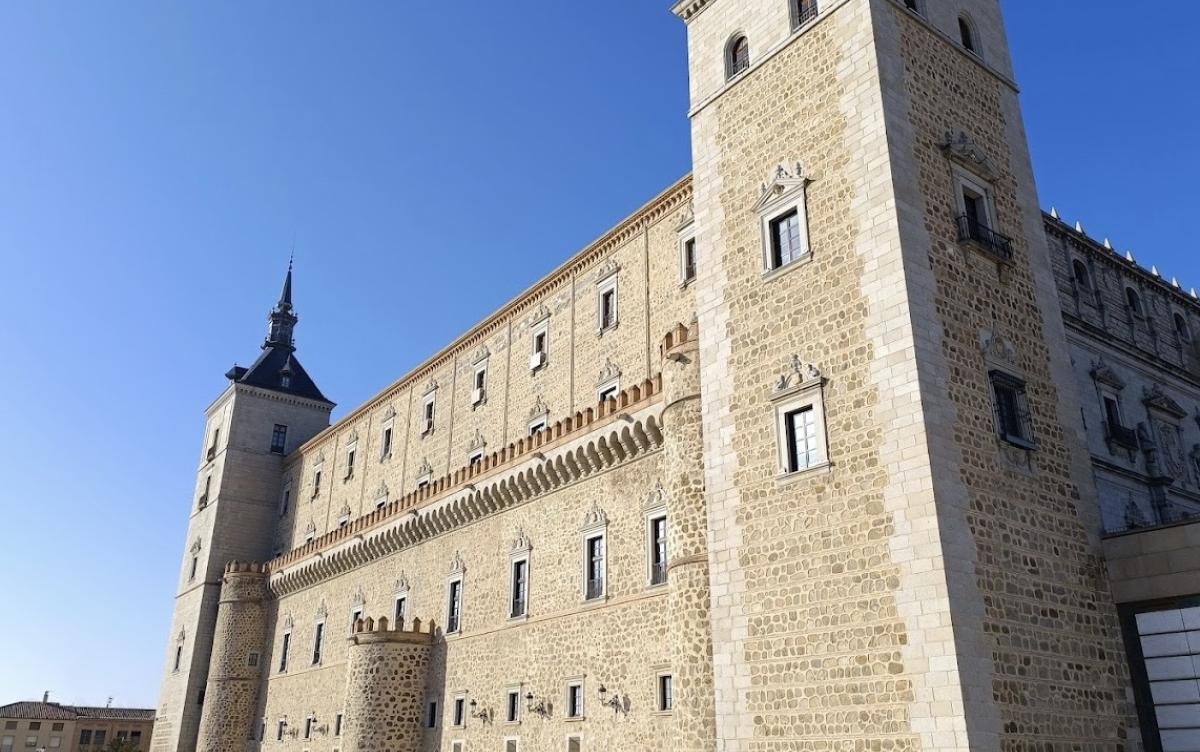
Army Museum Toledo
The Spanish Army Museum is the result of the merger of several military museums founded in the 19th century and at the start of the 20th century. Its core is formed by the Museum of Artillery and Engineers.
In 1803, under the instructions of Prime Minister Godoy, the Royal Military Museum was created in Madrid. This was the beginnings of the present day Spanish Army Museum. It is one of the oldest Spanish museums and was founded in response to the interest in Europe at the time in the preservation and exhibition of objects related with military history. At that time its collections had a clearly educational purpose. Its main aims included supporting soldiers’ training and supplementing teaching at military academies.
In 1827 the Royal Military Museum was divided into two sections: the Artillery Museum and the Engineers’ Museum, each with its own organisation and operating capacity. The last thirty years of the 19th century saw the start of a period where new military museums were created. This was when the Quartermasters' Museum (1885), the Cavalry Museum (1889) and the Infantry Museum (1908) were created. Like the previously mentioned Artillery Museum and Engineers’ Museum, they were independent of each other.
In 1929 the idea was considered of creating a new museum to bring together all of the existing military museums, although it did not bear fruit. It was not until the Second Republic that the Military History Museum was created, in 1932. It comprised sections for the four weapon types and the Quartermaster and Military Medical Corps After the Spanish Civil War, the Museum acquired the structure and organisation it had when it was housed in the Buen Retiro Palace.
The Spanish Army Museum is now based in the Alcázar of Toledo, a change entailing not only a new location, but also the restructuring of exhibit and museographic design in line with more contemporary trends.
C.de La Paz S/n
Toledo
45001
Spain


