
On this day in military history…
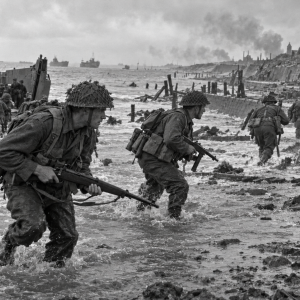
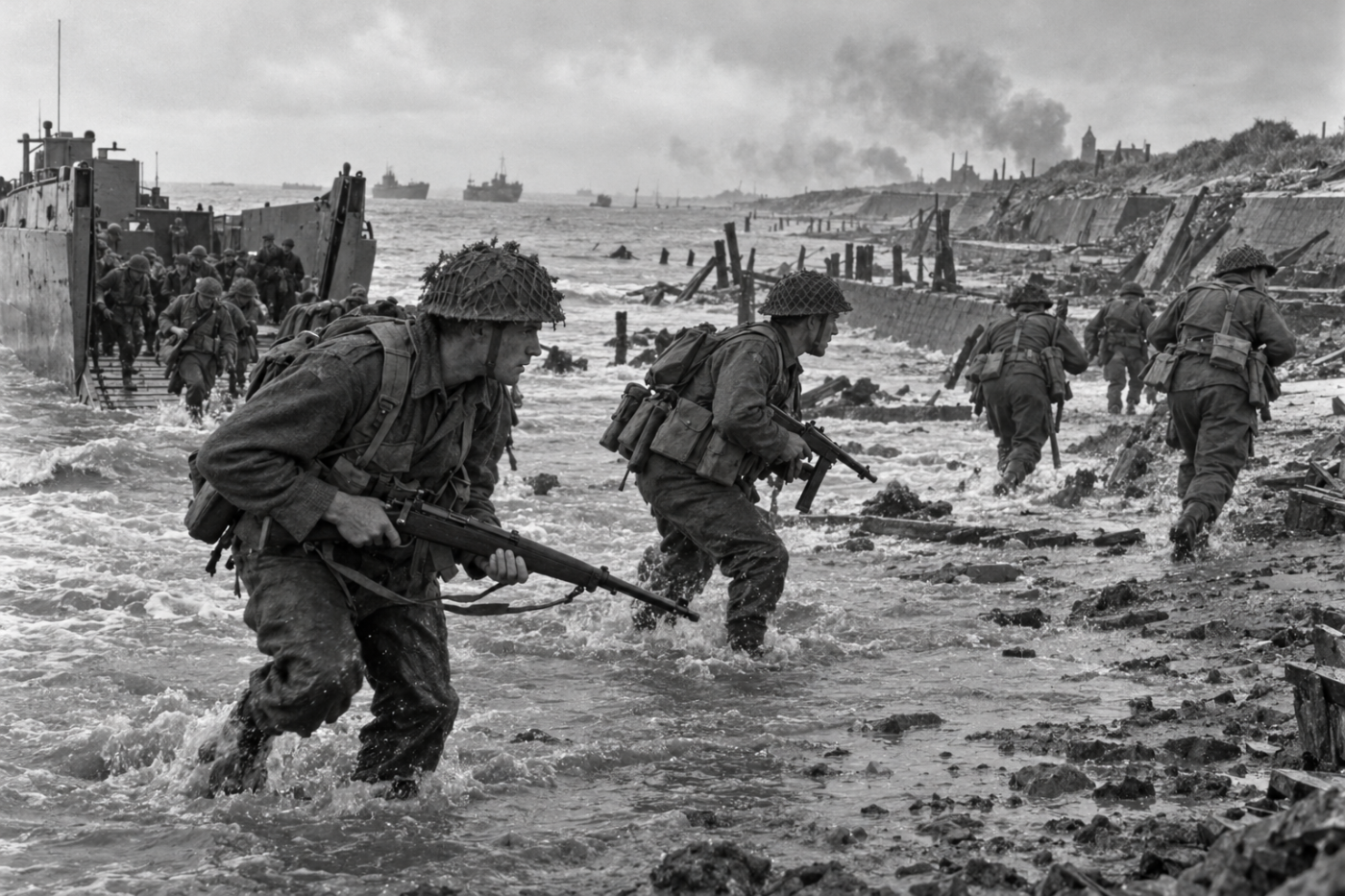
On 1 November 1944, British and Allied commandos fought their way ashore on the Dutch island of Walcheren beneath the fire of German coastal batteries. Landing craft approached through rough water as shells struck around them, while naval crews deliberately drew enemy fire to give the assault troops a chance of reaching the beaches. Operation Infatuate had begun, opening one of the most demanding amphibious assaults of the campaign in north-west Europe.
The prize was the approach to Antwerp, whose enormous port offered the Allies a way to overcome their increasingly difficult supply problems. British troops had captured the city in early September, but possession of its docks meant little while German forces controlled the Scheldt estuary connecting it to the sea. Supplies still had to travel long distances from the Normandy beaches and other ports, placing growing pressure on transport as Allied armies advanced towards Germany. Before ships could reach Antwerp, the estuary had to be cleared.
Walcheren guarded its seaward entrance. German batteries could engage approaching shipping, while concrete bunkers, trenches, mines and barbed wire protected the island’s defenders. Much of the surrounding country was flat and exposed, offering little shelter to attacking infantry. As Canadian forces fought through the Scheldt region, Walcheren remained a formidable obstacle standing between the Allies and a working supply route into Antwerp.
To weaken the German positions, RAF bombers breached the island’s sea dykes during October. Seawater flooded much of the interior, restricting movement and isolating defensive positions, although the higher coastal dunes remained largely above water. The flooding also brought severe hardship to Dutch civilians, many of whom lost their homes and livelihoods. For the attacking troops, it created a battlefield where roads, causeways and narrow strips of dry ground became vital routes.
The amphibious operation was divided into two assaults. Infatuate I would strike Flushing, now usually known as Vlissingen, from across the Scheldt. Infatuate II would land at Westkapelle on the western coast, beside a breach in the sea *blocked text*. British Army and Royal Marines commandos would fight alongside men from occupied European nations, supported by infantry, specialist armour, artillery and the Royal Navy.
Before dawn on 1 November, No. 4 Commando crossed from Breskens towards Flushing. Its ranks included French commandos who had already fought in Normandy. Landing near the town’s waterfront, they pushed into streets dominated by German strongpoints. Infantry of the 52nd (Lowland) Division followed, reinforcing the bridgehead as the fighting spread through buildings, docks and defensive positions. Progress depended on small groups clearing each obstacle, often at close quarters.
At Westkapelle, the approaching assault force faced powerful coastal guns. Poor weather had disrupted the planned air support, but the naval and commando commanders decided to continue. HMS Warspite and the monitors HMS Erebusand HMS Roberts supported the attack, their heavy guns joining the bombardment of German positions. Closer to shore, armed landing craft engaged the batteries directly as the troop-carrying craft closed on the beaches.
The crews of the Support Squadron Eastern Flank faced an exceptionally dangerous task. By bringing their vessels into close action, they attracted fire that might otherwise have torn into the landing craft carrying the commandos. German shells smashed into bridges, gun positions and hulls, leaving vessels burning, sinking or struggling to remain afloat. Despite mounting losses, crews continued firing. Their sacrifice helped the assault troops reach the shore.
Men of 41 and 48 Royal Marine Commandos landed on either side of the *blocked text* breach, accompanied by Allied commandos, with 47 Royal Marine Commando coming ashore later. Specialist armoured vehicles provided support where conditions allowed. Once clear of the beaches, the commandos advanced along the narrow coastal strip, fighting through mines, wire and fortified positions while the flooded interior restricted their freedom of movement.
The battle developed into a succession of fierce local actions. North of Westkapelle, 41 Commando advanced towards Domburg, while other units pushed south-east towards Zoutelande and Flushing. German bunkers had to be approached and attacked individually, often under machine-gun and mortar fire. Naval gunfire and artillery could batter a position, but infantry still had to close with its defenders and secure the ground.
Flushing fell after several days of bitter fighting, and the forces advancing from the separate landing areas gradually linked up. Resistance elsewhere on Walcheren continued until 8 November. The island’s capture removed the German stronghold guarding the mouth of the Scheldt, although minesweepers still faced the painstaking work of clearing a safe channel. On 28 November, the first Allied supply convoy reached Antwerp.
Operation Infatuate was far more than a raid. It was a major assault whose success helped transform the Allied supply position for the final advance into Germany. Its achievement rested on the commandos who fought through the dunes and streets, the infantry and engineers who followed them, and the sailors who brought their vulnerable craft beneath the German guns. On the flooded shores of Walcheren, they opened a gateway the Allied armies urgently needed.