
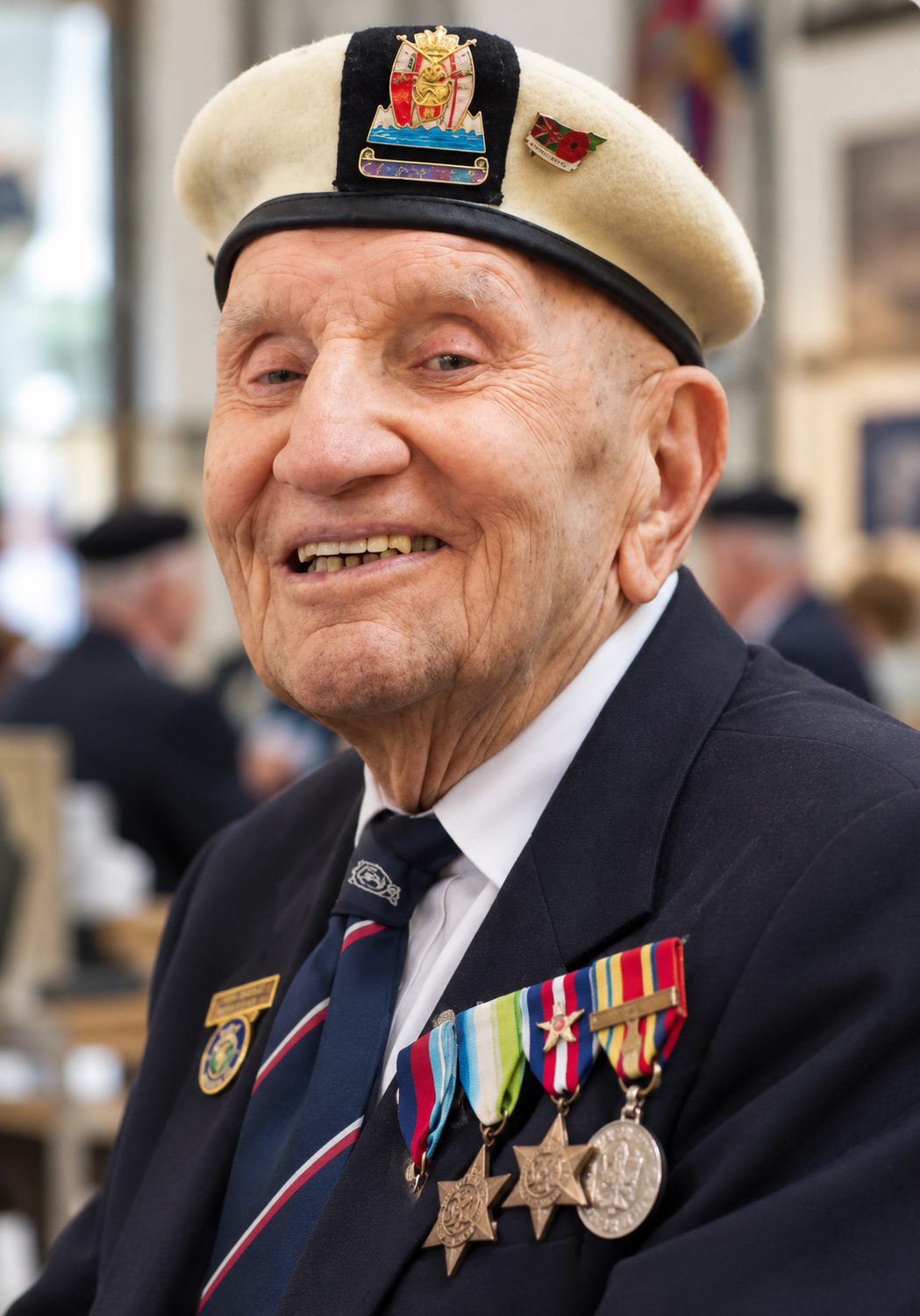
Claude Choules
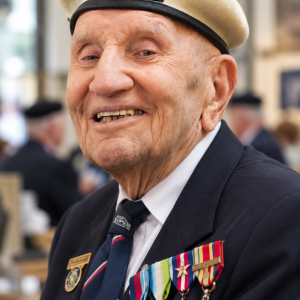
Claude Choules lived through an extraordinary sweep of history. Born just weeks after the death of Queen Victoria, he served in both world wars, witnessed the surrender of Germany’s High Seas Fleet and survived into an age of smartphones and space stations. When he died on 5 May 2011, aged 110, he was the world’s last surviving First World War naval veteran and the last known surviving combat veteran of that conflict. His distinction was his remarkable longevity rather than the longest naval service, although his career spanned around four decades. Born in Pershore, Worcestershire, on 3 March 1901, Claude grew up enjoying boats and the waters of the River Avon. When the First World War began, his older brothers went into military service, and he was eager to follow. Too young to join the Army, he began nautical training aboard the training ship Mercury in 1915, aged fourteen. He formally entered the Royal Navy in October 1916, training aboard HMS Impregnable at Devonport before joining the battleship HMS Revenge the following year.
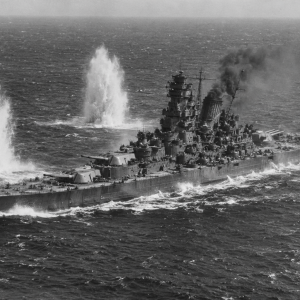
For a teenage boy, life aboard a battleship brought strict discipline, hard work and the constant demands of keeping a major warship ready for action. Revenge belonged to the Grand Fleet, Britain’s principal naval force guarding against the German High Seas Fleet. Claude entered this world of steel, heavy guns and cold northern waters while still little more than a schoolboy. In November 1918, he witnessed one of the defining moments in naval history: the surrender of the German High Seas Fleet following the Armistice. Ships that had once threatened Britain’s command of the seas steamed into Allied custody. He also witnessed the scuttling of the interned German fleet at Scapa Flow in June 1919, when German crews sank their own vessels rather than allow them to be divided among the victorious powers. Before his nineteenth birthday, he had seen the dramatic end of Germany’s imperial battle fleet.
His naval career continued after the war, taking him to the Black Sea and the Mediterranean. He served aboard the battleship HMS Valiant and later the aircraft carrier HMS Eagle, experiencing the changing face of naval warfare as aircraft became increasingly important at sea. Developing his skills and gaining promotion, he built a career that would eventually take him to the opposite side of the world. In 1926, Claude travelled to Australia as one of a group of Royal Navy instructors loaned to the Royal Australian Navy. He liked the country and its way of life sufficiently to transfer permanently. The voyage also brought a more personal change when he met Ethel Wildgoose, whom he married in December that year. They went on to have two daughters and a son, building a marriage that lasted more than seventy-six years.
Claude served aboard the Australian cruiser HMAS Canberra and specialised in torpedo and anti-submarine instruction. After a brief period outside the service, he rejoined in 1932 as a chief petty officer instructor at Fremantle in Western Australia. By the outbreak of the Second World War, the young sailor of 1918 had become an experienced specialist whose knowledge was needed for the defence of his adopted country. During the war, he served as acting torpedo officer at Fremantle and chief demolition officer for Western Australia. Among his duties was dealing with a German mine washed ashore near Esperance. Such work demanded practical expertise and steady judgement, with mistakes carrying potentially fatal consequences.
His responsibilities became particularly serious in 1942, when Japanese advances brought the threat of invasion closer to Australia. Claude helped prepare Fremantle’s harbour facilities and oil storage installations for demolition should they be in danger of capture. Ships unable to escape were also prepared for sinking. These were grim precautions intended to deny an enemy the use of a valuable port, although the feared invasion never came and the demolition plans were not carried out. After the war, he remained in naval employment, eventually transferring to the Naval Dockyard Police. This allowed him to continue beyond the usual retirement age for naval ratings, and he finally retired in 1956, aged fifty-five. He and Ethel settled beside the coast at Safety Bay, south of Perth, where he bought a boat and spent years crayfishing. The sea remained part of his daily life long after he had stopped wearing uniform.
Despite serving through two world wars, Claude disliked anything he believed glorified conflict. His daughter recalled that he stopped attending Anzac Day marches after leaving the navy. To his family, he was a loving father and grandfather whose greatest happiness lay in the home he and Ethel had created. In his eighties, he attended creative writing classes and began recording his memories for his family. Those recollections eventually became his autobiography, The Last of the Last, published in 2009 when he was 108. His account preserved the voice of someone who could remember the world before the First World War and had witnessed events that later generations knew only through books and photographs.
Ethel died in 2003, aged ninety-eight, after more than three-quarters of a century together. Claude lived for another eight years, reaching his 110th birthday in March 2011. His death in Perth two months later marked the passing of the final known combat veteran of the First World War. Florence Green, who had served in the Women’s Royal Air Force, survived him as the conflict’s last known veteran. On 13 December 2011, the Royal Australian Navy commissioned HMAS Choules in his honour. It was a fitting tribute to a man whose life had been shaped by the sea: a Worcestershire boy who became a sailor, served two countries through two world wars and lived long enough to carry the memories of his generation into a new century.