On this day in military history…
On 26 July 1945, with the Second World War in Europe already over but the war against Japan still raging, the governments of the United States, Britain and China issued one of the most important ultimatums of the entire conflict. Known as the Potsdam Declaration, it called upon Japan to surrender unconditionally or face what was described as “prompt and utter destruction”. The declaration came at a moment when Allied leaders were preparing for the possibility of a vast and costly invasion of the Japanese home islands, while at the same time a new and devastating weapon was becoming available to the United States.
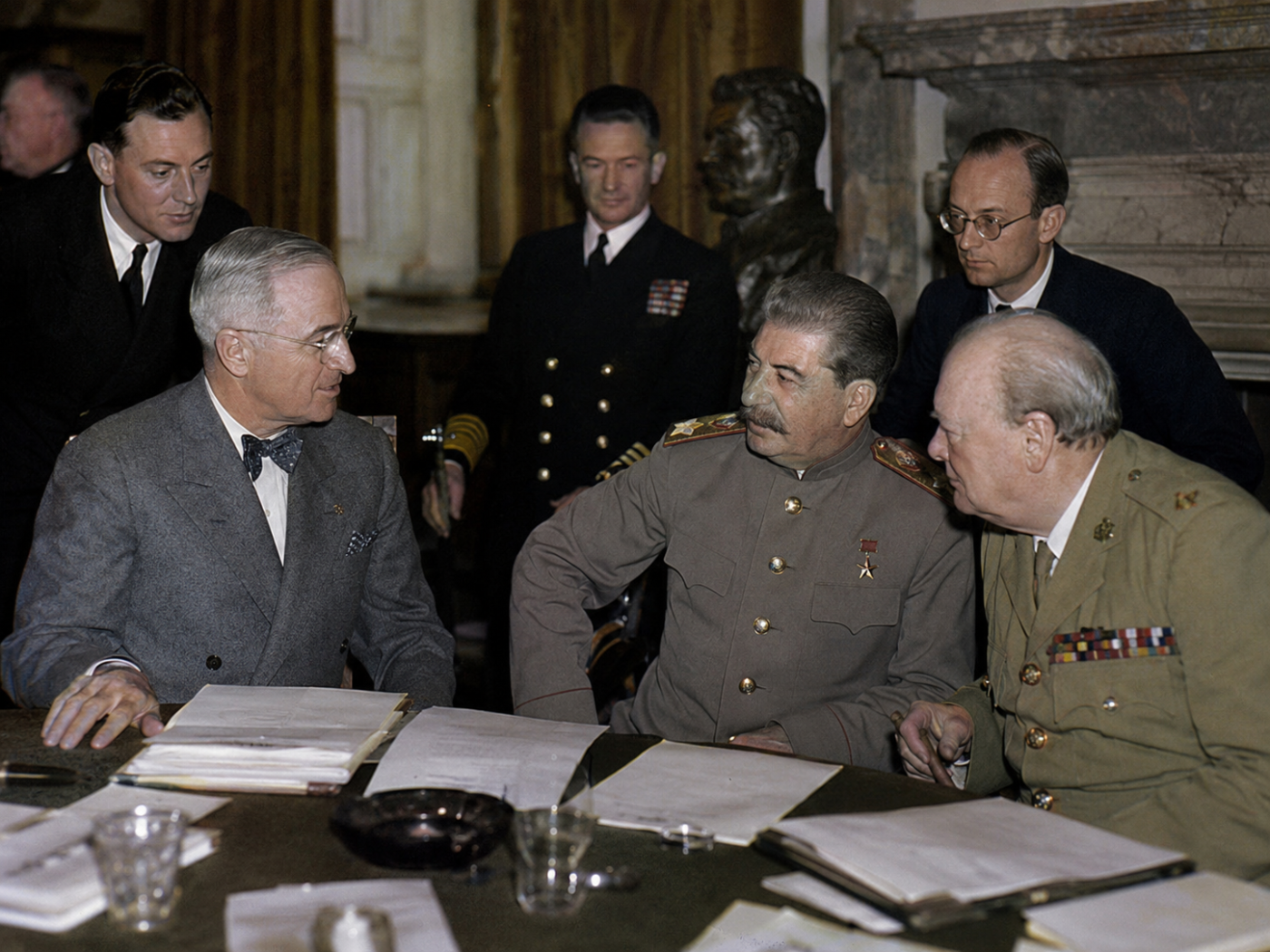
The declaration took its name from the Potsdam Conference, held near Berlin between 17 July and 2 August 1945. The meeting brought together the leaders of the principal Allied powers to discuss the future of defeated Germany and the wider shape of the post-war world. President Harry S. Truman represented the United States, Winston Churchill initially represented Britain before being replaced during the conference by Clement Attlee following Labour’s general election victory, and Joseph Stalin represented the Soviet Union. China was not physically represented at the conference, but the Chinese Nationalist government of Chiang Kai-shek later approved the terms of the declaration.
By July 1945, Japan’s military position had become increasingly desperate. The Imperial Japanese Navy had been largely destroyed as an effective fighting force, Allied submarines and aircraft had severely disrupted shipping and supplies, and American forces had advanced steadily across the Pacific. The battles for Iwo Jima and Okinawa had demonstrated both the determination of Japanese defenders and the enormous casualties likely to be suffered in any invasion of Japan itself. American B-29 bombers were also carrying out devastating raids against Japanese cities, with conventional incendiary bombing already causing enormous destruction.
Despite this deteriorating situation, Japan had not yet surrendered. Powerful elements within the military leadership remained determined to continue fighting in the hope that inflicting heavy casualties on an invading Allied army might eventually produce more favourable peace terms. The Japanese government was also attempting to use diplomatic channels, particularly through the Soviet Union, in the hope of finding a way to end the war without accepting complete unconditional surrender.
The Potsdam Declaration was intended to remove any doubt about what the Allies expected. Its terms called for the elimination of the influence of those who had led Japan into military conquest, the occupation of Japanese territory until Allied objectives had been achieved, the disarmament of Japanese armed forces and the punishment of war criminals. At the same time, the declaration stated that the Japanese people would not be enslaved or destroyed as a nation and that democratic freedoms would eventually be established.
The document also explained that Japan would be allowed to retain industries necessary to sustain its economy, although industries that could enable the country to rearm for war would be restricted. Once a peaceful and responsible government had been established and the terms of surrender had been fulfilled, Allied occupation forces would be withdrawn.
One of the most important issues left deliberately unclear was the future of Emperor Hirohito. The declaration did not specifically guarantee that the Emperor would remain in his position, something that caused considerable concern within the Japanese leadership. For many Japanese officials, preservation of the imperial institution was considered essential, and uncertainty over the Emperor’s fate became one of the major obstacles to immediate acceptance of the Allied terms.
The final section of the declaration demanded that the Japanese government immediately proclaim the unconditional surrender of all armed forces and provide guarantees that it would carry out the terms of surrender. The warning that followed was stark, declaring that the alternative for Japan was prompt and utter destruction.
Unknown to the Japanese government, the United States had recently completed the first successful test of an atomic bomb. On 16 July 1945, just before the Potsdam Conference began, the Trinity nuclear test had taken place in New Mexico. The successful explosion demonstrated that the United States possessed a weapon unlike anything previously used in warfare. President Truman was informed of the success during the conference, fundamentally changing the strategic calculations surrounding the final defeat of Japan.
The Soviet Union was not one of the original signatories to the Potsdam Declaration because it was still officially neutral in the war against Japan. Under agreements made earlier with the Western Allies, Stalin had promised that the Soviet Union would enter the war against Japan following Germany’s defeat. This would eventually become another major factor in Japan’s decision to surrender.
Japan’s response to the declaration has remained the subject of considerable historical discussion. Prime Minister Kantaro Suzuki used the Japanese word mokusatsu when commenting publicly on the Allied demands. The term has been variously interpreted as meaning to ignore, to treat with silent contempt or simply to withhold comment. Whatever the precise intended meaning, the Allies interpreted Japan’s position as a rejection of the ultimatum.
The war therefore continued.
On 6 August 1945, the United States dropped an atomic bomb on Hiroshima. The explosion destroyed much of the city and killed tens of thousands of people immediately, with many more dying later from burns, injuries and radiation sickness. Yet even after Hiroshima, Japan’s leadership remained divided over surrender.
During the night of 8 August, the Soviet Union declared war on Japan. Soviet forces launched a huge offensive against the Japanese Kwantung Army in Manchuria, rapidly overwhelming Japanese positions. The loss of Soviet neutrality destroyed Japanese hopes of using Moscow as an intermediary in peace negotiations and created the danger of Soviet forces occupying additional Japanese-controlled territory.
On 9 August, a second atomic bomb was dropped on Nagasaki. Japan now faced a combination of unprecedented destruction from atomic weapons, continuing conventional bombing, naval blockade and the sudden entry of the Soviet Union into the Pacific War.
The Japanese leadership became bitterly divided over whether to surrender. Some senior military officers still wished to continue fighting, believing that the country should resist an Allied invasion and seek more favourable terms. Others believed that further resistance would result only in the complete destruction of Japan.
Emperor Hirohito eventually intervened directly in the deadlocked discussions. He supported acceptance of the Allied terms, provided that the imperial institution could be preserved. On 10 August, Japan communicated its willingness to accept the Potsdam Declaration with an understanding regarding the Emperor’s position.
The Allies replied that the authority of the Emperor and the Japanese government would be subject to the Supreme Commander for the Allied Powers. After further debate and another intervention by Hirohito, Japan accepted the terms.
On 15 August 1945, the Japanese people heard the voice of their Emperor by radio for the first time when Hirohito announced that Japan would accept the Allied surrender terms. His carefully worded broadcast did not directly use the word surrender, but told the population that the war situation had not developed to Japan’s advantage and referred to the use of a new and most cruel bomb.
Even at this final stage, a group of Japanese military officers attempted to prevent the surrender announcement by seizing the Imperial Palace and trying to destroy the recording of the Emperor’s broadcast. The coup attempt failed, and the message was transmitted as planned.
The formal surrender took place on 2 September 1945 aboard the battleship USS Missouri in Tokyo Bay. Representatives of the Japanese government and armed forces signed the Instrument of Surrender in the presence of General Douglas MacArthur and representatives of the Allied nations, officially bringing the Second World War to an end.
The Potsdam Declaration therefore stands as one of the most significant documents of the closing stages of the war. It was both an ultimatum and a statement of Allied intentions for the future of Japan. Its demand for surrender was issued at a moment when the military defeat of Japan appeared inevitable, yet the cost and duration of achieving that defeat remained uncertain.
Its importance also lies in the dramatic events that followed within only a few weeks. Hiroshima, the Soviet invasion of Manchuria, Nagasaki and Japan’s eventual surrender transformed the international situation and brought six years of global warfare to a close.
Debate continues among historians over the reasons for Japan’s surrender and the relative importance of the atomic bombings, Soviet intervention, economic collapse and the threat of invasion. What is certain is that the Potsdam Declaration provided the formal terms around which the final surrender was eventually constructed.
Issued on 26 July 1945, the declaration gave Japan one final opportunity to end the war before the conflict entered its most destructive and decisive final days. Less than three weeks later, the Japanese government had accepted its terms, and within little more than a month the Second World War was formally over.