Britains own Great Escape
By March 1945 the Second World War in Europe was approaching its final weeks. Allied armies had crossed into Germany from the west while the Soviet Red Army was advancing relentlessly from the east, yet hundreds of miles away in the countryside of South Wales one of the most extraordinary prisoner-of-war escapes of the entire conflict was about to take place.
On the night of 10 March 1945, 70 German prisoners climbed down through a concealed opening beneath a bed, crawled along a hand-dug tunnel underneath the perimeter of a British prisoner-of-war camp and disappeared into the darkness surrounding Bridgend. It became Britain’s own version of the Great Escape.
The scene was Island Farm, officially designated Prisoner of War Camp 198, situated on the outskirts of Bridgend in Glamorgan. Although far less famous than the Allied escape from Stalag Luft III a year earlier, the similarities were remarkable. The German prisoners produced improvised digging equipment, constructed ventilation systems, stole timber to support their tunnel, disposed of enormous quantities of earth, made maps and compasses and organised elaborate distractions to prevent the British guards discovering what they were doing.
Island Farm had never originally been intended to hold prisoners of war. The complex had been constructed before the war as accommodation associated with the huge Royal Ordnance Factory at Bridgend, where tens of thousands of people worked producing and filling ammunition and explosives for Britain's armed forces. The accommodation was never used as extensively as originally intended and during the war the site found several different purposes. American troops were billeted there before the invasion of Normandy, including men connected with the US 28th Infantry Division. General Dwight D. Eisenhower himself visited troops in the Bridgend area during the preparations for the invasion of Europe.
After D-Day, however, Britain suddenly faced the problem of accommodating enormous numbers of German prisoners captured during the Allied advance across France and Belgium. Island Farm was converted into Camp 198. By late 1944 more than 1,600 German prisoners were being held there. Initially the camp had accommodated other ranks, but the British authorities considered the accommodation unusually comfortable for ordinary prisoners and it increasingly became associated with German officers.
Many of the men arriving at Bridgend had been captured during the collapse of the German armies in France following the Normandy campaign. They included members of the German Army, Luftwaffe and Kriegsmarine. Some remained committed to Germany and believed that, despite the increasingly desperate military situation, it was still their duty as officers to attempt to escape. Their arrival had already caused considerable interest among the people of Bridgend, as groups of German prisoners marching through the town from the railway station were an extraordinary sight for local civilians who had spent more than five years at war with Germany.
The British officer responsible for Camp 198 was Lieutenant-Colonel Edwin Darling MC. Darling was no inexperienced administrator. He had served for more than 30 years and possessed one particularly useful qualification for commanding a prisoner-of-war camp: he knew exactly what it felt like to be a prisoner plotting an escape. During the First World War Darling had himself been captured by the Germans, and he eventually escaped and succeeded in returning to Britain through Holland. He therefore understood perfectly well that prisoners would examine every weakness in their camp.
Security at Island Farm nevertheless presented problems. A number of the British soldiers employed as guards had been medically downgraded and were no longer considered suitable for front-line combat duties. Guarding prisoners was an important job, but by 1944 and 1945 Britain was desperately short of manpower and its youngest and fittest soldiers were generally required elsewhere. The German officers soon recognised weaknesses in the camp and began planning their escape almost as soon as they arrived.
One tunnel would not be enough. Just as Allied prisoners in German camps often constructed several escape tunnels simultaneously, the Germans at Island Farm apparently worked on more than one route so that the discovery of one would not necessarily destroy their entire escape organisation. In January 1945 Lieutenant-Colonel Darling appeared to have beaten them when a tunnel being dug from Hut 16 was discovered shortly before completion. For the British authorities it appeared to be an important success, and Darling had expected an attempt and now seemed to have found it. What the guards did not know was that another tunnel remained hidden, this one starting inside Hut 9.
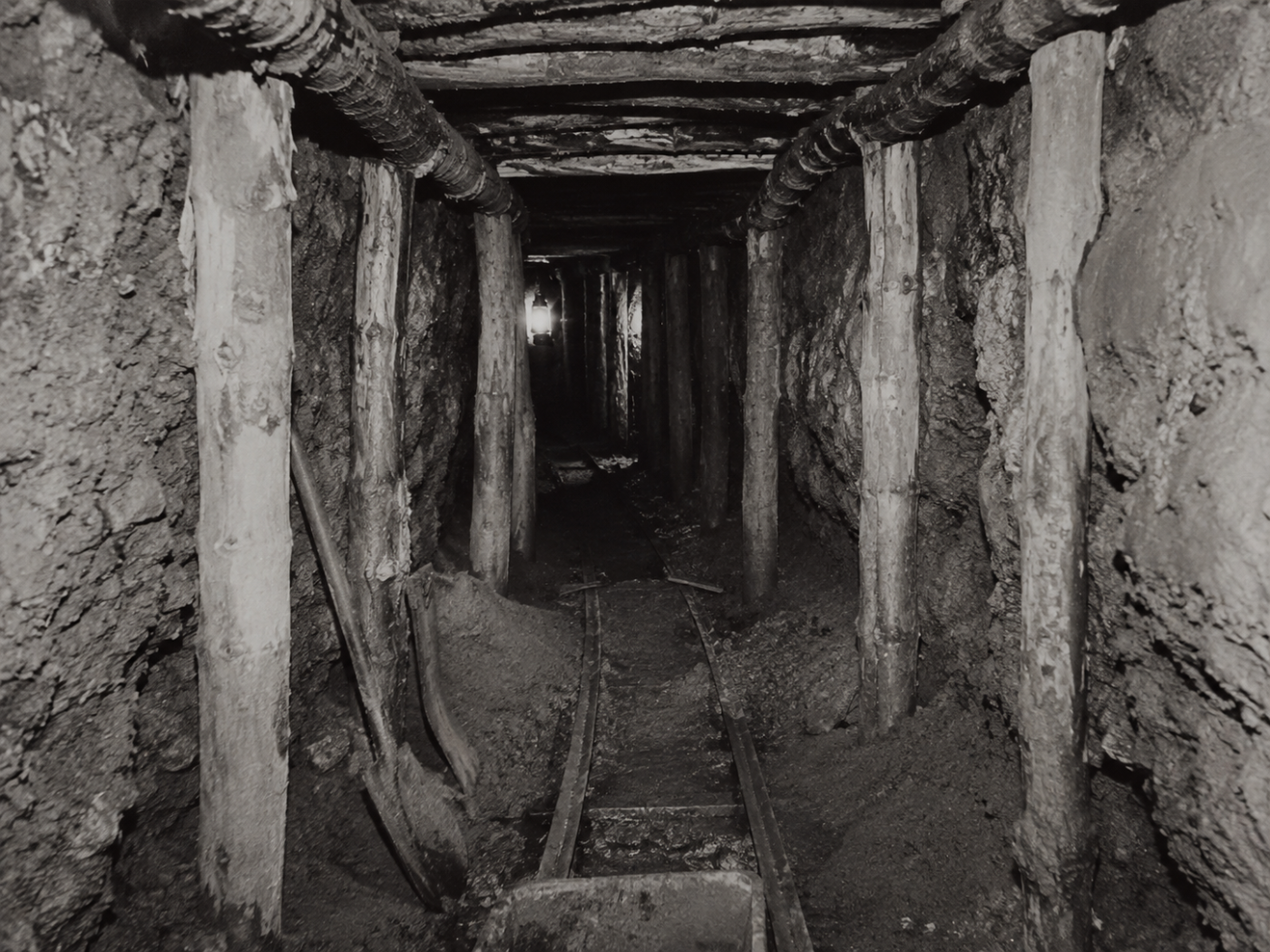
The entrance was concealed beneath a bunk bed. Once the bed and covering were moved, the prisoners could descend approximately four or five feet below floor level before beginning the horizontal section towards the perimeter. Conditions underground were miserable. Island Farm stood on heavy South Wales clay, which was difficult to excavate and equally difficult to dispose of unnoticed. The tunnel was roughly three feet square in places, leaving barely enough room for a man to crawl through while moving excavated material in the opposite direction. Almost everything required for its construction had to be stolen, improvised or secretly manufactured inside the camp.
Meat tins, food cans, knives and other pieces of metal were turned into digging tools. The excavated clay was loaded onto a crude underground trolley or skip and dragged back towards the entrance. Getting rid of the soil presented an even greater problem, as every tunnel produces a remarkable quantity of spoil and suddenly depositing tonnes of fresh clay around a prisoner-of-war compound would immediately attract attention. The prisoners developed several methods. Some earth was placed into bags and distributed around gardens and recreational areas, while men could carry smaller amounts hidden in their clothing before discreetly scattering it around the camp. One of their cleverest methods involved an unused area of one of the huts, where they constructed a false wall creating a hidden cavity behind it. Clay from the tunnel could then be formed into manageable lumps and fed secretly into the space, and the deception was so successful that quantities of the concealed soil remained hidden long after the war.
Timber presented another difficulty, as without supports there was always the possibility that the soft ground above the prisoners would collapse. Pieces of wood were therefore taken from camp furniture, with benches and parts of bunk beds cut up and disappearing into the tunnel as roof supports. The gradual disappearance of timber became so extensive that some beds were reportedly left noticeably shorter than they had originally been. Ventilation required yet another ingenious solution, as a man crawling and digging underground consumes oxygen quickly, particularly in a confined tunnel filled with dust. The Germans collected empty condensed-milk tins, removed their ends and connected them together to form a primitive ventilation pipe. The improvised tube ran down into the tunnel while a prisoner above operated a homemade fan, propeller or bellows arrangement to force fresh air underground.
They even installed electric lighting, with wiring secretly connected to the camp's electricity supply and bulbs positioned along the tunnel. The electrical system later became part of the security arrangements for the escape itself, as when a British sentry approached the area near the tunnel exit, prisoners acting as lookouts could switch off the tunnel lights so anyone underground immediately knew that danger was approaching. When the lights came back on, movement could continue.
One of the most difficult questions was determining exactly where the tunnel ended. The prisoners could estimate distance underground but had no way of seeing whether they had actually passed underneath the wire. One ingenious method was to push a metal rod upwards through the soil and create a tiny opening, then blow cigarette smoke through it. Prisoners watching from inside the compound could observe where the smoke appeared outside and establish whether the diggers had travelled far enough beyond the perimeter. Eventually they had, and the tunnel emerged into a field beyond the barbed wire. The Germans were ready.
Saturday 10 March 1945 was selected for the breakout, which began at approximately 10 o'clock that evening after the final roll call. The prisoners had organised themselves carefully, with men allocated times at which they should report to Hut 9 so that dozens of people would not suddenly congregate around the tunnel entrance and attract the guards' attention. Other prisoners helped create noise and distractions, with singing particularly useful, as a large group of German prisoners singing loudly inside their accommodation might be irritating to the British guards but also concealed sounds coming from the tunnel and allowed men to move around with less chance of being heard.
The preparations went far beyond simply digging a hole, as escapees required clothing, food, directions and some idea of where they intended to go. Improvised maps and compasses were produced, and some prisoners wore civilian-looking clothing or long coats to conceal their prisoner-of-war uniforms. Their ultimate prospects were extremely poor, as even if they escaped Island Farm they remained in South Wales, hundreds of miles from Germany and separated from occupied Europe by the English Channel. Britain was an island covered by wartime checkpoints, railway police, soldiers, Home Guard units and civilians accustomed to carrying identity documents, and a German officer with limited English attempting to cross Britain unnoticed faced enormous difficulties. Yet they went anyway.
One after another the prisoners climbed beneath the bunk in Hut 9, descended into the earth and crawled beneath the perimeter. Outside they moved across a freshly ploughed field towards a large tree about 150 yards away which had been chosen as a rendezvous point, and from there groups separated and began following their individual escape plans. Hour after hour prisoners passed through the tunnel while the British guards remained unaware of the scale of what was happening only yards away. Some escapees attempted to reach railway lines, others intended to steal vehicles, and several hoped that somehow they might reach an airfield or port and find a route out of Britain.
One group produced one of the most extraordinary stories of the entire escape. German officers Hans Harzheim, Werner Zielasko, Oswald Prior and Luftwaffe officer Seffi Ehlert made their way towards Merthyr Mawr Road where they found an Austin 12 belonging to local doctor Dr R. Baird Milne. They attempted to steal it, but the car would not start. Incredibly, men connected with the prison guard force encountered them and, not realising that they were assisting escaped German prisoners, helped them get the vehicle going. The Germans then drove away, heading towards the Midlands and apparently hoping to find an aircraft or another means of continuing their escape, though they did not succeed.
Meanwhile the stream of men leaving Hut 9 continued until approximately four o'clock in the morning of 11 March when the operation finally began to unravel. A German officer emerging from the tunnel was noticed by a British guard, a shout was followed by a shot, and suddenly the darkness outside the camp erupted into confusion. One prisoner, Lieutenant Tonnsmann, was wounded, and although he had not been one of the properly organised escape party, his light-coloured kitbag had helped attract attention. The escape was over.
At first the British authorities had no idea how serious the situation was, as prisoners were discovered hiding in bushes near the perimeter and several were immediately captured, leading to initial hopes that the outbreak had been contained. Then information began arriving from the local police that German prisoners were appearing outside the camp. A roll call revealed the astonishing truth: seventy men had successfully escaped. The alarm spread rapidly through South Wales, with police stations warned, army units alerted, Home Guard members mobilised, roadblocks and checkpoints established, railway stations watched, vehicles stopped and identity cards inspected, and the public warned that German prisoners were loose.
For families living around Bridgend the news was alarming, as Britain had not experienced enemy troops roaming freely through its countryside during the war and nobody initially knew what the escapees intended to do. There were particular fears because Bridgend was an important wartime industrial centre, with the enormous Royal Ordnance Factory nearby and South Wales containing docks, railway lines, factories and military installations. Before the escape, local Police Superintendent William May had already discussed emergency plans with Lieutenant-Colonel Darling, as escaped prisoners could theoretically attempt sabotage against one of the many military or industrial targets in the area. Fortunately nothing of the sort happened, as the Germans were interested primarily in avoiding capture.
Some hid in woodland, others walked along country lanes, and several attempted to use railway routes, but many quickly discovered that escaping from the compound had been the easy part, as Britain itself was effectively another prison. The first two men to be recaptured after reaching freedom were reportedly Lieutenant Heinz Herzler and Lieutenant Karl Ludwig, whose original plan had been to climb aboard lorries passing Island Farm and travel towards Cardiff docks, but they were instead found asleep in woodland near Llanharan by RAF personnel at approximately 5.10 in the morning.
Similar stories followed throughout the region as police officers, soldiers, RAF personnel, Home Guardsmen and civilians joined what became one of the largest prisoner searches Britain had experienced during the war. Roads were checked, farms searched, barns, woods and outbuildings examined, and descriptions of the escaped Germans circulated around the country. By the time the BBC Home Service broadcast the news on Sunday 11 March, the British public learned that 70 German prisoners had escaped from a camp near Bridgend, with only a fraction yet recovered.
The story immediately attracted national attention. Some prisoners managed impressive distances, with escapees eventually discovered as far away as Southampton and the Midlands, while others reached Swansea or travelled across Wales. Their homemade maps and compasses helped with direction, but obtaining food, transport and accommodation without attracting suspicion was extremely difficult, and their accents created another problem, as one wrong answer to a policeman, railway employee or suspicious civilian could end the escape immediately. The search gradually closed around them, most were caught within the first day or two, and the final fugitives remained free for almost a week before they too were recaptured. Not one of the 70 succeeded in escaping Britain.
The episode could easily have ended far more violently. A year earlier, after 76 Allied prisoners escaped through the famous tunnel at Stalag Luft III, Adolf Hitler ordered severe reprisals and fifty recaptured Allied airmen were murdered by the Gestapo. Nothing comparable happened to the German prisoners from Bridgend, who were returned to captivity and whose escape instead became an embarrassing security failure for the British authorities.
The similarities between Island Farm and Stalag Luft III remain striking, as both involved military prisoners who considered escaping part of their duty, both required extensive organisation involving far more prisoners than those who actually escaped, both used homemade digging equipment, both faced the enormous problem of disposing of excavated soil, both constructed ventilation and lighting systems, both relied on lookouts and distractions, and both ultimately saw dozens of prisoners disappearing through a tunnel beneath the perimeter wire before guards discovered what was happening.
There was, however, one enormous difference. The German escape from Island Farm occurred on 10 March 1945, and Germany surrendered in Europe less than two months later. Even had one of the Germans somehow managed to cross Britain, reach the coast, steal a boat and return to mainland Europe, he would have arrived in a country rapidly being overrun by Allied armies, making the military value of their escape virtually nonexistent. Nevertheless, from the prisoners' point of view, that was not necessarily the point, as they were captured German officers and many considered attempting escape an obligation regardless of their chances.
For the British authorities the incident produced immediate consequences, as Camp 198 was considered compromised and on 31 March 1945 the remaining prisoners were removed from Island Farm, with more than 1,600 men transferred to another camp at Carburton in Nottinghamshire. Lieutenant-Colonel Darling's period as commandant came to an end.
Island Farm's wartime story, however, was not finished. After Germany's surrender the camp was reopened under the designation Special Camp XI, holding some of the most senior surviving commanders of Hitler's armed forces while the Allied authorities investigated war crimes, prepared prosecutions or decided their futures. Among the prisoners who passed through Special Camp XI were Field Marshals Gerd von Rundstedt, Walther von Brauchitsch, Erich von Manstein and Ewald von Kleist. The camp therefore occupied an extraordinary position in British wartime history, having housed American soldiers preparing for D-Day, ordinary German prisoners captured during the invasion of Europe, and eventually some of the highest-ranking officers of the defeated Third Reich.
Most of Island Farm disappeared after the war as wooden and prefabricated buildings deteriorated and were demolished, but Hut 9 survived and was eventually recognised for its historic significance, receiving Grade II listed status. Evidence of the prisoners can still be found there, including wartime graffiti, and the tunnel itself has attracted historians and archaeologists attempting to establish its exact route and construction.
Even today there is occasional confusion about exactly how many Germans escaped, with some later accounts suggesting higher figures, but contemporary documentation and detailed research support 70 as the number who actually got clear of Camp 198 and were officially listed as escapees on the night of 10–11 March 1945. That number makes Island Farm remarkable, as the better-known Great Escape from Stalag Luft III involved 76 Allied prisoners getting outside their camp, while at Bridgend almost exactly a year later, 70 German officers achieved something extraordinarily similar on British soil.
They dug beneath their beds with improvised tools, stole timber from their own camp, manufactured ventilation ducts from condensed-milk tins, tapped into the electrical supply, concealed tonnes of Welsh clay and crawled one by one underneath the British perimeter wire. Then, for a few hours in the darkness of 10 March 1945, 70 enemy soldiers were loose in Britain. None reached Germany, none remained free, and within a week every one of them was back in British hands. But their tunnel beneath Hut 9 ensured that a quiet corner of South Wales became the scene of Britain's own remarkable wartime Great Escape.