FN 58 Machine Gun
The Argentine FN 58 machine gun used in the Falklands War was a powerful 7.62 mm general-purpose machine gun, better known internationally as the FN MAG or MAG 58. In Argentine service it was often known as the Ametralladora MAG Tipo 60-20 7,62. Argentina had obtained the weapon in the 1960s and also produced it under licence through Dirección General de Fabricaciones Militares, usually shortened to DGFM. By 1982 it was a familiar and respected weapon in Argentine hands, used by infantry and naval infantry units across the islands.
It was designed in Belgium by Ernest Vervier for Fabrique Nationale, later FN Herstal, and production began in the late 1950s. The letters MAG came from the French Mitrailleuse d’Appui Général, meaning general-support machine gun. That description suited it well, because it could be carried by infantry on its bipod, mounted on a tripod for steadier fire, or fitted to vehicles and defensive positions. It was built to be strong, reliable and capable of keeping up heavy fire when riflemen needed support.
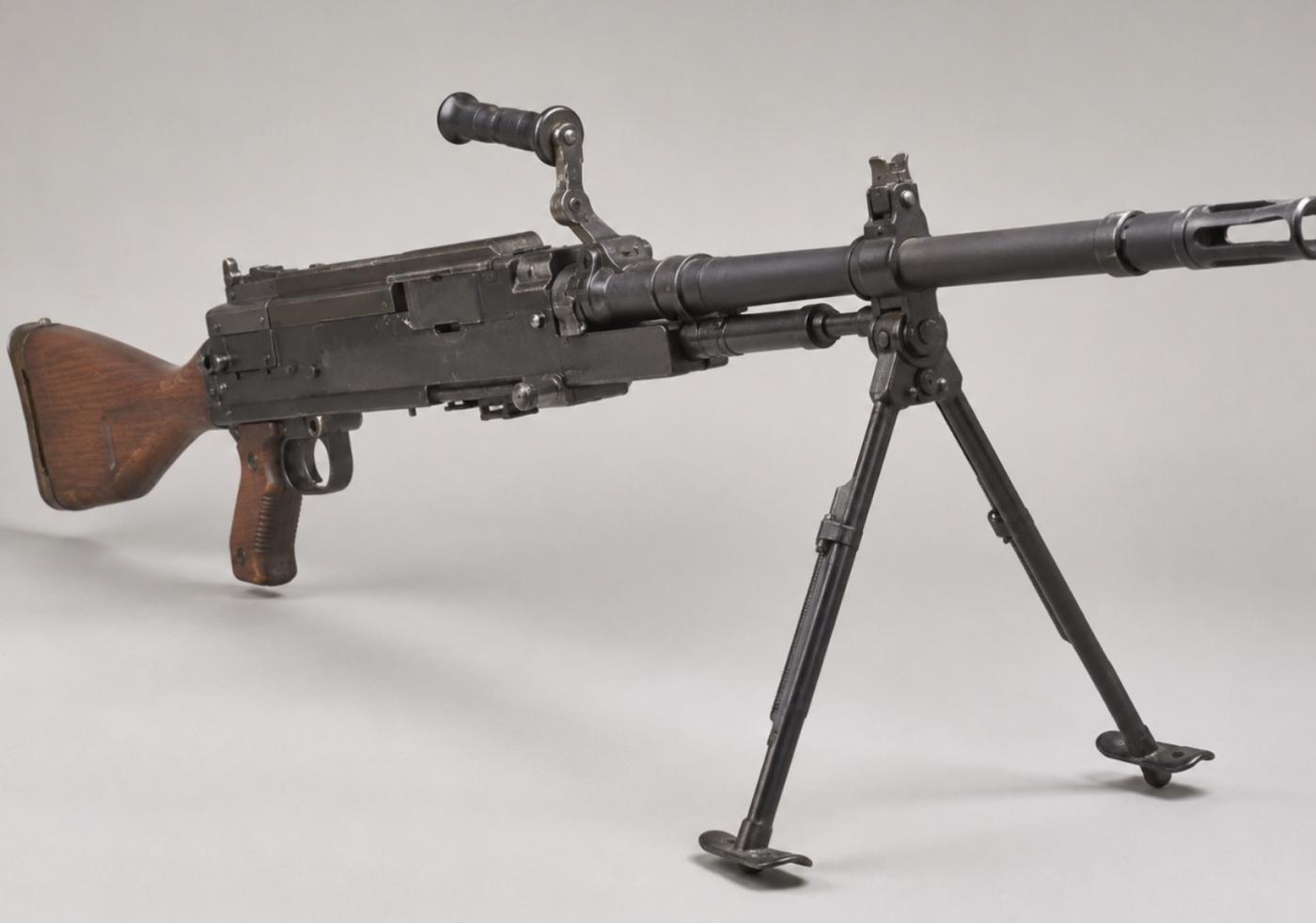
The Falklands-era Argentine gun had the classic Cold War appearance, with a dark metal receiver, long barrel, wooden buttstock, wooden pistol grip, carrying handle, top feed cover and front bipod. It was air-cooled, gas-operated and belt-fed, firing from an open bolt. The barrel could be changed during sustained fire, but in ordinary appearance it looked like a long fixed barrel running forward from the receiver. Its wooden furniture gave it a very distinctive look compared with later versions that used synthetic stocks and grips.
The calibre was 7.62×51 mm NATO, a full-power cartridge with strong range and penetration. Although called 7.62 mm, the bullet diameter was about 7.82 mm, with a case length of 51 mm. This round was far more powerful than lighter intermediate ammunition and was well suited to machine-gun fire across open ground. It could punch through cover better than smaller rounds and had a strong psychological effect, especially when fired in bursts from a well-sited position.
The usual cyclic rate of fire was around 650 to 1,000 rounds per minute, with many examples quoted at about 850 rounds per minute. In real fighting, a gunner would not normally hold the trigger down for long periods, because that would waste ammunition and overheat the barrel. Instead, the gun was fired in controlled bursts, enough to pin down enemy troops, cover friendly movement or sweep an exposed approach. A trained crew could make the weapon far more effective than its figures alone suggest.
Its effective range was roughly 800 metres from the bipod and about 1,200 metres from a tripod. The bullet could travel much farther than that, but practical accuracy depended on the mounting, the gunner, the wind, visibility and the condition of the weapon. In the Falklands, cold weather, darkness, rough ground and strong winds all mattered. The MAG’s value was not just in hitting single targets, but in dominating ground and making movement dangerous for enemy troops.
The gun was heavy, weighing around 11 kilograms before ammunition was added. Belts, spare barrels and other equipment made the load even greater, so it was normally served by more than one man. One soldier could fire it, but others were needed to carry ammunition and help keep the weapon supplied. This weight made it tiring to move across the Falklands terrain, but once set up it gave the gun stability and helped control recoil.
Argentine troops used the FN 58 in defensive positions around the islands, covering ridgelines, tracks, open slopes and likely British approaches. It was especially dangerous at night, when muzzle flashes, tracer and the sound of automatic fire could dominate a battlefield. A well-placed machine gun could slow an attack, force soldiers to take cover and give defenders time to move or reorganise. In battles such as Goose Green, Mount Longdon, Two Sisters and Wireless Ridge, Argentine automatic weapons formed a serious part of the defensive fire British troops had to overcome.
The British also used a close relative of the same weapon, the L7A2 GPMG, so both sides in the Falklands were familiar with this type of 7.62 mm machine gun. Captured Argentine MAGs were sometimes examined or reused because the basic system was already known to British soldiers. This says a lot about the design’s reputation. It was rugged, straightforward and effective, which is why it served with so many armies around the world.
The FN 58 was not a precision rifle, but it could be very accurate for a belt-fed machine gun when used properly. On the bipod it gave infantry sections strong direct fire. On a tripod it became steadier and more suitable for longer-range sustained fire. Its open-bolt system helped with cooling, its heavy barrel helped control heat, and its long sight radius helped the gunner aim. Accuracy still depended on short bursts, good positioning and a steady mount.
Ammunition supply was one of the most important parts of using it. A high rate of fire was useful only if enough belts were available. In fixed positions Argentine troops could store ammunition nearby, but during heavy fighting belts could disappear quickly. Crews also had to manage heat, because even a strong machine gun could suffer if fired too hard for too long. Barrel changes and fire discipline were essential.