
On this day in military history…
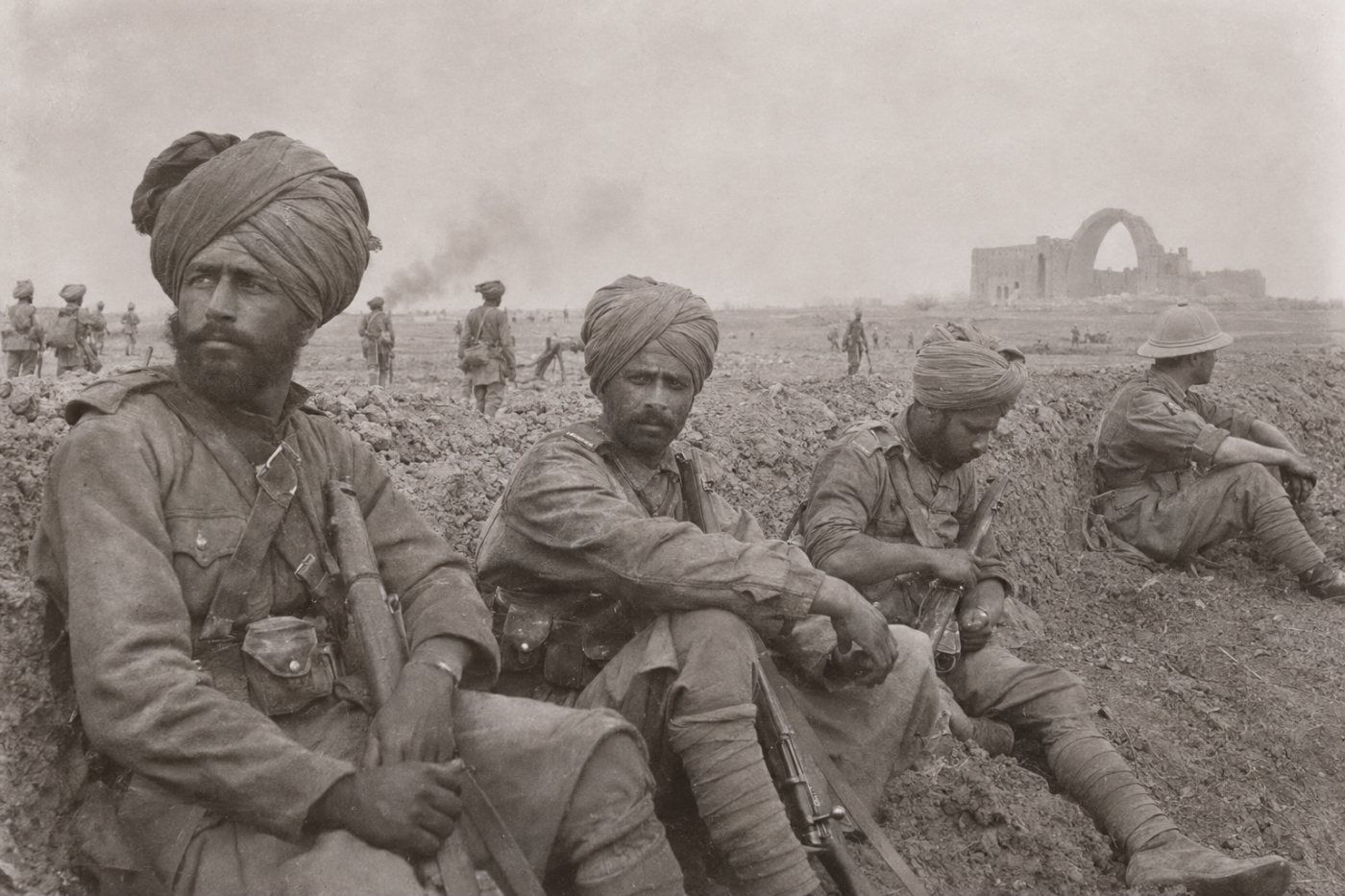
On 22 November 1915, British and Indian soldiers advanced across the open plains of Mesopotamia towards an entrenched Ottoman army near the ancient city of Ctesiphon. Baghdad lay tantalisingly close, but between the attackers and their objective stood a determined enemy whose resistance would bring the British advance to a bloody halt. Within days, hopes of a triumphant entry into Baghdad had given way to the struggle to bring a shattered division and its wounded back down the River Tigris.
The battle would become the turning point in a campaign that had begun with limited aims. It opened the road to the siege of Kut, where thousands of those who survived Ctesiphon would eventually march into captivity.
Britain’s original intervention in Mesopotamia, in what is now Iraq, had been intended to protect its interests around the head of the Persian Gulf, including the oil installations at Abadan. British and Indian troops landed in November 1914 and captured Basra. Further victories encouraged an advance inland, and a campaign intended to secure a strategically important area gradually expanded into a much more ambitious undertaking.
By the autumn of 1915, Baghdad had become the prize. Its capture promised prestige and a powerful demonstration of British strength in the Ottoman Empire. Yet every mile north increased the difficulty of supplying the army. The Tigris was its principal artery, but river transport was insufficient, communications were stretched and medical arrangements were already struggling to meet the demands placed upon them.
Major-General Charles Townshend commanded the 6th (Poona) Division, the formation at the heart of the advance. Its British and Indian battalions had fought hard during the preceding months, and their success encouraged confidence at higher headquarters. General Sir John Nixon, commanding British forces in Mesopotamia, pressed the campaign forward. Townshend had expressed concerns about the resources needed to take and hold Baghdad, but the advance went ahead.
The Ottoman commander, Nureddin, prepared to meet him near Ctesiphon, south-east of Baghdad. The enormous brick arch of the ancient Sasanian palace rose above the landscape, a surviving monument to an empire that had vanished centuries before. Around it, a modern army dug trenches and positioned guns to stop another imperial force.
The Ottoman defences extended across both banks of the Tigris. Successive trench lines, artillery and reserves gave the defenders depth, while the largely flat and exposed ground offered little protection to advancing infantry. Townshend could bring roughly 11,000 men into the battle, facing an Ottoman force that outnumbered his own. Earlier British successes were no guarantee that these positions would collapse.
Following a night approach, the attack began on 22 November. Townshend intended to engage the Ottoman front while directing a powerful movement against the enemy’s left flank. It was an attempt to repeat the kind of manoeuvre that had brought success earlier in the campaign, but it demanded close coordination across difficult ground against an enemy ready to fight.
As the infantry advanced, Ottoman rifle, machine-gun and artillery fire swept the plain. British and Indian soldiers pressed forward through the fire, losing officers and men as formations struggled to maintain direction and momentum. The battlefield became a series of fierce local struggles, with different columns encountering different levels of resistance.
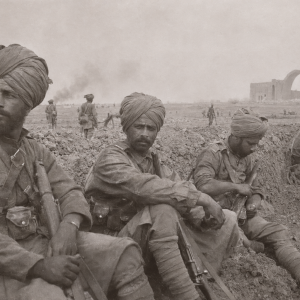
There were important gains. On the attacking right, Indian troops, including Punjabis and Gurkhas, broke into the forward defences. Elsewhere, British and Indian battalions fought their way into trenches at heavy cost. By the end of the first day, substantial parts of the Ottoman first line had been taken. The men had demonstrated extraordinary determination, but capturing the forward trenches had not broken the defending army.
Nureddin committed reserves and launched counter-attacks. His troops contested the British gains and prevented the attack from developing into a decisive breakthrough. Artillerymen worked their guns under dangerous conditions, while infantry units, already weakened by casualties, faced renewed assaults. The attackers had reached the limits of what their strength could achieve.
Fighting continued over the following days, leaving both armies exhausted. Ottoman losses were severe, but Townshend’s smaller force could less afford the damage. British and Indian casualties amounted to approximately 4,600 killed, wounded and missing, a devastating proportion of the men committed. Baghdad remained beyond reach, and there were too few fresh troops available to turn costly gains into victory.
For the wounded, the ordeal was only beginning. The medical services had neither the capacity nor the transport needed for casualties on this scale. Doctors, stretcher-bearers and orderlies worked amid overwhelming demand, but courage and dedication could not replace missing equipment, suitable boats or hospital accommodation. Moving the injured away from the battlefield became a desperate undertaking.
The battle had produced a strange and dangerous uncertainty. Both commanders had suffered heavily, and both considered withdrawal. For Townshend, however, remaining near Ctesiphon offered little prospect of success. His division was badly depleted, supplies were a continuing concern and further Ottoman pressure threatened its survival. He abandoned the advance and withdrew towards Kut.
The retreat demanded another effort from men already worn down by battle. The wounded had to be carried or transported over poor routes and along the river, while troops capable of fighting protected the withdrawal. Ottoman forces followed, turning the journey south into a continuing military operation. Reaching Kut in early December brought temporary shelter, but no lasting escape.
On 7 December 1915, Ottoman troops surrounded the town. Townshend’s decision to remain there placed his force inside a siege that British relief columns would repeatedly fail to break. Hunger, disease and shellfire weakened the defenders through the following months. On 29 April 1916, the garrison surrendered, beginning captivity from which many British and Indian soldiers would never return.
Ctesiphon deserves remembrance in its own right. Its story is often overshadowed by the surrender at Kut, yet it was on the exposed ground outside Baghdad that the campaign’s weaknesses became impossible to ignore. An advance had been pushed beyond the strength of its transport, medical support and available manpower, against an opponent whose ability to resist had been underestimated.
The men sent forward on 22 November had fought with courage. British regulars, Indian soldiers, Gurkhas, gunners, engineers and medical personnel endured a battle that demanded everything of them. Their sacrifice could not overcome the wider failures that had brought them there. Beneath the ancient arch of Ctesiphon, the promise of Baghdad gave way to a retreat, a siege and one of the most painful disasters in British military history.