On this day in military history…
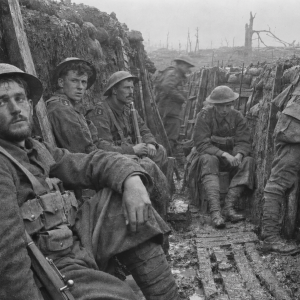
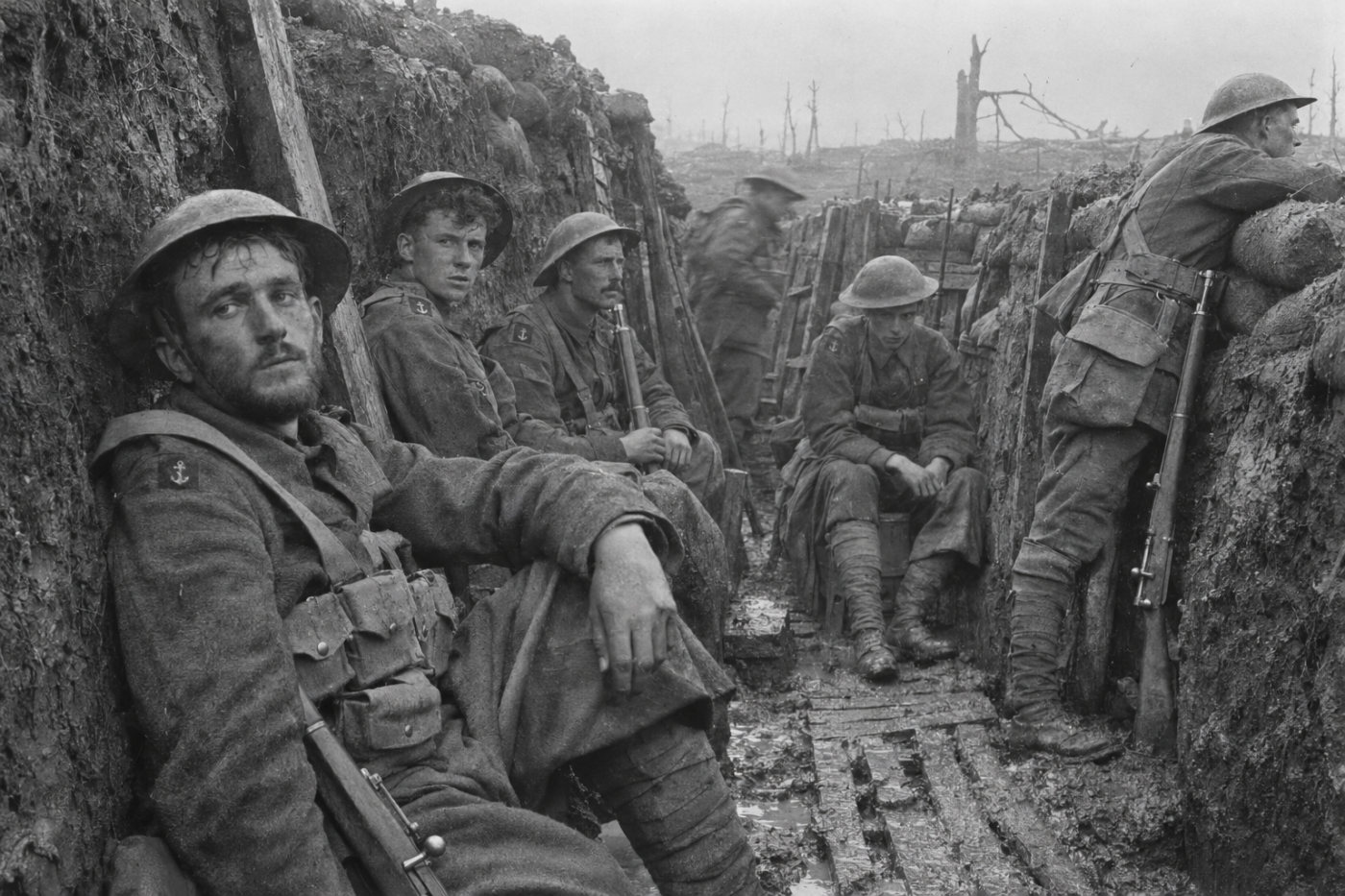
Before dawn on 13 November 1916, men of the Royal Naval Division waited in trenches beside the River Ancre in northern France. Ahead lay German positions and ground shattered by months of shellfire. Rain had filled the shell holes and turned the battlefield into deep mud. They were preparing to fight one of the final battles of the Somme, although many had joined a service expecting their war to be fought at sea.
Their unusual story began in 1914, when mobilisation produced more naval reservists than the fleet immediately needed aboard its ships. Winston Churchill, then First Lord of the Admiralty, backed using these men on land. Naval battalions were brought together with Royal Marines to create the Royal Naval Division. Fighting ashore was already part of the Marines’ role, but many reservists now found themselves learning to use rifles and bayonets, dig trenches and fight alongside the Army.
They became infantry while remaining proud of their naval identity. Battalions carried names such as Hood, Drake, Nelson and Hawke, while naval ranks, expressions and customs survived in everyday life. The division served at Antwerp in 1914 and Gallipoli in 1915 before reaching the Western Front in 1916. That year it passed to Army control and became the 63rd (Royal Naval) Division.
The Battle of the Ancre was the final major offensive of the Somme campaign, aimed at capturing German positions around Beaumont-Hamel and Beaucourt-sur-Ancre. Some of this ground had been an objective on 1 July, when the opening British attack suffered devastating losses. More than four months later, it remained in German hands.
At 5.45am on 13 November, the naval men climbed from their trenches and advanced behind an artillery barrage. Fog made direction difficult, while mud and shell holes slowed their progress. Hood and Drake battalions pushed forward, but Hawke and Nelson encountered a German strongpoint whose machine guns tore into their ranks. As casualties mounted, units became mixed together and scattered groups fought their way through the German defences.
Lieutenant Colonel Bernard Freyberg, commanding Hood Battalion, helped keep the advance moving. He rallied his men and others separated from their units, repeatedly leading them forward despite being wounded. On 14 November, the naval division captured Beaucourt and hundreds of German prisoners. Freyberg’s courage and leadership earned him the Victoria Cross. He would later command New Zealand troops during the Second World War.
Nearby, the 51st (Highland) Division had captured Beaumont-Hamel on the opening day, finally securing the ruined village that earlier attacks had failed to take. These successes came at a terrible price. The Royal Naval Division suffered nearly 4,000 casualties during the Ancre fighting, leaving its exhausted survivors mourning friends and comrades.
The battle ended on 18 November, bringing the Somme campaign to a close. Among those who fought in its final offensive were naval reservists whose service had taken an unexpected course. From Antwerp and Gallipoli to the mud of France, they fought as infantry while keeping their naval traditions alive, writing one of the most unusual chapters in the Royal Navy’s history.