
On this day in military history…
On 18 October 1942, Adolf Hitler issued one of the most notorious orders of the Second World War. Known as the Commando Order, or Kommandobefehl, it instructed German forces to kill Allied troops encountered on commando missions in Europe and Africa, even when they wore proper military uniform, were unarmed or attempted to surrender. Men who should have been protected as prisoners of war were instead marked for execution, with the chilling instruction that they were to be “slaughtered to the last man”. The order reflected Hitler’s growing alarm at the damage small raiding parties could inflict behind German lines. British commandos had demonstrated that carefully trained troops could destroy valuable installations and force the Germans to commit substantial resources to protecting occupied territory. In a secret explanation to senior commanders, he described attacks on communications, transport and industrial facilities as a serious threat to Germany’s ability to sustain the war.
One incident associated with the decision was Operation Basalt, a British raid on the occupied Channel Island of Sark during the night of 3–4 October 1942. The raiders captured German soldiers and bound their hands while attempting to take them back to the coast. Several prisoners were killed during incidents involving resistance or attempted escape, although important details remain disputed. The affair gave Hitler further material for his accusations that commandos mistreated prisoners, providing a pretext for a sweeping order against captured Allied raiding troops, regardless of their individual conduct. Its wording deliberately removed the safeguards normally afforded to surrendering soldiers. It made no difference whether a party had landed from the sea or arrived by air, and offering to surrender provided no protection. Men apprehended outside combat were to be handed immediately to the Sicherheitsdienst, the Nazi security service known as the SD, while holding them in military prisoner-of-war camps was expressly forbidden.
Commanders who failed to carry out the instructions were threatened with punishment under military law. Although extensive in scope, the directive contained exemptions for soldiers captured during ordinary large-scale battles, landing operations and airborne operations, as well as airmen escaping damaged aircraft by parachute. It was therefore not originally a blanket instruction to execute every captured Allied parachutist, but its wording left dangerous scope for German authorities to decide who qualified as a commando or saboteur. Secrecy surrounded its distribution, with supplementary instructions intended for commanders alone and copies to be returned and destroyed. Within the German Navy, subordinate formations were to receive the order verbally rather than through unrestricted written circulation. Behind these arrangements lay a policy requiring the killing of men who had ceased fighting and were already in custody.
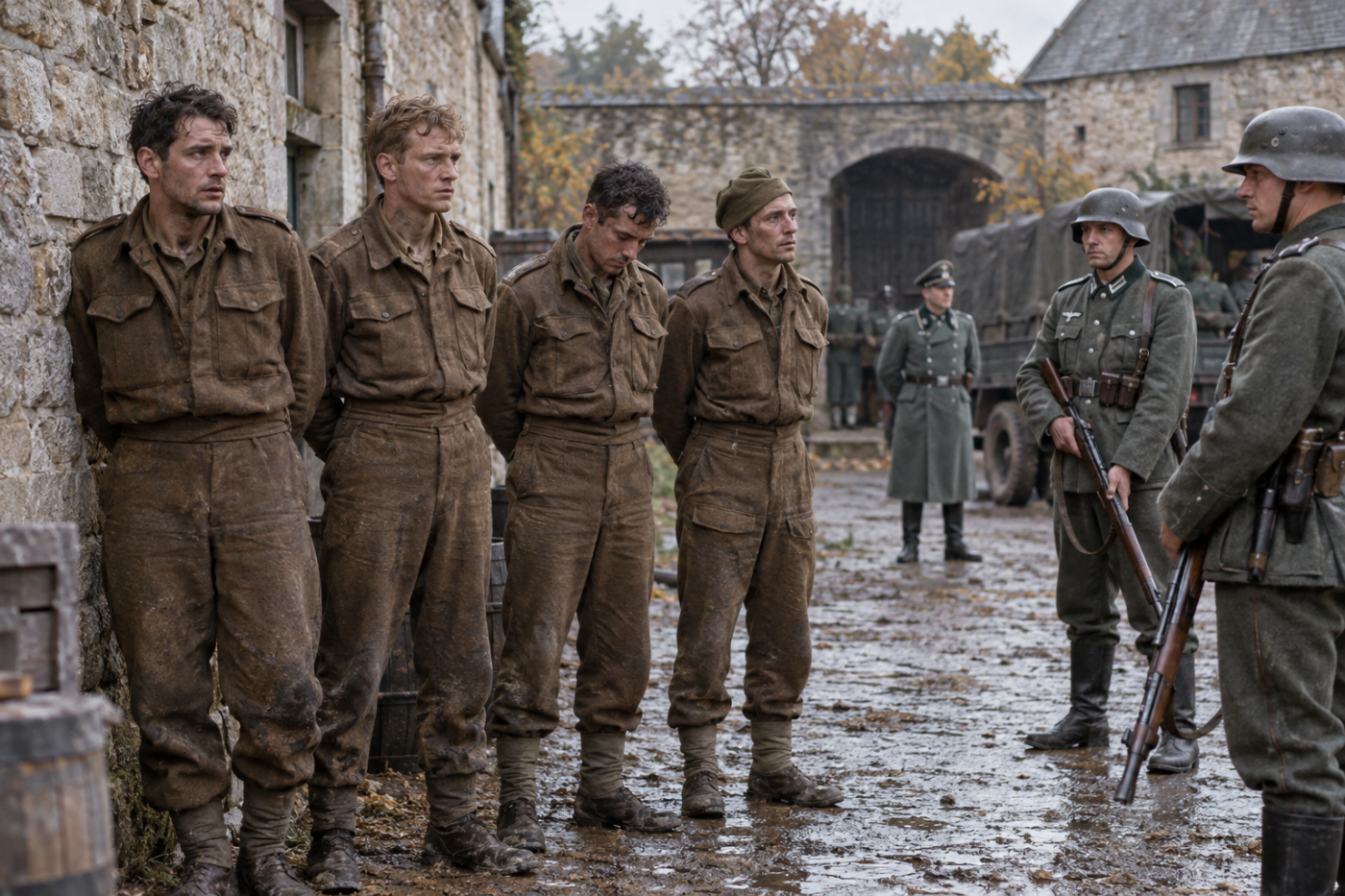
Among its earliest victims were seven men of No. 2 Commando captured following Operation Musketoon, a raid against the electricity-generating station at Glomfjord in German-occupied Norway in September 1942. The attack succeeded, but several raiders were taken prisoner during their withdrawal. Their capture occurred before the Commando Order was issued, yet this offered no protection. On 23 October, just five days after Hitler signed the directive, all seven were executed at Sachsenhausen concentration camp. Their commander, Captain Graeme Black, was among those murdered, along with Rifleman Cyril Abram, who was killed the day before his twenty-first birthday. They had survived the dangers of their mission and capture, only to be killed while helpless in German custody.
The order also claimed men involved in Operation Frankton, the daring canoe raid against shipping at Bordeaux in December 1942. Remembered as the Cockleshell Heroes, the Royal Marines paddled through the Gironde estuary to place explosive charges against vessels serving the German war effort. Those captured faced execution rather than the treatment due to uniformed prisoners. Documents later presented at the war crimes trials recorded the capture and killing of members of the force while acknowledging that others had reached Bordeaux and damaged shipping. Evidence also revealed efforts to withhold death notifications, leaving families uncertain about the fate of men who had already been murdered.
American troops also fell victim to the policy. On 26 March 1944, fifteen American soldiers captured near La Spezia in Italy were executed after General Anton Dostler ordered their shooting. The two officers and thirteen enlisted men had been sent to attack a railway connection behind German lines. At his post-war trial, Dostler argued that he had acted under Hitler’s Commando Order, but the military commission rejected that defence, convicted him and sentenced him to death. He was executed by firing squad on 1 December 1945, demonstrating that obedience to a superior’s instruction did not excuse the murder of prisoners. Even the Allied landings in France had failed to end the policy. In June 1944, German headquarters reaffirmed that it remained in force against sabotage and raiding parties, and captured men continued to face execution as Allied armies advanced across occupied Europe.
At the post-war trials, surviving orders, correspondence and reports exposed how these murders had been directed through military and security organisations. The evidence revealed the involvement of officers who transmitted, enforced and reported the executions, extending responsibility beyond those who pulled the triggers. The significance of 18 October 1942 lies in what Hitler’s signature meant for a soldier who laid down his weapon. Capture, which should have ended his part in the fighting, could instead become the beginning of a journey towards execution. The men of Musketoon, Frankton and other raiding operations already faced extraordinary dangers in carrying out their missions. The Commando Order added the deliberate threat of murder after surrender, and those killed under it deserve to be remembered both for their courage in action and for the injustice of their deaths.