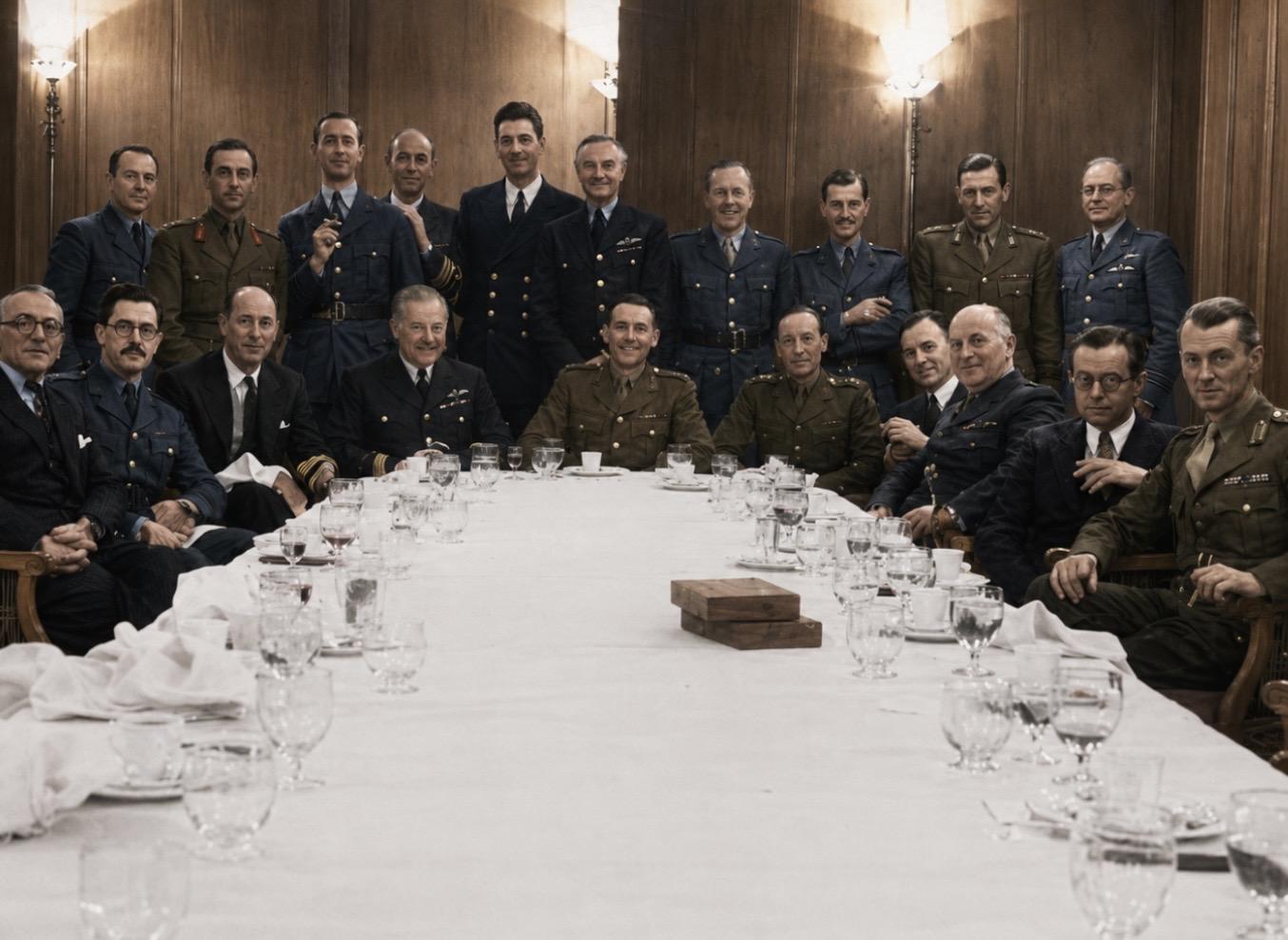
XX Committee
The XX Committee, usually called the Double-Cross Committee, was one of the most remarkable secret organisations of the Second World War. Its name looked mysterious, but it was really a joke with a deadly serious purpose. In Roman numerals, XX means twenty, but it also suggests a “double cross”. That was exactly what the committee existed to do: take German spies who had been sent to Britain, turn them into double agents, and use them to deceive Nazi Germany.
The committee was not a battlefield unit, and its members did not fight with guns, tanks or aircraft. Their weapon was information. More precisely, their weapon was false information made to look so convincing that the Germans would believe it. In the intelligence war, this was priceless. A bomb could destroy a target once, but a well-placed lie could misdirect divisions, aircraft, ships and strategic decisions across Europe.
The Double-Cross system grew out of MI5’s wartime counter-espionage work. When German agents arrived in Britain, they were often quickly detected, arrested or persuaded to surrender. Some were frightened, some were anti-Nazi, some were opportunists, and some simply realised that working for Britain was the only way to stay alive. Instead of merely imprisoning or executing them, MI5 began to see that these agents could be more useful if they were kept in contact with their German controllers. The Germans would think they still had spies operating in Britain, but in reality their messages would be controlled by British intelligence.
It would be wrong to say that the XX Committee was the idea of just one man. John Cecil Masterman, the Oxford historian, teacher, author and sportsman, became the famous chairman of the committee and later wrote the best-known account of its work. However, Masterman himself credited MI5 with originating the idea. The practical handling of the double agents was closely connected with MI5’s B1(a) section, led by Lieutenant Colonel T. A. “Tar” Robertson. Masterman’s role was to chair, organise, judge and coordinate. Robertson’s section dealt with the difficult daily business of finding, turning and running the agents themselves.
The committee began meeting in January 1941. Its meetings were held at 58 St James’s Street in London, an MI5 wartime address in the heart of the capital. This was a fitting location: respectable, discreet, close to Whitehall, and far removed from the dramatic image of spies in dark alleyways. Week by week, representatives of the security and intelligence world came together to decide what each double agent should tell the Germans. The work required calm judgement. The information had to be believable. It could not be so obviously false that German intelligence would become suspicious, but it also could not give away real Allied secrets.
The number of people involved is often misunderstood. The “Twenty” in Twenty Committee did not mean that exactly twenty people worked on it. It was a code-name and a pun. The committee itself was a small interdepartmental body, made up of intelligence, military and Allied representatives, while the wider Double-Cross system drew on a much larger hidden network. This included MI5 case officers, radio operators, postal censors, military intelligence officers, deception planners, codebreakers at Bletchley Park, and the double agents themselves. MI5 later described a series of about 120 wartime German agents who were turned into double agents. That figure refers to the controlled agents, not to the committee staff. The exact number of people working around the system changed over time, because the operation grew from counter-espionage into one of the great strategic deception machines of the war.
The early purpose of the system was defensive. Britain feared German spies would report troop movements, airfields, ports, factories, morale, shipping and weather. Weather was especially important because any invasion, bombing campaign or naval operation depended on it. Once MI5 could control the German agents, it could stop real secrets leaking out. At first the safest tactic was to feed the Germans “chicken feed”: small pieces of harmless, sometimes true information that made an agent look reliable. A spy who never sent anything useful would soon be doubted. A spy who sent small accurate details might earn trust. Once trust was built, the lies could become larger and more important.
This was the genius of the XX Committee. It did not simply invent stories at random. It built personalities, habits, excuses, delays, frustrations and apparent successes around each agent. Every message had to fit the agent’s character and supposed access. A double agent who claimed too much knowledge would look suspicious. One who occasionally made mistakes might seem more human. One who was sometimes late, confused or demanding might seem more real. The committee had to think not only about what it wanted the Germans to believe, but also about what the Germans already wanted to believe.
Some of the agents became famous. Juan Pujol García, known to the British as GARBO, was perhaps the greatest. He was a Spaniard who despised Nazism and had originally set out to fool the Germans even before he was properly taken into the British system. With his MI5 handler Tomás Harris, GARBO created an imaginary network of sub-agents supposedly scattered across Britain and beyond. The Germans believed this fantasy network was real. GARBO’s reports were so valued by his German handlers that they awarded him the Iron Cross, completely unaware that he was working under British control.
Another major agent was Dušan Popov, codenamed TRICYCLE, a Serbian businessman with charm, nerve and a complicated life. There was also Wulf Schmidt, codenamed TATE, who became one of the most trusted double agents in German eyes. Other colourful codenames included ZIGZAG, SNOW, TREASURE and BRUTUS. These names sound almost fictional, but the stakes were entirely real. Each agent was a channel into the German intelligence system, and every channel had to be protected.
The achievements of the XX Committee reached their peak in the deception plans before D-Day. By 1944 the Allies were preparing Operation Overlord, the invasion of German-occupied France. The real landing place was Normandy, but the Germans already suspected that the Pas de Calais, the narrowest part of the Channel, was a likely target. Allied deception planners decided to encourage that belief. This larger deception plan was called Operation Bodyguard, and one of its most important parts was Operation Fortitude.
The XX Committee’s double agents helped make Fortitude convincing. They sent messages suggesting that the main Allied invasion force was gathering in south-east England and would strike at Calais. This false picture was strengthened by other deception methods: dummy tanks, fake landing craft, false radio traffic and the supposed presence of General George Patton commanding a fictional First United States Army Group. The brilliance of the operation was that it did not ask the Germans to believe something totally new. It encouraged them to cling to what many of them already thought.
When the Allies landed in Normandy on 6 June 1944, the deception did not stop. In some ways, the most important lies came after the landings. The Germans had to be persuaded that Normandy was only a diversion and that the real blow would still fall at Calais. GARBO and other agents helped maintain this illusion. As a result, German forces that might have reinforced Normandy were kept waiting in the Pas de Calais area for a second invasion that never came. This did not make D-Day easy; the fighting was still terrible and costly. But it helped prevent Germany from reacting with full strength at the decisive moment.
The committee’s work was successful because it combined imagination with discipline. It was not enough to be clever. The false information had to match what aerial reconnaissance might see, what wireless intercepts might suggest, what German analysts expected, and what real Allied plans allowed. A lie that contradicted too much known evidence could ruin an agent. A lie that fitted too neatly might also look suspicious. The XX Committee operated in a world of careful balance, where one badly chosen sentence could endanger lives.
Bletchley Park’s codebreaking work gave the system an extraordinary advantage. Through intercepted and decrypted German communications, British intelligence could often see whether the Germans believed the double agents. This created a feedback loop. The British sent false information through controlled agents, then watched German reactions through intelligence intercepts. If the Germans swallowed the bait, the system could continue. If doubts appeared, the committee could adjust the story.
One of the most astonishing claims made by Masterman after the war was that Britain had “actively run and controlled the German espionage system” in the country. It sounds like boasting, but the evidence shows that the Double-Cross system really did give Britain a level of control over enemy espionage that was almost unbelievable. German intelligence thought it had agents in Britain. In reality, those agents were either imprisoned, dead, invented, or working under British direction.
The XX Committee also shows how modern war is fought far beyond the battlefield. The soldiers who landed on the Normandy beaches needed courage, training and equipment, but they also benefited from secret work done in offices, safe houses, wireless rooms and interrogation centres. The committee’s achievements were invisible at the time. Its members could not be publicly thanked. Its agents could not be celebrated. Even after the war, much of the story remained secret for years.
John Masterman eventually wrote The Double-Cross System in the War of 1939 to 1945, an official report that was later published and became one of the classic accounts of wartime deception. By then, the world could begin to understand how extraordinary the operation had been. It was a story of spies, but not in the usual glamorous sense. It was also a story of paperwork, patience, psychology, committee meetings, radio messages, invented details and the slow construction of believable falsehood.
The XX Committee helped the war effort by protecting Britain from German espionage, by turning enemy intelligence against itself, and by supporting the deception that made D-Day possible. Its greatest achievement was not simply that it fooled individual German officers, but that it helped shape German strategic belief. It made the enemy see what the Allies wanted them to see.
In the end, the Double-Cross system was one of Britain’s most successful secret weapons. It did not roar like a bomber or shake the ground like artillery. It worked quietly, through controlled messages and patient deception. Yet its effect was enormous. By helping to mislead Nazi Germany about Allied intentions, especially before and after D-Day, the XX Committee saved lives, protected operations and played a significant part in the liberation of Europe.