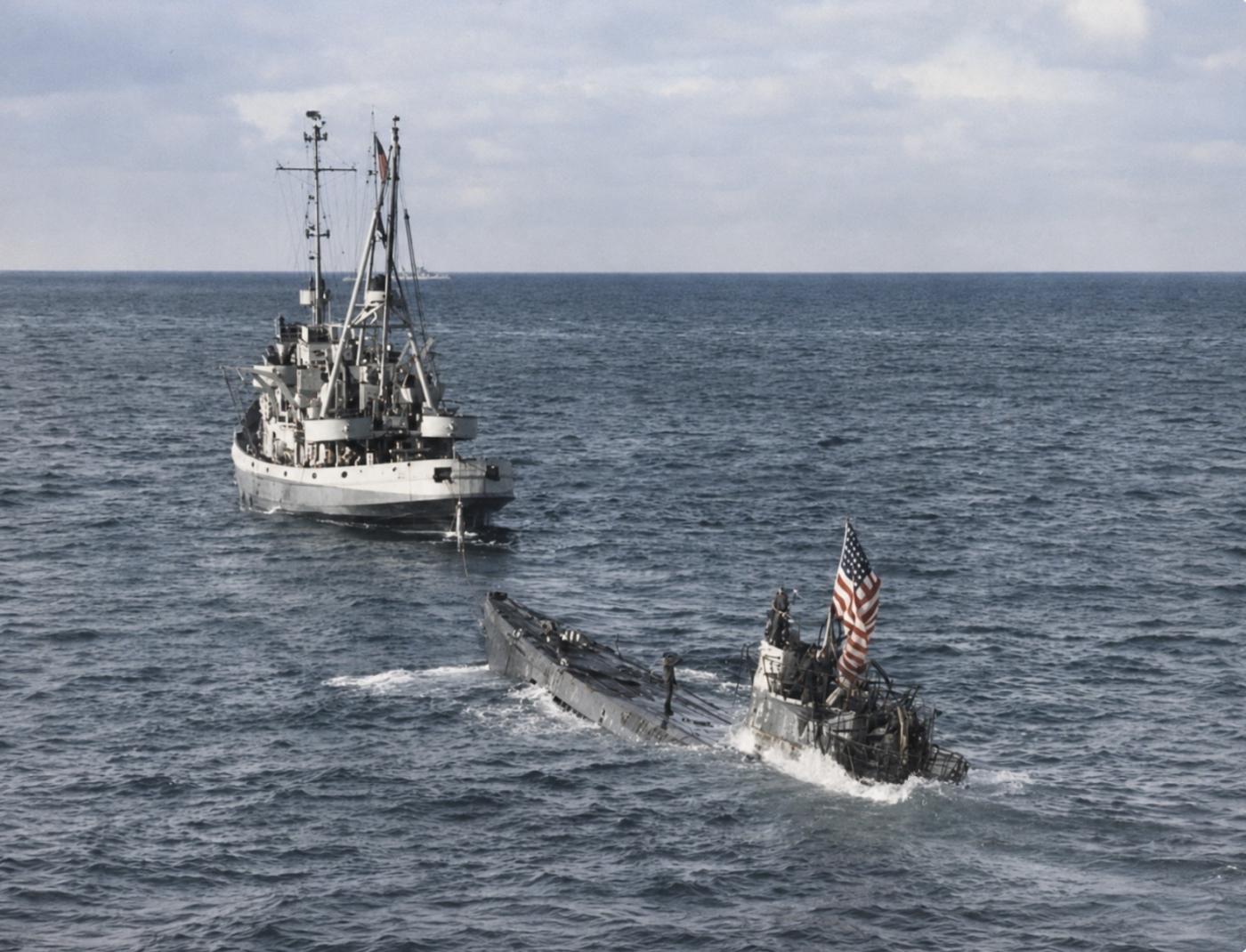
U-Boat Captured
On 4 June 1944, in the Atlantic Ocean off the west coast of Africa, American warships achieved one of the most unusual successes of the Second World War. They captured a German U-boat almost intact. This was not just another submarine sinking in the long Battle of the Atlantic. It was the first enemy warship captured on the high seas by the United States Navy since the War of 1812.
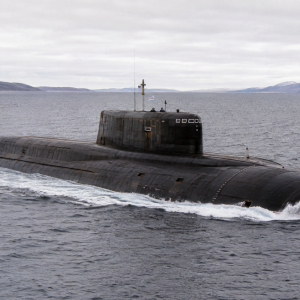
The submarine was U-505, a long-range Type IXC boat built for patrols far from Germany. She had already seen action in the Atlantic, where German U-boats had spent years trying to cut the supply routes between North America and Britain. These routes were vital. Across them came food, fuel, weapons, soldiers, aircraft parts, tanks, and almost everything else needed to keep Britain in the war and prepare for the invasion of Europe.
By 1944, the war at sea had changed. Earlier in the conflict, U-boats had often been able to strike suddenly and disappear into the ocean. Now the Allies had better radar, sonar, escort carriers, long-range aircraft, improved weapons, and far more experience. German submarines were still dangerous, but they were being hunted with growing skill and confidence.
The capture was planned and carried out by an American hunter-killer group under Captain Daniel V. Gallery. His force was centred on the escort carrier USS Guadalcanal, supported by several destroyer escorts, including USS Pillsbury, USS Chatelain, USS Pope, USS Flaherty, and USS Jenks. Their job was to search large areas of ocean and destroy German submarines before they could attack Allied shipping.
Gallery had an extra idea. He believed that if a U-boat could be damaged and forced to the surface, it might be possible to board it before it sank. This was a bold thought, because German crews were expected to destroy their boats rather than let them fall into enemy hands. A submarine might be flooding, on fire, booby-trapped, or still defended. Even so, Gallery had boarding parties trained for just such a moment.
On the morning of 4 June, the task group was operating near the Cape Verde Islands. The German boat, commanded by Oberleutnant Harald Lange, was submerged and trying to avoid detection. She had suffered a difficult service history, with damage, mechanical trouble, and morale problems on earlier patrols. Like many U-boat crews by this stage of the war, her men were under great strain.
The first clear contact came when USS Chatelain picked up the submarine on sonar. The destroyer escort moved in to attack while aircraft from Guadalcanal helped mark the position from above. This teamwork was important. The aircraft could spot signs on the sea and drop markers, while the ships below used sonar to follow the hidden target.
Chatelain attacked with depth charges. The explosions shook the submarine violently. Inside, lights failed, instruments were damaged, water began to enter, and confusion spread among the crew. The men below believed their boat had been badly hit and might be sinking. With the pressure rising and damage increasing, Lange decided to surface.
Once the submarine broke through the waves, the American ships opened fire. Their aim was to stop the Germans using their deck guns and force the crew to abandon ship, but not to smash the vessel so badly that she sank before she could be boarded. It was a difficult balance. Too little fire might allow resistance. Too much fire would destroy the very prize they hoped to capture.
The scene quickly became chaotic. The damaged boat was moving in circles because her steering had been affected. German sailors rushed out and jumped into the sea. Lange was wounded. As the crew abandoned ship, attempts were made to scuttle the submarine by opening valves and leaving her to flood. That was standard practice. If capture seemed possible, the boat had to be sent to the bottom.
For the Americans, the next few minutes were decisive. If they waited too long, the submarine would sink. USS Pillsbury moved close, and a boarding party led by Lieutenant Albert L. David crossed over. It was an extremely brave act. The men did not know whether explosives had been set, whether armed Germans remained inside, or whether the submarine might suddenly roll over or go down beneath them.
David and his men entered through the conning tower hatch. Inside, it was dark, damaged, and dangerous. They had to move through narrow compartments packed with machinery, pipes, valves, batteries, torpedoes, and electrical equipment. They were in an enemy vessel they barely knew, and every minute mattered.
Their first task was to stop the flooding. They found open valves and worked to close them. They looked for demolition charges and disconnected them. They gathered secret papers, code material, charts, and equipment before these could be destroyed or lost. More American sailors followed to help bring the situation under control.
The boarding party succeeded. The submarine stayed afloat. Although damaged and difficult to handle, she was no longer sinking. A tow line was eventually attached, and the captured boat was taken in hand by the task group. What had started as an anti-submarine attack had turned into a rare and valuable capture.
The prize was important for more than its steel hull. Inside were codebooks, documents, charts, and Enigma-related material. By 1944, Allied codebreakers were already reading much German naval traffic, but captured material could still be extremely useful. It helped confirm German procedures, supported intelligence work, and gave the Allies a close look at enemy equipment.
Secrecy now became vital. If Germany discovered that one of its submarines had been taken intact, naval command might change codes and operating methods. That could have damaged Allied intelligence just as the invasion of Normandy was about to begin. For that reason, the captured German crew were kept apart from other prisoners and were not allowed to send messages home that might reveal what had happened.
The timing made the event even more striking. The capture took place only two days before D-Day, when Allied troops landed in Normandy on 6 June 1944. While the world’s attention was about to turn to the beaches of France, a major intelligence success had just taken place far out in the Atlantic.
Captain Gallery’s planning had made the operation possible, but the courage of the boarding party made it real. Lieutenant Albert L. David later received the Medal of Honor for his actions. He became the only sailor of the United States Atlantic Fleet to receive that award during the Second World War. Other members of the boarding and support teams were also decorated.
After the capture, the submarine was secretly towed across the Atlantic and eventually taken to Bermuda, where intelligence specialists examined her in detail. The whole affair was kept quiet until after the war. The United States Navy did not want the Germans to know that the vessel and her secrets had fallen into Allied hands.
The episode showed how far the Battle of the Atlantic had turned in favour of the Allies. In the early years, U-boats had been feared for their ability to attack and vanish. By mid-1944, they were being hunted by aircraft, escort carriers, destroyer escorts, radar, sonar, and intelligence networks. The ocean was no longer the safe hunting ground it had once been.
After the war, the captured submarine survived when many others were scrapped. She was eventually moved to the Museum of Science and Industry in Chicago, where she became one of the most famous preserved submarines in the world. Visitors can still see the cramped conditions in which German submariners lived and fought.