Rear Admiral Kakuji Katuta
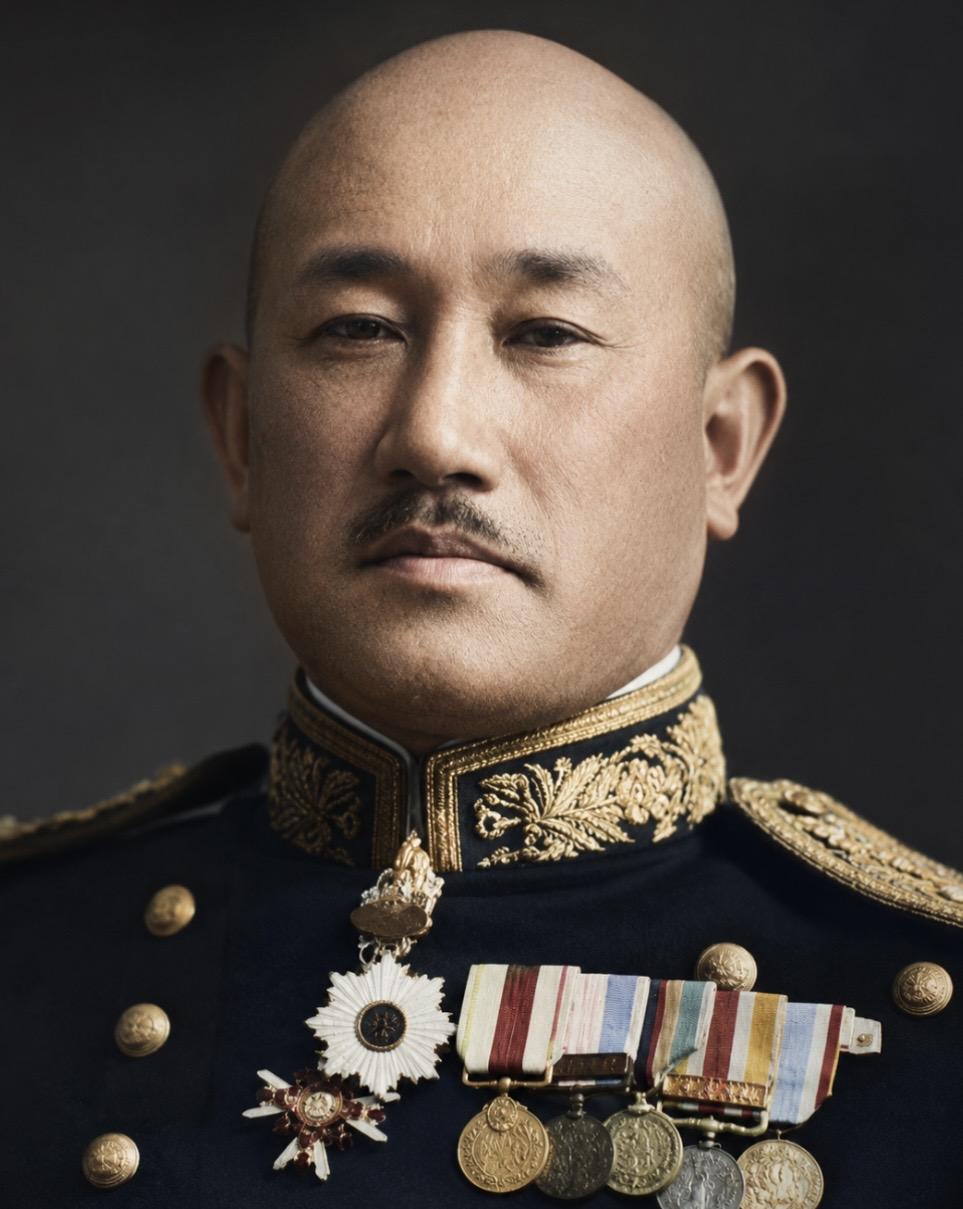
Kakuji Kakuta was one of the more aggressive air commanders of the Imperial Japanese Navy during the Second World War. Although he is often remembered as a rear admiral because he held that rank during several of his best-known operations, he later rose to vice admiral and became closely associated with Japan’s carrier and land-based naval air forces. His career reflected the transformation of the Japanese Navy from a battleship-centred force into one that increasingly relied on aircraft carriers, naval aviation, and long-range air power. His record contained moments of tactical success, but it also ended in the disaster that overtook Japan’s air arm in the central Pacific.
He was born on 23 September 1890 in Niigata Prefecture, a rural region on the Sea of Japan coast. Like many young men who entered the Imperial Japanese Navy in the late Meiji period, he joined an institution that had gained enormous prestige after Japan’s victory in the Russo-Japanese War of 1904–1905. The navy was expanding, modernising, and training a generation of officers who believed that discipline, technical skill, and offensive spirit were essential to Japan’s future security. He entered the Imperial Japanese Naval Academy at Etajima and graduated in 1911 as part of the 39th class. His class produced several officers who would later serve in senior positions during the Pacific War.
His early naval service followed the normal pattern for a promising line officer. He served as a midshipman aboard major warships, gaining experience in seamanship, gunnery, ship handling, and the routines of fleet life. These assignments were important because the Imperial Japanese Navy placed great value on practical service at sea before an officer could be trusted with command. He served on cruisers and capital ships, including vessels used for training and long-distance deployments. During the First World War, Japan fought on the Allied side, and although the Pacific and Asian naval campaigns were limited compared with the later world war, the period gave Japanese officers useful experience in patrol, escort, occupation, and fleet organisation.
In the years after the First World War, he continued to build a reputation as a capable professional officer. His early specialisation was not aviation but gunnery, which was still the central fighting skill of the navy in the 1910s and 1920s. He served as a gunnery officer and later held staff and equipment posts. This background mattered because the navy’s senior leadership still judged officers by command ability, technical competence, and capacity to manage complex shipboard organisations. He attended the Naval Staff College, another important step in the career of officers marked for higher responsibility. The college prepared officers for operational planning and staff work, and graduation helped open the way to more senior commands.
His rise through the ranks was steady. He became a lieutenant commander after staff college training and later served in a series of staff and sea assignments. His first major commands came in the 1930s, when he commanded cruisers before moving on to larger warships. He commanded the cruiser Kiso and later the heavy cruiser Furutaka. He also commanded battleships, including Yamashiro and Nagato. These commands showed that he was trusted with important units at a time when battleships were still symbols of national power. His promotion to rear admiral came on 15 November 1939, just over two years before Japan entered the Pacific War against the United States, Britain, and the Netherlands.
By the time the Pacific War began in December 1941, he had moved into the world of naval aviation. This was significant because Japanese naval strategy had changed dramatically. The aircraft carrier was no longer merely a scouting or support vessel; it had become the main striking arm of the fleet. He commanded Carrier Division 4, which included the light carrier Ryūjō. His division supported Japanese operations in the Philippines, where Japanese forces moved quickly against American and Filipino positions after the opening attacks of the war. Carrier aircraft were used to cover landings, attack enemy airfields, and prevent Allied forces from interfering with Japan’s rapid advance across Southeast Asia and the western Pacific.
His early wartime service came during the period of Japan’s greatest successes. In late 1941 and early 1942, Japanese forces captured or overran much of the Philippines, Malaya, Singapore, the Dutch East Indies, and numerous island positions. Carrier and land-based aircraft played a decisive role in this expansion. His carrier group was not the most famous part of the Japanese carrier force, but it contributed to the wider campaign by providing flexible air support. His work in these months showed the value of smaller carriers in secondary operations, freeing the main carrier striking force for larger missions.
One notable early mission was connected with the Indian Ocean Raid in 1942. This operation was designed to strike British naval power in the Indian Ocean, disrupt Allied communications, and demonstrate that Japan could threaten British bases in Ceylon and the surrounding region. The raid was a major Japanese success in operational terms. British ships and aircraft were destroyed, and the Royal Navy was forced to operate more cautiously in the eastern Indian Ocean. His participation in this wider operation placed him within Japan’s most successful phase of carrier warfare, when Japanese aviators were experienced, confident, and often technically superior to their opponents.
His most famous independent command in 1942 came during the Aleutian operation, which was linked to the Battle of Midway. While Admiral Isoroku Yamamoto’s main plan aimed to draw out and destroy the American Pacific Fleet near Midway, Japanese forces also moved against the Aleutian Islands in the North Pacific. As commander of the Second Carrier Striking Force, including Ryūjō and Junyō, he led attacks against Dutch Harbor in Alaska in June 1942. Japanese aircraft struck U.S. installations there on 3 and 4 June. The raid caused damage and alarm, and it supported the occupation of Attu and Kiska, the only parts of U.S.-claimed territory occupied by Japanese forces during the war.
The Dutch Harbor attack was a tactical success in the limited sense that Japanese aircraft struck their targets and helped cover Japan’s Aleutian advance. It also forced the United States to devote attention and resources to the North Pacific. However, the operation did not change the outcome at Midway, where Japan lost four fleet carriers and many experienced aircrew. In strategic terms, the Aleutian move was a diversion that could not compensate for the catastrophe suffered by the main Japanese carrier force. Still, his handling of the northern carrier force confirmed his reputation as an energetic and aggressive commander.
After Midway, Japan faced the difficult task of continuing offensive operations with a damaged carrier arm. He later commanded carrier forces including Junyō and Hiyō, and became involved in the bitter struggle around Guadalcanal. This campaign, fought from August 1942 into early 1943, was one of the turning points of the Pacific War. Japanese naval aviation was repeatedly committed to long-range attacks, carrier battles, and attempts to support army forces fighting on the island. His air groups took part in operations connected with the Battle of the Santa Cruz Islands in October 1942 and the wider naval battles around Guadalcanal.
The Battle of the Santa Cruz Islands was one of the last carrier battles in which Japan could still mount a powerful challenge to the U.S. Navy. Japanese aircraft helped damage the carrier USS Enterprise and sink the carrier USS Hornet. From a narrow tactical perspective, the battle appeared to be a Japanese success because the Americans lost a fleet carrier and suffered heavy damage. His carrier aircraft formed part of the striking power that made this possible. Yet the battle also cost Japan many trained aircrew, and those losses were harder for Japan to replace than ships. The United States could build new carriers and train new pilots at a pace Japan could not match.
He was promoted to vice admiral on 1 November 1942. This promotion came at a time when Japan still hoped to regain the initiative in the South Pacific, but the balance was already shifting. The long Guadalcanal campaign drained Japanese naval air strength. Experienced pilots were lost in combat, aircraft production struggled to keep pace, and fuel shortages limited training and operations. His later career must be understood against this background. He remained an important commander, but increasingly had to work with declining resources.
In July 1943 he was appointed to command the First Air Fleet. This was an important but difficult post. Earlier in the war, the name First Air Fleet had been associated with Japan’s elite carrier striking force, but by 1943 the organisation had been reshaped around land-based naval aviation spread across the Philippines, the Marianas, and other central Pacific bases. His headquarters was eventually located on Tinian in the Mariana Islands. His task was to prepare land-based aircraft to support Japan’s defensive perimeter and to strike American forces as they advanced across the Pacific.
This command placed him at the centre of Japan’s attempt to use island air bases as unsinkable aircraft carriers. In theory, the Marianas, Carolines, and other island groups could provide overlapping air power against approaching U.S. fleets. In practice, Japan’s air units were increasingly vulnerable. American carrier task forces could launch massive raids against Japanese bases, destroying aircraft on the ground and killing pilots before they could influence a major battle. Maintenance, fuel supply, radar, pilot training, and coordination all became serious problems for Japan.
The First Air Fleet suffered heavily during American carrier raids in early 1944. By the time the United States moved against the Marianas in June 1944, its air strength had been badly reduced. During the Battle of the Philippine Sea, Japanese planners expected land-based aircraft under his command to weaken the American carrier forces before Vice Admiral Jisaburō Ozawa’s Mobile Fleet attacked. This expectation proved unrealistic. American raids, superior radar direction, fighter control, pilot training, and anti-aircraft defences devastated Japanese air attacks. The battle became known to American pilots as the “Great Marianas Turkey Shoot” because so many Japanese aircraft were destroyed.
His role in the Philippine Sea campaign was therefore marked less by success than by the collapse of the system he had been ordered to command. He was not solely responsible for that failure. The causes lay in Japan’s wider strategic situation: attrition of veteran aircrew, inadequate pilot replacement, fuel shortages, weak radar networks, poor coordination between land-based and carrier aviation, and the overwhelming growth of American naval power. Nevertheless, the First Air Fleet failed to deliver the decisive support Japanese commanders had expected. The result was a crippling defeat for Japanese naval aviation.
His final days were spent on Tinian. After the American invasion of the Marianas, Tinian became one of the next targets following Saipan. He was the senior naval officer on the island, although the island’s ground defence was not entirely under his direct control. As American forces closed in, Japanese command and communications broke down. He and members of his staff reportedly attempted to escape by rubber boat to rendezvous with a submarine, but these attempts failed. He disappeared during the final phase of the battle and is generally believed to have committed suicide around 2 August 1944. His body was reportedly buried secretly by members of his staff.
Kakuji Kakuta’s career illustrates both the rise and destruction of Japanese naval air power. In the early war, he commanded carrier units during Japan’s rapid expansion and took part in operations that demonstrated the reach and effectiveness of Japanese aviation. His attacks at Dutch Harbor, his part in the Indian Ocean operations, and his contribution to carrier fighting around Guadalcanal showed energy, confidence, and tactical aggression. Yet his later command of the First Air Fleet exposed the limits of Japan’s wartime system. Courage and offensive spirit could not make up for the loss of trained pilots, the weakness of replacement programmes, the shortage of fuel, and the overwhelming industrial power of the United States.
His successes were real but limited. He helped provide air cover for Japanese advances, led a successful raid against Dutch Harbor, and contributed to the damaging of American naval forces during the hard-fought carrier battles of 1942. However, the larger arc of his career moved from expansion to attrition and finally to defeat. By the time he died on Tinian, the Imperial Japanese Navy’s air arm had lost the initiative it had held at the beginning of the war. He remains a significant figure because his service connects many of the central episodes of Japanese naval aviation: the early carrier offensives, Midway’s northern diversion, the Guadalcanal carrier battles, the defence of the Marianas, and the final ruin of Japan’s trained naval air forces.