Q Ships
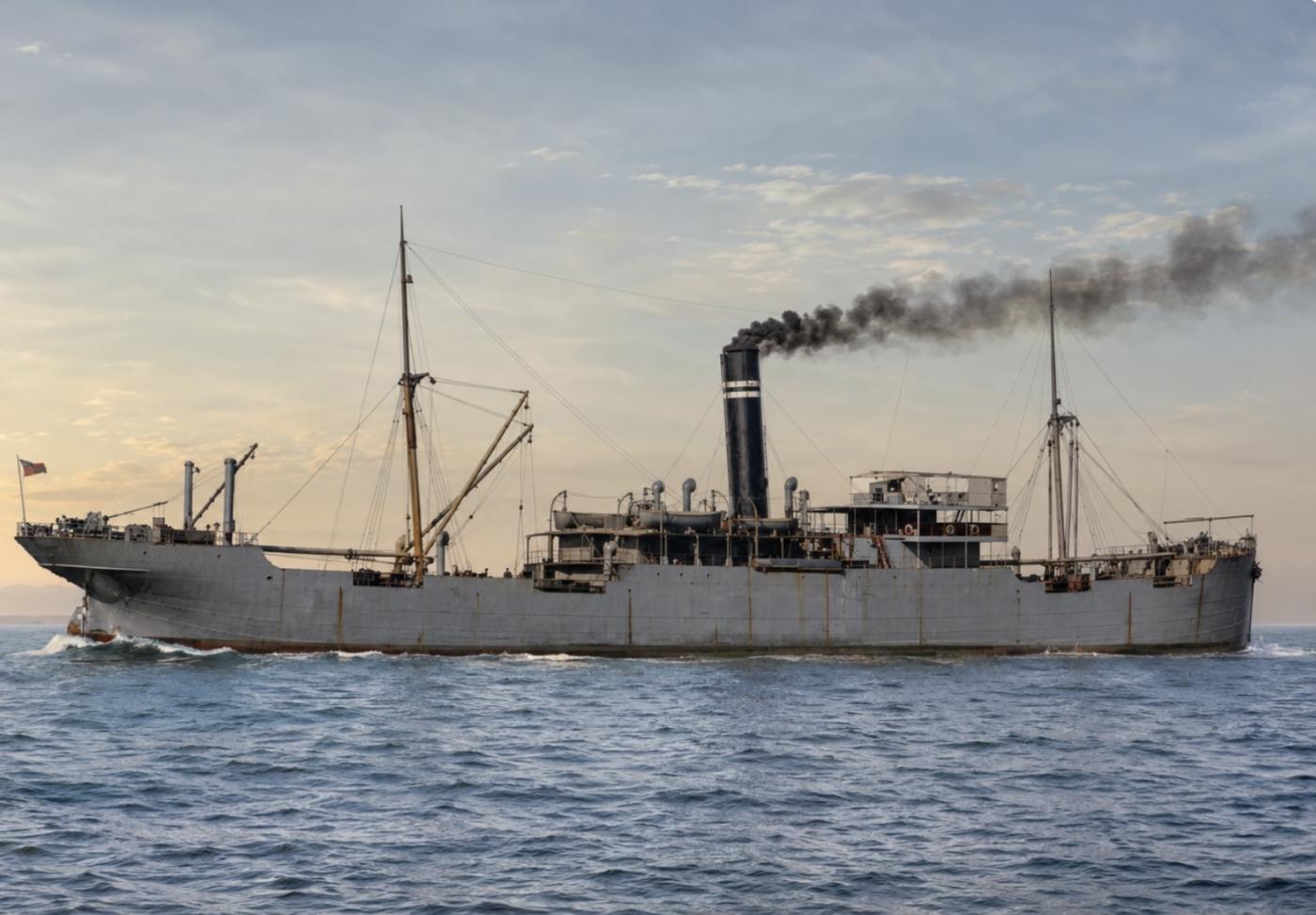
The Q-ships were one of the strangest British naval ideas of the First World War: ordinary-looking merchant ships, trawlers, colliers, schooners and small steamers secretly turned into armed traps for German U-boats. They were also called “mystery ships”, “decoy ships” or “Special Service” vessels. Their purpose was simple but dangerous: look helpless, lure a submarine to the surface, then suddenly reveal hidden guns and open fire.
The basic idea was not entirely new. Ships had used disguise, false flags and concealed strength for centuries. What was new in 1914–18 was that the Royal Navy organised it as a secret anti-submarine system against U-boats.
The person most often credited with starting the organised British Q-ship scheme was Winston Churchill, who was First Lord of the Admiralty at the start of the war. On 26 November 1914 he sent instructions calling for a small or medium steamer to be secretly fitted with concealed guns, manned by disguised naval men, and used to trap a German submarine. Soon after, the Admiralty ordered its first decoy ship.
The name “Q-ship” is usually linked to Queenstown, now Cobh, in Ireland. Queenstown was an important naval base, and many of these vessels operated from or were associated with it. Haulbowline Dockyard in Cork Harbour converted many mercantile steamers into armed decoy ships, although many conversions were also done in larger naval dockyards such as Devonport.
There is no single neat total, because historians count different categories differently. One figure gives 58 merchant ships converted into Q-ships, with 18 of those lost to U-boats. In addition, there were 40 Flower-class sloops and 20 PC-boats associated with Q-ship work, some built or completed to look like innocent coastal vessels rather than normal warships. Another broader count gives at least 157 named submarine decoy vessels converted from other types of ship, plus around 10 unnamed vessels. Because of those different definitions, the safest answer is that Britain used roughly 200 Q-ship or Q-ship-type vessels during the First World War, but only part of that total were ordinary merchant ships converted after purchase or requisition.
The conversions were carried out under Admiralty direction by Royal Navy dockyards and naval authorities. Haulbowline at Queenstown was important, but Devonport and other larger yards did much of the work. The vessels chosen were usually deliberately dull: tramp steamers, colliers, fishing vessels, sailing ships, luggers and small cargo ships. A perfect Q-ship was not grand or fast. It needed to look forgettable, slightly shabby and genuinely commercial. If it looked too valuable or too large, a U-boat might torpedo it from a distance. If it looked like a modest merchantman, the U-boat commander might save torpedoes and surface to sink it with the deck gun.
The work done to them was ingenious. Guns were installed behind false panels, fake deck cargo, hinged bulwarks, dummy lifeboats, collapsible deckhouses, crates, hen-coops or screens. A ship might carry twelve-pounder guns, smaller quick-firing guns, Maxim machine guns, depth charges and later even torpedoes. HMS Farnborough, originally the collier Loderer, carried three twelve-pounder guns and a Maxim gun, all hidden under false fittings such as cargo crates, dummy lifeboats and hinged structures.
Some Q-ships had their holds packed with timber or other buoyant material so that, even if torpedoed, they might stay afloat long enough to fight. That was vital, because the most dramatic Q-ship actions often began with the ship being genuinely hit. The trick was to look mortally wounded while the hidden gun crews remained at their stations.
The disguise went beyond the ship itself. Naval uniforms were banned on board. Even naval underwear hanging out to dry might give the game away. Men were given money to buy civilian clothes, and the crews had to behave like merchant seamen. Ships changed names, paint schemes and apparent identities. A Q-ship might leave one port under one name and arrive elsewhere looking like a different vessel.
The acting was as important as the engineering. When a U-boat appeared, part of the crew formed a “panic party”. They would rush about, shout, lower boats badly, and pretend to abandon ship in fear. The idea was to convince the submarine commander that only frightened merchant sailors remained and that the ship was safe to approach. Meanwhile, the real gun crews stayed hidden, often in great discomfort and danger, waiting for the order to reveal the guns.
Once the submarine came close enough, the Q-ship would drop its disguise. False sides fell away, hidden guns appeared, and the White Ensign was hoisted before firing, because a warship was supposed to show its true colours before opening fire. The aim was to hit the submarine before it could dive. This was harder than it sounds. A U-boat’s conning tower was visible, but the hull and ballast tanks were the vital targets, and much of the hull was under water.
The first clear unassisted Q-ship success came on 24 July 1915, when Prince Charles, commanded by Lieutenant William Mark-Wardlaw, destroyed U-36. The crew even received a £1,000 award to share. Another remarkable early success involved Inverlyon, a small sailing vessel armed with a single three-pounder gun, which sank UB-4 at close range near Great Yarmouth.
The most famous Q-ship officer was Gordon Campbell. He commanded several mystery ships, including Farnborough and later Dunraven, and became one of the great public heroes of the Q-ship war. His actions showed both the courage and the grimness of the method. In one action, Farnborough was torpedoed and badly damaged, but Campbell maintained the deception until the submarine came close enough to be attacked.
Q-ships were dangerous not only for the enemy but for their own crews. The men sometimes had to remain hidden while their ship was shelled or torpedoed. If they revealed themselves too early, the U-boat might dive and escape. If they waited too long, the Q-ship might sink under them. They also carried larger crews than normal merchant ships, because they needed naval gunners, signalmen, engineers and men for the theatrical “abandon ship” routine.
There were also darker episodes. The Baralong incident in August 1915 badly damaged the reputation of the Q-ships. Baralong, commanded by Lieutenant Commander Godfrey Herbert, sank U-27 while it was attacking merchant shipping, but German survivors were later killed in controversial circumstances. Germany accused Herbert and his crew of murder. The affair made Q-ships notorious and helped convince U-boat commanders that apparently harmless ships might be deadly traps.
Their best period was early in the war, especially 1915, when U-boat commanders were still more willing to surface and use gunfire. During 1915, 29 Q-ships entered service, including steamships, fishing vessels and sailing craft. But the more the Germans learned, the less effective the trick became. U-boat commanders grew suspicious and increasingly used torpedoes without warning or shelled from a distance.
By 1917, unrestricted submarine warfare changed the situation. German submarines were less likely to follow old prize rules, stop ships, inspect papers, or allow crews to abandon ship. That made the Q-ship idea less useful. The introduction of the convoy system in 1917 also reduced the independent hunting role of mystery ships. Convoys, escorts, depth charges, mines and patrol aircraft became more important anti-submarine weapons.
The results are debated. One source credits Q-ships with 14 submarines destroyed at a cost of 27 Q-ships lost. Broader estimates suggest British Q-ships destroyed or helped destroy about 12 to 15 U-boats and damaged many more, while losing somewhere between 27 and 38 Q-ships depending on how losses are counted. That means they were brave and imaginative, but not the decisive answer to the U-boat threat.
Their real importance was partly psychological. To British readers, they became symbols of cunning and courage: scruffy little ships with hidden teeth. To German submariners, they created doubt. Every harmless tramp steamer might be a trap. That suspicion may have made U-boat commanders more cautious, but it also helped make submarine warfare harsher, because commanders became less willing to surface, warn ships, or give crews time to escape.
One of the most interesting details is how theatrical the whole business became. Crews rehearsed their panic routines. Some deliberately lowered boats clumsily. Some carried props to make the scene convincing. One famous detail was the use of a stuffed parrot in a cage, supposedly carried away by the panic party to make the fake abandonment look more natural.
So the Q-ship was not really one invention by one man. It was an old maritime trick adapted to modern submarine warfare. Churchill helped launch the organised British scheme in late 1914; the Admiralty developed it; Royal Navy dockyards and bases such as Haulbowline and Devonport converted the ships; and officers such as Gordon Campbell turned the idea into a deadly, theatrical and very dangerous form of sea warfare. The Q-ships were not the most successful anti-submarine weapon of the war, but they remain among the most fascinating: merchant ships pretending to be victims, armed like traps, crewed by actors with guns, waiting for the moment when a hunted ship suddenly became the hunter.