Princess Patricia’s light infantry
Princess Patricia’s Canadian Light Infantry, often shortened to PPCLI and commonly known as the Patricias, is one of the best-known infantry regiments in the Canadian Army. It was formed at the very beginning of the First World War and has served Canada for more than a century in some of the most important conflicts and military operations in Canadian history.
The regiment was officially authorized in Ottawa, Ontario, on 10 August 1914, only days after Britain and Canada entered the First World War. Its first parade took place at Lansdowne Park in Ottawa on 23 August 1914. One of the most interesting things about the regiment is that it was raised largely through the private efforts of Captain Andrew Hamilton Gault, a wealthy Montreal businessman and militia officer. Gault offered $100,000 of his own money to help raise and equip a battalion for overseas service. Because of this, Princess Patricia’s Canadian Light Infantry is often remembered as the last privately raised regiment in Canada.
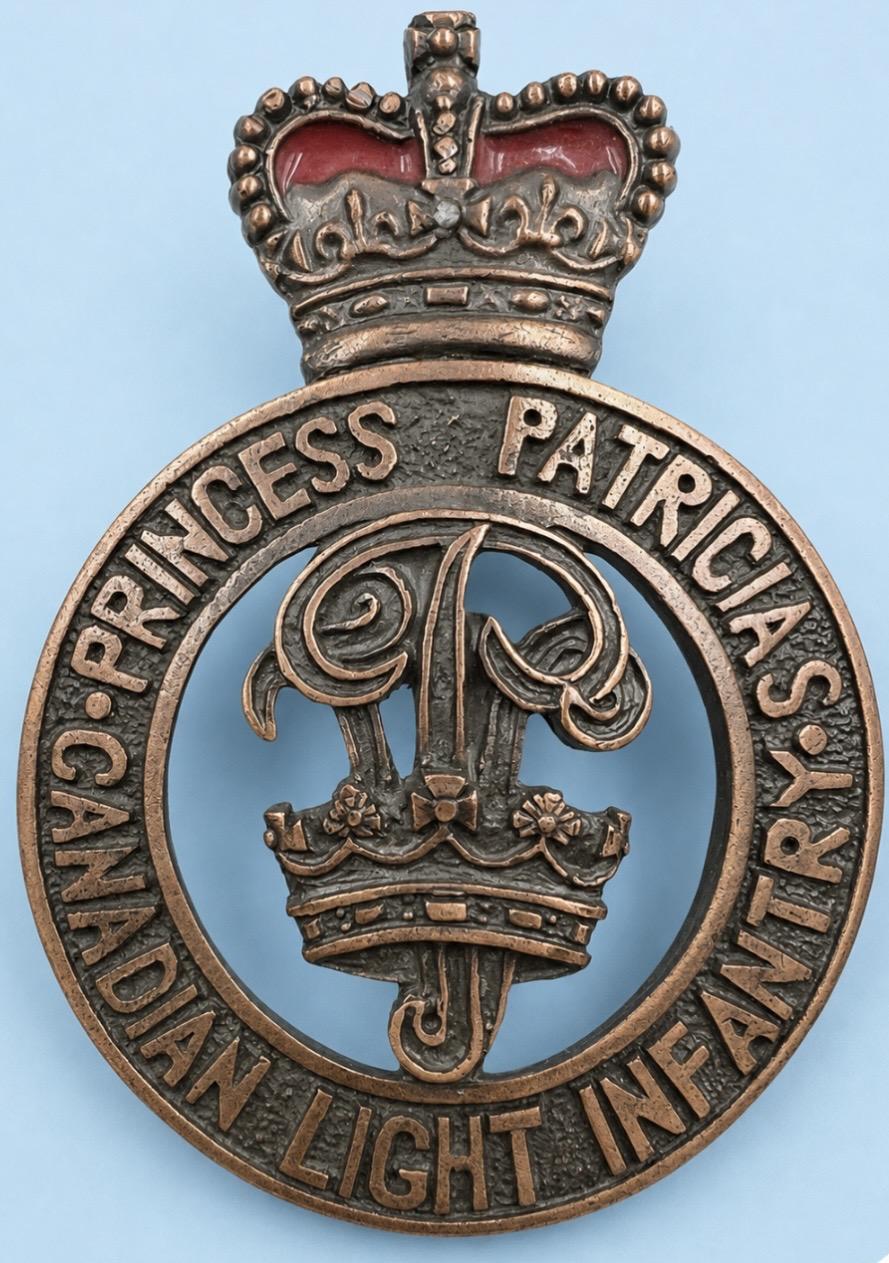
The regiment was named after Princess Patricia of Connaught, the daughter of the Duke of Connaught, who was Governor General of Canada at the time. Princess Patricia gave the regiment her name and also became closely connected with it. She hand-made the regiment’s original colour, which became known as the Ric-A-Dam-Doo. This colour was carried by the regiment during the First World War and became one of the most treasured objects in the regiment’s history.
The Patricias were among the first Canadian infantry soldiers to reach the fighting front in the First World War, which is why the regiment is closely associated with the phrase “First in the Field.” The regiment left Canada for Britain in September 1914 and landed in France in December of the same year. It served first with British forces and later as part of the Canadian Corps. During the war, PPCLI fought in many of the major battles on the Western Front, including Ypres, Frezenberg, Mount Sorrel, the Somme, Vimy Ridge, Hill 70, Passchendaele, Amiens, Canal du Nord, the Hindenburg Line and the final advance to Mons.
One of the regiment’s most famous early actions was at Frezenberg in May 1915, during the Second Battle of Ypres. The regiment suffered very heavy casualties while helping to hold the line against German attacks. This action became an important part of the regiment’s identity and helped build its reputation for courage and determination under extreme pressure. During the First World War, two members of the regiment, Sergeant George Mullin and Sergeant Robert Spall, were awarded the Victoria Cross.
The regiment also served during the Second World War. It was placed on active service on 1 September 1939 and went overseas to Britain later that year. In July 1943, PPCLI landed in Sicily as part of the Allied invasion and then fought through the Italian campaign. The regiment was involved in difficult fighting in Sicily and mainland Italy, including battles at Leonforte, Agira, the Moro River, the Gully, the Liri Valley, the Hitler Line, the Gothic Line, Rimini and San Fortunato. In 1945, the regiment moved to North-West Europe and took part in the final stages of the war there.
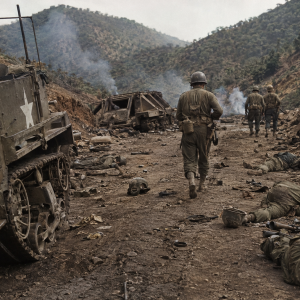
After the Second World War, Princess Patricia’s Canadian Light Infantry became part of Canada’s permanent Regular Army. The regiment was soon called into action again during the Korean War. Three battalions of the regiment served in Korea, but the most famous action was fought by the 2nd Battalion at the Battle of Kapyong in April 1951. During this battle, 2 PPCLI helped stop a major Chinese offensive. The battalion held its position against heavy attacks and played a key role in preventing a breakthrough. For this action, 2 PPCLI received the United States Presidential Unit Citation, a rare honour for a Canadian unit. Kapyong remains one of the most important battle honours in the regiment’s history.
During the Cold War and the decades that followed, PPCLI took part in many peacekeeping and overseas missions. Members of the regiment served in Cyprus, the Middle East, the Golan Heights, Egypt, Lebanon, Bosnia, Croatia, Kosovo, Somalia, Rwanda and other areas where Canadian forces were deployed. The regiment’s experience showed that peacekeeping was not always peaceful. In 1993, a Canadian battle group based largely around 2 PPCLI was involved in the Battle of Medak Pocket in Croatia. This was one of the most serious combat actions involving Canadian soldiers between the Korean War and the Afghanistan conflict.
Princess Patricia’s Canadian Light Infantry also played a major role in Canada’s mission in Afghanistan. Elements of the regiment served there from the early stages of the mission in 2002 through to later combat operations in Kandahar. PPCLI soldiers were involved in patrols, convoy security, counter-insurgency operations and direct fighting against Taliban forces. The 1st Battalion Battle Group served in some of the most intense fighting faced by Canadian troops in Afghanistan and later received the Commander-in-Chief Unit Commendation for distinguished service. Afghanistan is now part of the regiment’s modern operational history and battle honours.
The regiment has also served at home in Canada during domestic operations. PPCLI soldiers have helped during emergencies such as floods, wildfires and other situations where the Canadian Armed Forces were called upon to assist civil authorities. The regiment also trains for Arctic and northern operations, which are increasingly important for Canada because of sovereignty, climate, and security concerns in the North.
Today, Princess Patricia’s Canadian Light Infantry remains an active Regular Force infantry regiment of the Canadian Army. It is made up of three Regular Force battalions. The 1st Battalion, or 1 PPCLI, is based at Canadian Forces Base Edmonton in Alberta and is a mechanized infantry battalion equipped to operate with light armoured vehicles. The 2nd Battalion, or 2 PPCLI, is based at Canadian Forces Base Shilo in Manitoba and is also a mechanized infantry battalion. The 3rd Battalion, or 3 PPCLI, is based in Edmonton and is a light infantry battalion. It trains for operations in difficult terrain, including mountains, urban areas, northern environments and other places where light infantry skills are especially useful.
The exact number of soldiers in the regiment changes over time because of postings, recruitment, deployments and reorganizations. A safe general figure is that the regiment has around 2,000 soldiers across its Regular Force battalions and wider regimental structure. The regiment also has an affiliated Reserve Force connection through The Loyal Edmonton Regiment, which is associated as the 4th Battalion, Princess Patricia’s Canadian Light Infantry, although it remains a separate reserve regiment.
The current role of the regiment is to provide trained infantry soldiers for Canadian military operations at home and overseas. Its battalions are part of the Canadian Army’s western formation and are linked with 1 Canadian Mechanized Brigade Group. The regiment remains available for NATO commitments, international deployments, training with allies, domestic emergencies and defence of Canada. Recent public information shows PPCLI soldiers involved in NATO-related activities in Europe, including Latvia, and in training exercises in the Indo-Pacific region, including Japan and the Philippines. This shows that the regiment is still active, modern and operationally important.
The regiment’s traditions are an important part of its identity. Its badge reflects its royal connection with Princess Patricia, and its original colour, the Ric-A-Dam-Doo, remains one of the most famous regimental symbols in Canadian military history. The regiment’s history is full of well-known names, hard-fought battles and long service. From the trenches of the First World War to Sicily, Italy, Korea, the Balkans, Afghanistan and modern NATO deployments, Princess Patricia’s Canadian Light Infantry has been involved in many of the major chapters of Canadian military history.
Princess Patricia’s Canadian Light Infantry is important because it represents more than just one regiment. It reflects Canada’s military development from a young Dominion in 1914 to a modern country with worldwide defence responsibilities. Its soldiers have served in conventional wars, peacekeeping missions, counter-insurgency operations and emergency support at home. More than a century after it was formed in Ottawa, the regiment continues to stand as one of the most respected infantry regiments in Canada.