Napoleon
Napoleon Bonaparte remains one of the most famous military leaders in history, a man whose life seemed almost too dramatic to be real. He rose from a small island background to become Emperor of France, conquered much of Europe, changed laws and governments, and then ended his life as a prisoner in lonely exile. His story is one of ambition, genius, glory, disaster and downfall.
He was born on 15 August 1769 in Ajaccio, on the island of Corsica. The island had only recently come under French control, and he grew up feeling somewhat separate from mainland France. His family was not rich, but they belonged to the minor nobility, which helped him gain a place at military school in France. As a boy he was serious, proud and often lonely. He spoke French with a Corsican accent and was sometimes mocked by other pupils, but this only seemed to make him more determined.
From an early age he loved reading about history, war and famous rulers. He admired the great commanders of the ancient world and dreamed of making a name for himself. He trained as an artillery officer, which was a clever choice because artillery required mathematics, planning and discipline. These skills would later help him become one of the most brilliant commanders Europe had ever seen.
The French Revolution, which began in 1789, changed his life completely. Before the Revolution, promotion in the army often depended on noble birth and connections. But as France was thrown into political chaos and war, talented young officers suddenly had the chance to rise quickly. He was ambitious, intelligent and ready to seize his opportunity.
His first great success came in 1793 during the siege of Toulon. The city had rebelled against the revolutionary government and British forces had entered the port. Still a young artillery officer, he helped plan the attack that forced the British to withdraw. His skill and confidence impressed the leaders in Paris, and he was promoted to brigadier general at only 24 years old.
Two years later, in 1795, he again proved his value when he helped crush a royalist uprising in Paris. He used artillery with ruthless efficiency and saved the revolutionary government from being overthrown. This made him a trusted figure among those in power, and soon he was given command of the French Army of Italy.
It was in Italy that the young general became a legend. In the campaign of 1796 to 1797, he led a tired and poorly supplied army against Austrian and allied forces. Instead of being cautious, he moved with great speed and struck his enemies before they could unite against him. He won victory after victory at places such as Lodi, Arcole and Rivoli. His soldiers admired him because he shared their hardships, spoke to them directly and promised them honour, glory and reward.
He was not just a fighter; he understood how to create an image. He sent reports back to France that made his victories sound heroic and almost unstoppable. The French people began to see him as a young saviour of the Republic. He had the rare gift of winning battles and making sure everyone heard about them.
In 1798 he led an expedition to Egypt. His aim was partly to threaten British power in the East and partly to increase his own fame. At first the campaign looked impressive, especially after his victory at the Battle of the Pyramids. But the expedition soon turned into a failure when the British admiral Horatio Nelson destroyed the French fleet at the Battle of the Nile. The army was left stranded.
Yet he had an extraordinary ability to escape disaster with his reputation still alive. He eventually left Egypt and returned to France, where the government was weak, unpopular and divided. Many people wanted order after years of revolution and uncertainty. He presented himself as the man who could provide it.
In November 1799, he took part in a coup that overthrew the French government. He became First Consul, which made him the most powerful man in France. Although the country still appeared to be a republic, he was now effectively its ruler. In 1804 he went even further and crowned himself Emperor of the French. It was a remarkable moment. The young outsider from Corsica had climbed to the very top of power.
As ruler, he did not only fight wars. He also changed France in lasting ways. His most famous achievement was the Napoleonic Code, a legal system that brought order and clarity to French law. It protected property rights, promoted equality before the law for men, and removed many old feudal privileges. The code influenced legal systems in many countries and remains one of his most important legacies.
He also reorganised education, strengthened government, improved administration and made peace with the Catholic Church after the bitter divisions of the Revolution. He rewarded talent and loyalty, especially in the army and civil service. But his rule also became increasingly authoritarian. He censored newspapers, controlled political life and expected obedience. He brought order, but not real freedom.
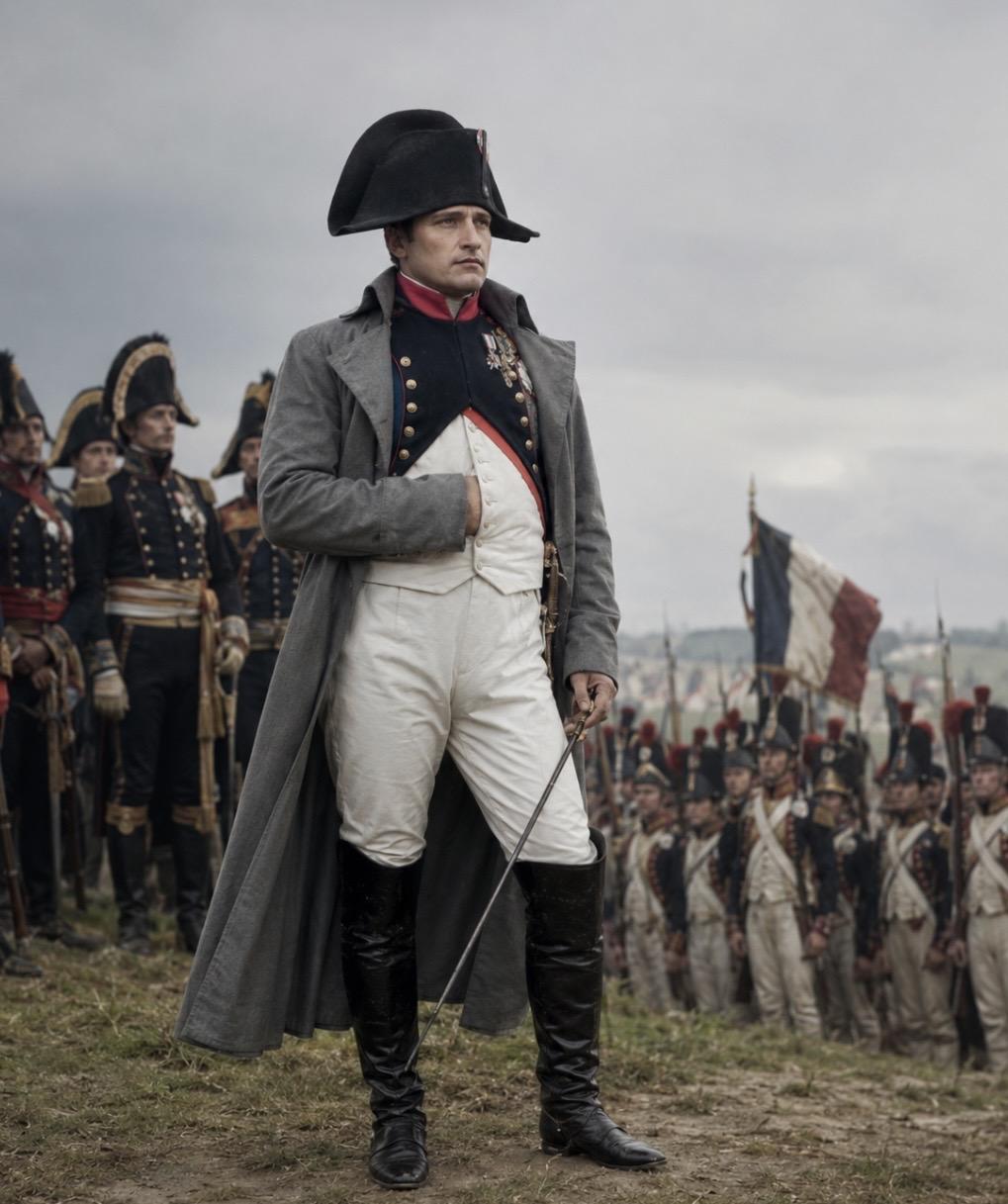
His greatest military years came between 1805 and 1809. During this period he defeated some of the strongest powers in Europe. In 1805 he won one of his most famous victories at Austerlitz, often called the Battle of the Three Emperors. Facing the armies of Austria and Russia, he tricked his enemies into weakening their centre and then struck with devastating force. Austerlitz is often considered his masterpiece.
In 1806 he crushed Prussia at Jena-Auerstedt, and in 1807 he fought Russia to a settlement at Tilsit. At the height of his power, the French emperor dominated much of Europe. He placed members of his family on foreign thrones, redrew borders and forced defeated nations to follow his will. His armies seemed almost unbeatable, and for a time it looked as if he might build a European empire under French control.
But ambition also created his greatest problems. Britain remained his most stubborn enemy. Because he could not defeat the British navy after the French and Spanish fleets were destroyed at Trafalgar in 1805, he tried to weaken Britain through trade restrictions known as the Continental System. This policy hurt Britain, but it also damaged European economies and caused resentment against French rule.
Another major mistake was his involvement in Spain and Portugal. In 1808 he placed his brother Joseph on the Spanish throne, expecting the country to accept French control. Instead, Spain erupted in fierce resistance. British forces under the Duke of Wellington joined the struggle, and the Peninsular War became a long and draining conflict. French armies won battles, but they could not fully control the country. The war became what he later called his “Spanish ulcer”, slowly weakening his empire.
His most disastrous decision came in 1812, when he invaded Russia with a huge army known as the Grande Armée. He expected a quick victory, but the Russians refused to fight on his terms. They retreated deeper into their own country, burning supplies as they went. He reached Moscow, but the city was largely abandoned and soon burned. With winter approaching and no clear victory achieved, he was forced to retreat.
The retreat from Russia was one of the great disasters of military history. Hunger, cold, disease and Russian attacks destroyed his army. Hundreds of thousands of men were lost. The aura of invincibility around him was shattered, and his enemies saw their chance.
In 1813, European powers joined together against him. He fought with his usual skill, but he no longer had the same strength. After defeat at the Battle of Leipzig, often called the Battle of Nations, he was pushed back into France. In 1814, Paris fell, and he was forced to abdicate.
He was exiled to the small island of Elba, off the coast of Italy. It seemed that his extraordinary career was over. But he was not ready to disappear from history. In 1815 he escaped from Elba and returned to France. Soldiers sent to arrest him instead joined him, and he marched back to Paris in triumph. This dramatic return began the period known as the Hundred Days.
Europe quickly united against him once more. He raised another army and tried to strike before his enemies could fully gather their strength. His final campaign ended at the Battle of Waterloo on 18 June 1815, where he was defeated by British-led forces under the Duke of Wellington and Prussian forces under Marshal Blücher. Waterloo ended his rule forever.
This time the Allies were determined that he would not return. He was exiled to Saint Helena, a remote island in the South Atlantic Ocean. It was far from Europe, windswept and isolated. There, watched by British guards, he lived out his final years. He dictated memories of his life, defended his actions and helped shape the legend that would survive him.
He died on Saint Helena on 5 May 1821, at the age of 51. The most commonly accepted cause of death is stomach cancer, though rumours of poisoning have existed for many years. His body was later returned to France, and he was buried in Paris at Les Invalides, where his tomb remains today.
His life is difficult to judge simply. He was a brilliant military commander who won some of the greatest victories in history, but his ambition also led to enormous suffering and war across Europe. He spread reforms and modern laws, yet ruled as an autocrat. He rose by talent and determination, yet crowned himself emperor. He inspired loyalty, fear, admiration and hatred.
What makes the story so fascinating is the sheer scale of it. He began as a young Corsican outsider with little money and a strong will. He became a general, then ruler of France, then emperor, then master of much of Europe. Finally, he ended as a prisoner on a lonely island, looking back on a career that had changed the world. Few figures in history have climbed so high, fallen so dramatically, or left such a powerful legend behind.