Major Chris Keeble
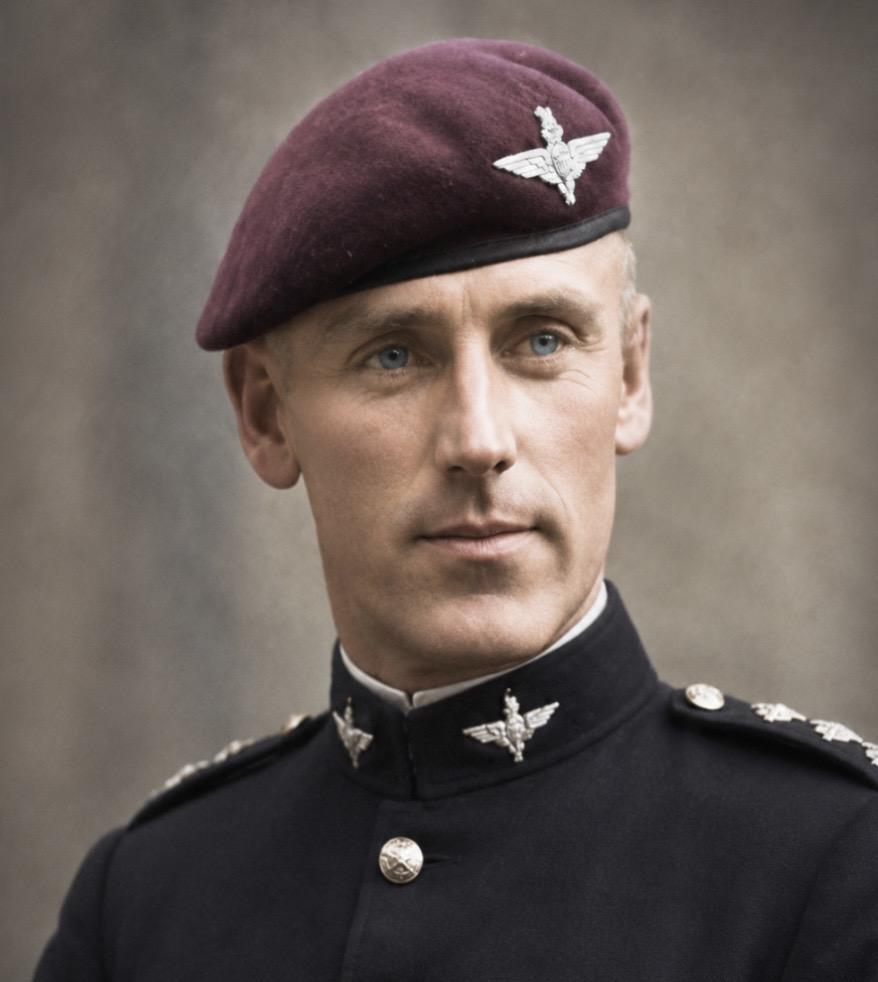
Major Christopher Patrick Benedict Keeble DSO is remembered as the officer who took over 2 PARA during one of the most dramatic moments of the Falklands War. He was not the battalion’s commanding officer when the Battle of Goose Green began. That role belonged to Lieutenant Colonel Herbert “H” Jones. Keeble was his second-in-command. But when Jones was killed in action on 28 May 1982, Keeble suddenly found himself responsible for a tired, battered and hard-pressed battalion in the middle of a battle that was still far from won.
Christopher Keeble was born on 14 November 1941 in Quetta, then part of British India. He was educated at Douai College and began his military life in 1960. Like many officers of his generation, his early years in the Army were shaped by discipline, regimental life and steady professional development rather than sudden fame. He first served as a trooper in the 17th/21st Lancers before going on to the Royal Military Academy Sandhurst. In December 1963 he was commissioned into The Royal Leicestershire Regiment.
His early service gave him a solid grounding in soldiering. He served with the 1st Battalion and later with 4th Royal Anglian after regimental changes. By 1970 he had become adjutant, an important post that required attention to detail, discipline and a close understanding of how a battalion worked from the inside. It was the kind of job that helped form him into a practical and organised officer.
Keeble later transferred to The Parachute Regiment, joining the airborne world that would come to define the best-known part of his career. He served in Northern Ireland during the difficult years of the Troubles and also held staff appointments, including service with NATO in Denmark. These postings gave him experience not only of command, but also of planning, training and working with other forces.
By the mid-1970s, Keeble had become Training Major with 10 PARA. He also served as Chief Instructor in Anti-Tank warfare at the Support Weapons Wing of the School of Infantry. These roles show the type of soldier he had become. He was not simply a fighting officer. He was a trainer, organiser and professional thinker, someone trusted to prepare others for the realities of combat.
In February 1982, Keeble became second-in-command of 2 PARA. At that point nobody knew that within months the battalion would be fighting a major land battle in the South Atlantic. When Argentina invaded the Falkland Islands in April 1982, Britain quickly assembled a task force to retake them. 2 PARA was drawn into the campaign and had to prepare rapidly for war.
Lieutenant Colonel Jones travelled ahead to link up with higher command, leaving Keeble to prepare the battalion. Keeble later recalled that Jones told him to train the battalion and bring it south. That meant Keeble had several important weeks in which he effectively carried much of the burden of getting 2 PARA ready. The men had to move from normal duties and exercises into the hard reality of an expeditionary war thousands of miles from home.
The Battle of Goose Green began in the early hours of 28 May 1982. 2 PARA was ordered to attack Argentine positions around Darwin and Goose Green on East Falkland. It was a bold and demanding task. The British force was advancing against defenders who were dug in, armed with machine guns, mortars and artillery support, and positioned across difficult open ground.
The battle soon became much harder than expected. Argentine resistance was strong, and 2 PARA found itself held up by well-sited defensive positions. The men were exposed, the ground offered little cover, and progress was costly. Lieutenant Colonel Jones, seeing the attack in danger of losing momentum, moved forward personally in an attempt to break the deadlock. He was killed while leading from the front.
His death was a serious blow. In battle, the loss of a commanding officer can cause confusion and uncertainty, especially when troops are already under fire and the original plan is under pressure. At Goose Green, that responsibility now passed to Major Keeble. He had to take command quickly, steady the battalion and continue the fight.
Keeble’s response was calm and decisive. He did not allow the battalion to lose direction. He took control, assessed the situation and kept the attack moving. This was not a simple matter of giving orders from a safe distance. The battalion was tired, under pressure and suffering casualties. Keeble had to hold together men who had been fighting hard and who knew their commanding officer had just been killed.
As the battle continued, 2 PARA pushed on through fierce resistance. The fighting was intense and costly. By the end of the day the battalion had taken important ground, but the situation was still dangerous. The men were exhausted, ammunition was a concern, and Goose Green itself was still held by Argentine forces. There were also civilians trapped in the settlement, which made the next decision even more difficult.
Keeble faced a hard choice. He could order a renewed attack, but that might lead to heavy casualties among his own men and among the civilians in Goose Green. He could call for more firepower, but that also risked killing innocent people. He needed to win, but he also needed to avoid needless bloodshed.
This was where Keeble showed not only courage, but judgement. Instead of simply launching another assault, he chose to put pressure on the Argentine commanders to surrender. He sent prisoners back with a surrender demand, making clear that if resistance continued, 2 PARA would continue the attack. The message was direct and firm, but it also gave the defenders a way out.
The decision worked. Argentine commanders agreed to talks, and on 29 May 1982 the garrison at Goose Green surrendered. Around a thousand Argentine troops laid down their arms. It was a remarkable result. 2 PARA, a single British battalion that had suffered hard fighting and the loss of its commanding officer, had forced the surrender of a much larger enemy force.
The victory at Goose Green became one of the defining moments of the Falklands War. It was the first major land battle of the campaign and gave British forces a powerful boost in morale. It also showed the toughness of 2 PARA and the effectiveness of British infantry under extremely difficult conditions.
Keeble’s part in the battle was later recognised with the Distinguished Service Order. Yet he remained modest about his role. He made it clear that the battle had begun under Lieutenant Colonel Jones and that the victory belonged to the battalion as a whole. He saw himself as someone who had carried on the work after Jones had fallen. He also paid tribute to the soldiers and junior commanders of 2 PARA, whose courage and endurance had made the victory possible.
After Goose Green, Keeble did not remain permanently in command of 2 PARA. Lieutenant Colonel David Chaundler was flown south from Britain to take over the battalion. This decision has often been discussed because Keeble had already proved himself in battle, but the Army chose to appoint a full commanding officer to lead the battalion through the rest of the campaign.
Keeble continued his Army career after the Falklands. He attended the Joint Service Defence College in 1983 and later commanded 15 PARA, a Territorial Army battalion. He also served in senior staff roles, including with Allied Forces Central Europe. He was promoted to lieutenant colonel and remained a respected officer.
But the war had changed him. Like many who experienced combat, Keeble came away with deeper questions about leadership, duty and the human cost of conflict. He had seen courage and sacrifice at close quarters, but he had also seen death, fear and the lasting effects of battle. These experiences shaped the direction of his later life.
In 1987 he left the Army. His life after military service took him into leadership training, consultancy and education. He became interested in how people and organisations could change for the better, and how leaders could act with both strength and humanity. This was a natural continuation of what had marked him out at Goose Green: not just the ability to command, but the ability to think clearly under pressure and to understand people.
One of the most meaningful parts of his post-war life was his willingness to take part in reconciliation. He met Argentine veterans of the conflict, including men who had fought at Goose Green. These meetings showed another side of Keeble’s character. He understood that former enemies could recognise each other’s courage and suffering, and that war did not have to end in bitterness.