M20 3.5 super Bazooka
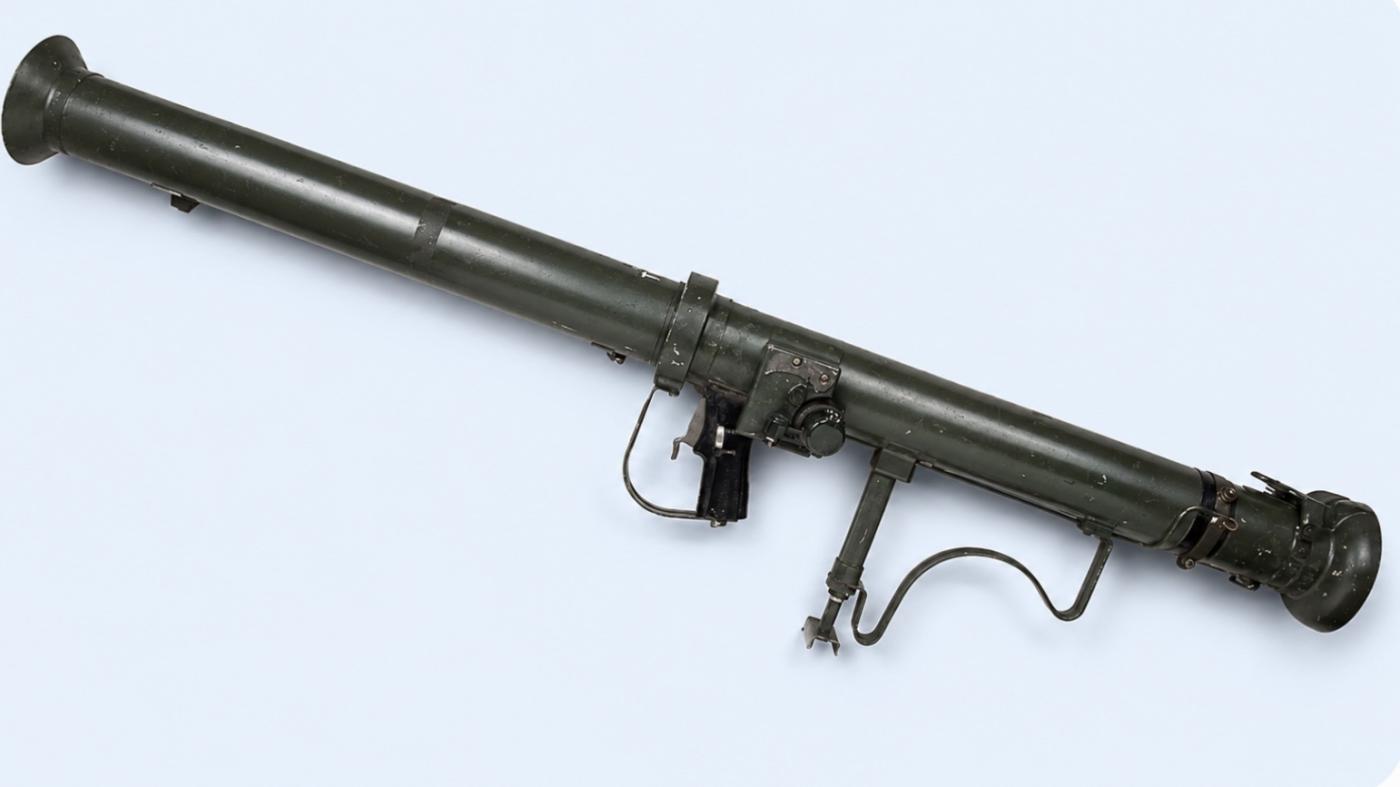
The Argentine 3.5-inch bazooka used in the Falklands War was a shoulder-fired rocket launcher. It was used by Argentine forces in 1982 as an infantry support and anti-armour weapon. It was often described as an M20 Super Bazooka, although some Argentine weapons of this type were Spanish-made Instalaza M65 launchers, which were closely related to the American M20 design.
The weapon was not originally designed in Argentina. The original M20 Super Bazooka was developed in the United States after the Second World War. It was created as a more powerful replacement for the earlier 2.36-inch bazooka. The smaller wartime bazooka had been useful, but it lacked the power needed against heavier post-war tanks.
The M20 used a 3.5-inch calibre tube. This was equal to 88.9 mm. The larger size allowed it to fire a much more powerful rocket than the earlier bazooka.
The bazooka was a simple tube-shaped weapon. It was open at both ends. The rocket was loaded into the rear of the tube. When fired, the rocket travelled out of the front, while blast and gases escaped from the back. Because of this, the area behind the firer had to be clear before the weapon was used.
The weapon was fired from the shoulder. It could be fired while standing, kneeling, sitting, or lying down. Some versions had a bipod or support to help steady the launcher.
The usual crew was two men. One man aimed and fired the launcher. The second man carried ammunition and loaded the rockets. The weapon could be operated by one man if needed, but a two-man team was more practical because the rockets were large and awkward to carry.
The main round was a high-explosive anti-tank rocket, known as a HEAT round. This used a shaped-charge warhead. A shaped charge focuses the force of the explosion into a narrow jet. This jet is designed to burn and punch through armour.
The M20-type bazooka could penetrate about 280 mm, or around 11 inches, of armour under good conditions. This made it powerful against older tanks, armoured cars, bunkers, light vehicles and field defences.
Its effective range was limited. Against a moving target, it was useful at about 200 yards. Against a stationary target, it could be used at about 300 yards. The rocket could travel much farther, but long-range fire was not very accurate.
The maximum range was roughly 900 to 1,000 yards. This was the distance the rocket could travel, not the distance at which it was normally expected to hit a battlefield target.
By the Falklands War, the 3.5-inch bazooka was already an old design. It was no longer a modern first-line anti-tank weapon. Newer rocket launchers and guided missiles had replaced it in many armies.
Even so, it was still dangerous. It was simple, portable and powerful at short range. It did not need complex equipment. It could be carried by infantry and used quickly from defensive positions.
In the Falklands, the weapon was more useful as a support weapon than as a tank killer. There were few tanks in the campaign. Argentine troops could use the bazooka against British strongpoints, rocky sangars, buildings, light vehicles, landing craft and groups of soldiers.
The explosion from a 3.5-inch rocket could cause serious damage. It could break through field defences, damage vehicles and force enemy troops to take cover. Even near misses could have a strong effect because of blast, noise, smoke and fragments.
The bazooka also had disadvantages. The backblast was dangerous. It could injure friendly troops behind the weapon. It could also reveal the firing position to the enemy.
The launcher was difficult to use safely in tight spaces. It was not suitable for firing from enclosed rooms, narrow trenches or positions where the rear of the weapon was blocked.
The rocket was slower than a bullet or shell. This meant the firer had to judge range and movement carefully. Wind and bad weather could affect accuracy. The Falklands climate, with strong winds, rain and poor visibility, made accurate firing more difficult.
The American M20 could fire different types of ammunition. These included anti-tank rockets, smoke rounds and practice rockets. The Spanish Instalaza M65 also used several types of ammunition, including anti-tank, smoke and dual-purpose rockets.
The Spanish Instalaza M65 was made by Instalaza of Zaragoza, Spain. It was based on the same 88.9 mm bazooka concept as the American M20. It was an improved post-war version rather than a completely new weapon.
Argentina used imported or foreign-derived 3.5-inch bazookas. The country did not design the original M20. Argentine forces used these weapons because they were available, easy to operate and still useful as close-range infantry weapons.
The launcher was fairly light for its power. American M20A1-type launchers weighed roughly 13 to 15 pounds unloaded. The tube could be separated into parts for carrying. This made it easier for soldiers to move it across rough ground.
The ammunition was bulkier than the launcher itself. Carrying enough rockets for combat usually required more than one soldier. This is why the two-man crew was important.
The exact number of M20-type or Instalaza M65 launchers produced is not easy to confirm. The American M20 was produced in large numbers during the early Cold War, but total production figures are not always clearly stated. Spanish production numbers for the M65 are also unclear. The exact number used by Argentina during the Falklands War is also uncertain.
Captured examples of 3.5-inch bazooka-type launchers from Argentine forces show that the weapon was present during the campaign.
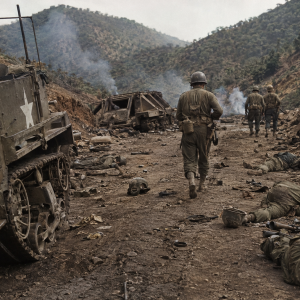
The 3.5-inch Super Bazooka family had already been used before the Falklands War. It became well known during the Korean War, where it was used against North Korean T-34 tanks. Its larger warhead gave it much better armour penetration than the earlier 2.36-inch bazooka.
By 1982, it was an ageing but still useful weapon. It was not accurate at long range and it was not ideal against modern heavy armour. However, it remained effective against lighter targets, defensive positions and troops in cover.
The Argentine 3.5-inch bazooka of the Falklands War was therefore a simple, hard-hitting infantry weapon. It was not sophisticated, but it gave soldiers a portable launcher with serious destructive power at short range. Its main strengths were its simplicity, portability and powerful shaped-charge rocket. Its main weaknesses were limited range, backblast, slow rocket speed and reduced accuracy in difficult weather.
It was an old weapon by the time of the Falklands War, but it still had value. In the hands of trained troops, it could damage vehicles, attack strongpoints and support infantry in close combat.