Kershaw ww11 Binonoculars
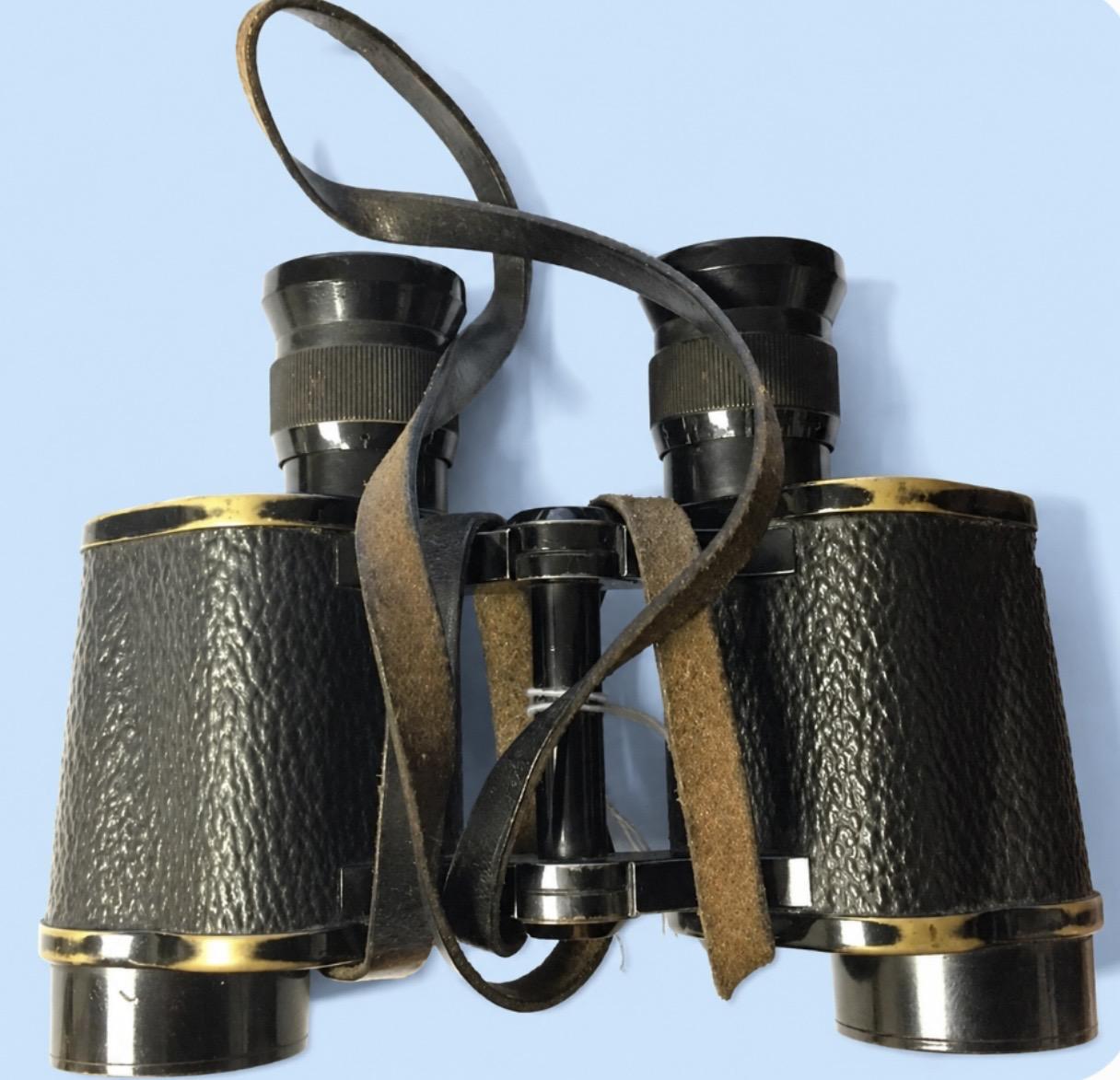
The British “Bino Prism No. 2 Mk III” 6x30 field binoculars are among the classic service binoculars associated with Britain and the Commonwealth during the Second World War. They were practical, compact military instruments designed for general field use rather than luxury or sporting use, and they reflect the urgent wartime need for reliable optical equipment that could be produced in large numbers by several British manufacturers. The name is often seen written in different ways by collectors, including “Binocular Prismatic No. 2 Mk III,” “Bino Prism No. 2 Mk. III,” or simply “No. 2 Mk III 6x30.” The “6x30” marking means that the binoculars magnify six times and have objective lenses 30 millimetres in diameter.
The 6x30 size was widely used because it offered a good balance between magnification, brightness, weight, and steadiness. Higher magnification binoculars can show more detail, but they are harder to hold steady by hand, especially in field conditions. Six-power binoculars were ideal for soldiers, artillery spotters, observers, engineers, airfield personnel, Home Guard units, and other military users who needed a broad, steady view. The 30 mm objective lenses gathered enough light for daylight and moderate low-light observation while keeping the instrument small enough to carry around the neck or in a leather case.
The No. 2 series was part of a larger family of British prismatic binoculars. “Prismatic” refers to the internal prisms that turn the image the correct way up and allow the binoculars to be shorter than a straight telescope of the same power. These binoculars normally used individual eyepiece focusing rather than a central focusing wheel. Each eyepiece could be adjusted separately to suit the user’s eyesight. This was common on military binoculars because it made the instrument stronger, simpler, and more resistant to dirt and damage than civilian-style centre-focus designs. Once set for the user’s eyes, the binoculars could often be used over a range of distances without constant refocusing.
The Mk III version was a wartime development of the No. 2 pattern. The “Mk” or “Mark” number identified the version or pattern, with changes sometimes involving the body, optical details, waterproofing, fittings, manufacturing simplifications, or service requirements. Exact details can vary between makers and production batches, but the No. 2 Mk III generally belongs to the rugged, workmanlike 6x30 British field binocular tradition of the 1940s. These were not decorative pieces; they were military tools. Their finish was often black, khaki, olive drab, or tan, depending on service use, later repainting, theatre of war, or postwar refurbishment.
Many wartime British binoculars carry useful markings on the prism cover plates. A typical example may include the designation, such as “Bino Prism No. 2 Mk III,” the power and lens size “6x30,” a serial number, a maker’s name or initials, and sometimes a year of manufacture. A British military broad arrow mark may also appear. The broad arrow is a government ownership or acceptance mark and is one of the most recognisable signs that an item was made or accepted for official service. Some binoculars also have graticule markings, indicating that one side contains a scale used for estimating distance, measuring angles, or assisting observation. If a graticule is fitted, it is usually visible when looking through one eyepiece.
One of the firms associated with these binoculars was Kershaw of Leeds. The company, often marked as “Kershaw,” “Kershaw & Son,” or “A. Kershaw & Son Ltd, Leeds,” was an important British optical manufacturer. Kershaw made cameras, lenses, optical instruments, and military equipment. During the Second World War, British industry was heavily mobilised, and firms that had suitable optical or engineering skills were brought into wartime production. Kershaw was one of several manufacturers that helped supply the armed forces with binoculars and related optical equipment. Other British makers connected with military binocular production included Ross of London, Barr & Stroud, Wray, Taylor-Hobson, and others.
Kershaw-made examples are interesting to collectors because they show how regional British industry contributed to the war effort. Leeds was a major industrial city, and firms there were part of the wider network of factories producing everything from optical goods to armaments and aircraft components. A pair of Kershaw binoculars is therefore not just an optical instrument but a small piece of wartime industrial history. The maker’s name can usually be found engraved or stamped on one of the prism plates. On some examples the markings may be partly hidden by paint, wear, dirt, or later refurbishment.
The body of the No. 2 Mk III binoculars was usually made from metal, commonly brass or aluminium alloy depending on production and maker. Wartime production often involved compromises and variations because materials were controlled and factories had to meet large government orders quickly. The outer surface was normally painted or covered in a protective finish to reduce reflections and resist wear. Blackened metal around the eyepieces and objective rims helped prevent glare. Tan or khaki-painted binoculars are particularly attractive to collectors because they have a strong military appearance, though it is important to remember that some were repainted after wartime service.
The leather strap and case are also part of the story. British military binoculars were commonly issued with a leather neck strap and a protective carrying case. The case might be marked with military stamps, maker details, dates, or ownership marks. Some cases were leather, while others used composite or webbing materials depending on period and supply. The eyepiece rain guard, often black, helped keep moisture and dust away from the ocular lenses. Surviving straps and cases are often cracked or fragile today because wartime leather dries out over decades, especially if it has been stored in lofts, sheds, garages, or display cabinets.
The optics in a good pair of No. 2 Mk III binoculars can still be surprisingly usable. A clean, well-collimated pair gives a steady image with a wide enough field of view for observation. However, many surviving examples suffer from haze, fungus, dust, prism separation, chipped prisms, stiff eyepieces, or misalignment. Fungus appears as thread-like or cloudy growth on internal glass surfaces and is common in old binoculars stored in damp conditions. Haze can come from evaporated lubricants, dust, or age-related deterioration. Misalignment, also called being “out of collimation,” causes eye strain or double vision. A pair may look complete from the outside but still need careful optical restoration.
Collectors should be cautious when cleaning them. The outside can usually be wiped gently with a dry or slightly damp soft cloth, but the lenses should not be rubbed aggressively. Old lens coatings, if present, can be delicate. Dust should be blown off first, then the glass can be cleaned lightly with proper optical tissue or a microfibre cloth. Leather parts should be treated carefully and not soaked in oil. Opening the binoculars is best left to someone experienced with vintage optics, because the prisms and eccentric rings can easily be disturbed.
The military value of 6x30 binoculars during the Second World War was considerable. Binoculars were essential for spotting enemy movement, reading signals, observing aircraft, directing fire, surveying terrain, and watching coastlines, roads, bridges, railway lines, and airfields. Officers, non-commissioned officers, artillery observers, anti-aircraft units, naval personnel, and airfield staff all used binoculars. They were also valuable for civil defence and Home Guard duties. In wartime Britain, optical equipment was important enough that civilian binoculars were sometimes collected, purchased, or adapted for service.
The No. 2 Mk III was not as large or powerful as naval binoculars, nor as specialised as some artillery or rangefinding instruments, but that was part of its strength. It was a general-purpose field glass: portable, simple, robust, and useful in many roles. Its six-power magnification made it suitable for hand-held use from standing, crouching, or prone positions. It could be carried on patrol, used from a vehicle, kept in an observation post, or stored with other field equipment.
Dating a particular pair depends on its markings. A wartime example may show a date from the early or mid-1940s. The serial number may help, but records are not always easy to trace. The maker’s name, government mark, pattern designation, and date are the most useful clues. Sometimes binoculars were refurbished after the war, and refurbishment marks or repainting can complicate identification. Some remained in military stores for years after 1945, while others were sold as surplus and entered civilian use. This explains why many wartime binoculars turn up today in family collections, antique shops, car boot sales, militaria fairs, and online auctions.
Value depends heavily on condition, maker, completeness, markings, originality, and optical quality. A clean, clearly marked, wartime-dated Kershaw example with its original strap and case will usually be more desirable than an unmarked, damaged, or heavily repainted pair. However, even worn examples have historical interest, especially if they retain their military markings. Provenance can add greatly to the appeal. If a pair can be linked to a named serviceman, unit, airfield, ship, or campaign, it becomes much more than a collectable object.
One of the pleasures of owning British wartime binoculars is that they are personal objects. They were held in the hands, adjusted to the eyes, carried in the field, and used to look at real wartime landscapes. Unlike a medal or badge, binoculars were working equipment. They may have been used to scan the sky for aircraft, watch a coastline, observe training exercises, check a convoy, or support troops in the field. Their scratches, worn paint, faded leather, and stiff focusing rings are part of their history.
For anyone trying to identify a pair, the most important step is to examine the top prism plates and any markings around the eyepieces. Look for the full designation, magnification, maker, serial number, date, broad arrow, and any additional letters or symbols. A photograph of these markings usually allows a much more accurate identification. The underside, hinge, strap lugs, case, and rain guard may also contain useful clues. If the binoculars are painted tan or khaki, check whether the paint sits neatly under the original engraved markings or whether it fills them in, as that can suggest whether the finish is original or later.
The British Bino Prism No. 2 Mk III 6x30 binoculars, including those made by Kershaw of Leeds, are excellent examples of wartime practical design. They were not made to impress with luxury; they were made to serve. Their appeal today lies in that combination of usefulness, durability, military history, and British industrial workmanship. A surviving pair connects the collector directly with the everyday equipment of the Second World War, and when the maker is Kershaw, it also tells part of the story of Leeds and its contribution to Britain’s wartime optical production.