James Martin Stagg
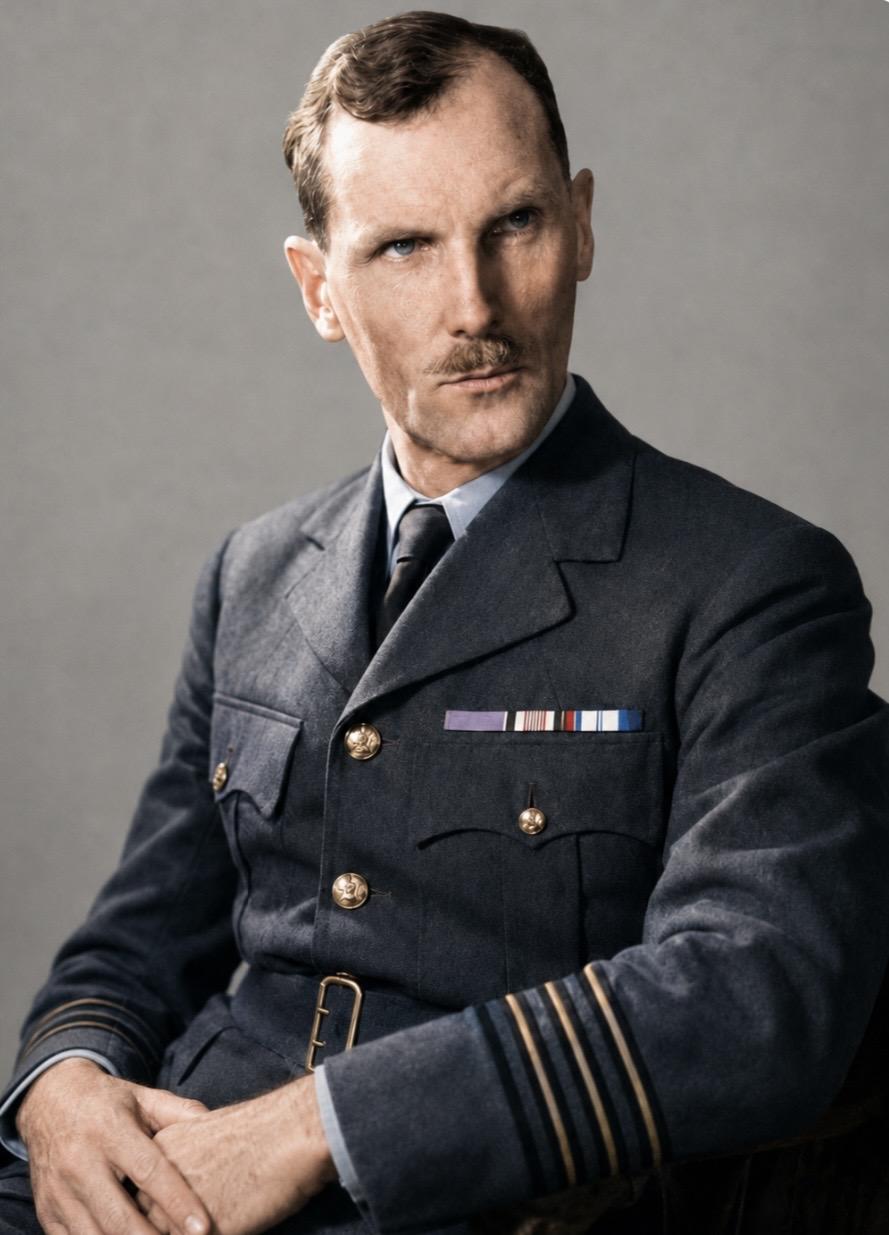
James Martin Stagg was one of the most important scientific figures behind D-Day, though his name is far less familiar than the generals and admirals who led the campaign. He was not a battlefield commander, but a meteorologist whose forecast helped decide whether the greatest amphibious invasion in history should go ahead. In June 1944, with thousands of ships, aircraft and men waiting to cross the Channel, his judgement became a matter of life and death.
He was born on 30 June 1900 at Musselburgh, Midlothian, Scotland, the son of Alexander Cairns Stagg, a plumber, and Helen Martin. His childhood was spent in Scotland, including Dalkeith, where he attended school. He later studied at the University of Edinburgh and graduated with a Master of Arts degree in 1921. His first career was in teaching, as a science master at George Heriot’s School in Edinburgh, where he developed the ability to explain scientific ideas clearly.
In 1924 he joined the British Meteorological Office. At that time forecasting was a demanding science carried out without satellites, computers or modern radar. Weather charts were drawn by hand and based on reports from ships, aircraft, weather stations and balloons. A good forecaster needed patience, judgement and experience, as well as scientific training.
His career advanced steadily. He became superintendent at Kew Observatory and in 1932–33 led the British Polar Expedition to Fort Rae in north-western Canada, where he worked in difficult northern conditions for about fifteen months. This experience deepened his knowledge of remote observation, atmospheric behaviour and scientific fieldwork. He also studied terrestrial magnetism and auroral data, and in 1936 he received a Doctor of Science degree from the University of Edinburgh.
By the late 1930s he was already a respected figure in meteorology. In 1937 he was appointed Officer of the Order of the British Empire, the OBE, while serving as a senior technical officer at the Meteorological Office under the Air Ministry. During the Second World War, weather forecasting became vital to military operations, affecting bombing raids, naval movements, airborne drops and amphibious landings.
Attached to the Royal Air Force Volunteer Reserve, he rose to the rank of Group Captain. In 1943 he was appointed chief meteorological adviser to General Dwight D. Eisenhower, Supreme Allied Commander for the invasion of north-west Europe. This placed him at the centre of Operation Overlord, the Allied plan to land in Normandy and begin the liberation of western Europe.
The invasion required a rare combination of conditions. The airborne forces needed moonlight, the naval forces needed manageable winds and seas, the troops needed low tide near dawn, and the air forces needed enough visibility to support the landings. The best dates in June 1944 were limited to 5, 6 and 7 June, but the weather over the Channel and North Atlantic was unsettled.
His task was made harder because several British and American forecasting teams disagreed. Some were more optimistic, others more cautious. He had to judge the evidence, reconcile the different opinions and give Eisenhower a clear recommendation. The pressure was immense. A wrong decision could have wrecked the invasion before it began.
On 4 June he warned that conditions for 5 June would be too poor. Strong winds, rough seas and low cloud threatened the operation. Eisenhower accepted the advice and postponed the invasion by twenty-four hours. Soon after, the forecast showed a possible temporary improvement for 6 June. It was not ideal weather, but it appeared good enough to make the attempt.
At the crucial meeting on 5 June, Eisenhower listened to the forecast and the views of his commanders. He then gave the order for the invasion to proceed. D-Day was launched on 6 June 1944, not because the weather was perfect, but because there was a narrow break between storms. The judgement proved correct. Conditions were difficult, yet the landings succeeded.
The poor weather also helped deceive the Germans. Many believed an invasion was unlikely in such conditions, and some senior officers were away from their posts. In this way, the same weather that nearly delayed the assault also helped conceal it.
The achievement is even more impressive because the forecast was made without modern technology. There were no satellite images or computer models. Allied forecasters relied on observations, charts, radio reports and experience. Their access to wider weather data gave them an advantage over German forecasters, who had fewer observations from the Atlantic and Britain.
After the landings, the importance of the decision became clearer. A later storm in the Channel caused severe damage to the Mulberry harbours and disrupted Allied supply operations. Had the invasion been postponed to the next suitable tide period, it might have faced far worse weather. Eisenhower later thanked him and acknowledged how fortunate the Allies had been to go when they did.
After the war he returned to senior work at the Meteorological Office. He became Director of Services and remained a leading figure in British meteorology until his retirement in 1960. He was elected a Fellow of the Royal Society of Edinburgh in 1951 and became president of the Royal Meteorological Society in 1959. In 1971 he published Forecast for Overlord, an account of the D-Day weather crisis based on his wartime experience and diaries.
His honours reflected both scientific and wartime service. He was appointed OBE in 1937, received the United States Legion of Merit in the grade of Officer in 1945, and was appointed Companion of the Order of the Bath, CB, in the 1954 New Year Honours. His name is often written as James Martin Stagg, CB, OBE, FRSE.
He died at Seaford, East Sussex, on 23 June 1975, shortly before his seventy-fifth birthday, and was buried in Dalkeith Cemetery. Today plaques in Dalkeith and Seaford help preserve the memory of a man whose quiet scientific judgement influenced one of the decisive moments of the twentieth century. His legacy is the story of expertise under pressure: the courage to speak honestly, trust the evidence and hold his nerve when history was waiting on the weather.