Hartenstein Airborne Museum
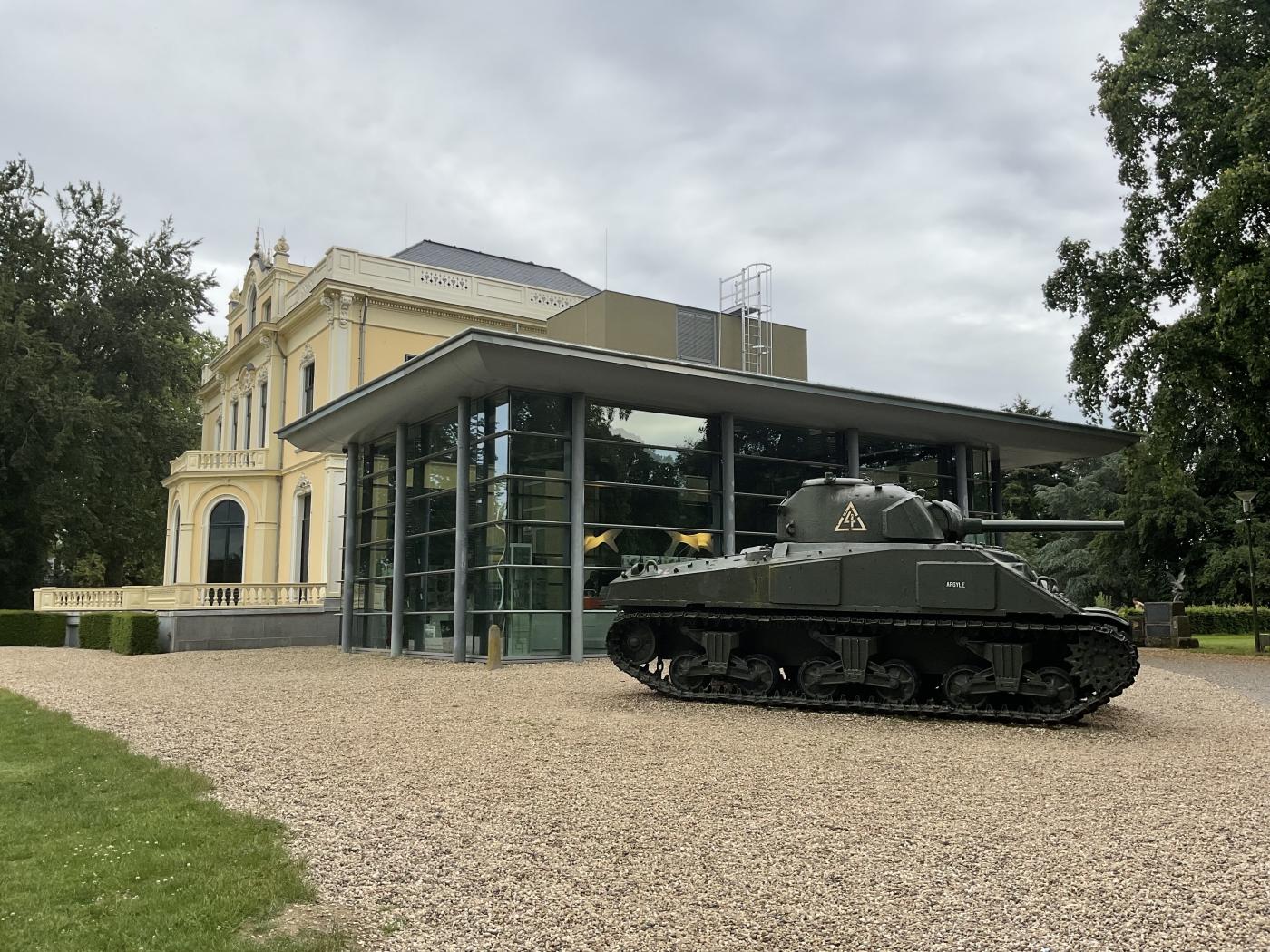
The Legends Team visited the Airborne Museum Hartenstein at Arnhem, a place that stands as one of the most powerful reminders of Operation Market Garden and the Battle of Arnhem.
Set inside the beautiful Villa Hartenstein in Oosterbeek, this stately home became the headquarters of the British 1st Airborne Division in September 1944, as the battle unfolded around them. From here, plans were made, wounded men were treated, and desperate decisions were taken as the airborne troops fought to reach and hold the bridge while being encircled and pounded by determined German forces.
Inside the museum are beautifully preserved and presented historical items spread throughout a series of well-designed galleries that guide visitors through the story of the battle. Original weapons, airborne equipment, radios, maps, uniforms, medals, photographs, documents, and personal belongings are displayed alongside detailed information panels that help bring the events of September 1944 to life. Many of the exhibits focus not only on the military operation itself but also on the experiences of the individual soldiers who fought there and the Dutch civilians who found themselves caught in the middle of the conflict.
One of the most impressive aspects of the museum is the way it combines large-scale displays with personal stories. Visitors can see original airborne uniforms worn by British paratroopers, equipment dropped during the operation, and artefacts recovered from the battlefield. There are detailed displays explaining the planning of Operation Market Garden, the airborne landings, the advance towards Arnhem Bridge, and the fierce fighting that followed. Maps, photographs, and eyewitness accounts help visitors understand how events unfolded and why the battle became one of the most famous episodes of the Second World War.
A particularly important section of the museum is the large Polish Airborne Forces room, which honours the contribution of the Polish 1st Independent Parachute Brigade. This excellent display tells the story of the Polish troops who were dropped into the battle to support the surrounded British airborne forces. Through photographs, uniforms, equipment, personal accounts, and historical information, visitors learn about the bravery and determination of these men who fought under extremely difficult circumstances. The display also explains the sacrifices made by the Polish soldiers and how their role in the battle has become increasingly recognised over the years. It is a fitting tribute to a force whose contribution was vital and whose story deserves to be remembered alongside that of the British airborne troops.
One of the most poignant parts of the museum is the room filled with name cards and identification photographs, where individual faces and stories bring home the human cost of the operation. It is a deeply emotional part of the visit and a reminder that behind every uniform was a person, a family, and a life forever changed. Reading the names and seeing the faces creates a powerful connection to the men who fought and died during those desperate days.
At the reception area, there are also many books available to buy on the subject, giving visitors the chance to continue learning after their visit. These books help explain the wider story of Operation Market Garden, the Battle of Arnhem, and the men and civilians caught up in those dramatic days. It is clear that for many people, this museum is not just somewhere to look around, but somewhere to understand more deeply.
Whilst the Legends Team were there, visitors of many different nationalities were arriving, and there was a strong feeling that some may have had relatives connected to these events. Perhaps for them, this was more than a museum visit; it was a place they needed to come to, to learn more, to remember, and to feel closer to a part of their family history. That atmosphere made the visit feel even more meaningful.
Downstairs, in the basement, the Airborne Experience creates an immersive battle scene, giving visitors a small sense of the noise, confusion, tension, and terror of being under attack. Through sound effects, visual displays, reconstructed scenes, and dramatic storytelling, visitors are taken through the battle as if they were moving alongside the soldiers themselves. It is done with great care and respect, helping people understand, as much as possible, what those soldiers and civilians endured during those terrible days.
Beside the museum, there is also a peaceful and very fitting contrast to the history inside. Adjacent to the building, in a fenced field surrounded by lovely scenery, are deer grazing quietly. At first, they seem simply to add calm and beauty to the surroundings, but they also have a deeper connection to the story of the place. Long before the building became famous for its role in the Battle of Arnhem, an old inn once stood on this site called “Het Rode Hert,” meaning “The Red Deer.” Later, when the mansion was built, the name Hartenstein remained part of the identity of the estate.
Knowing this gives the deer beside the museum an extra meaning. They are not only a peaceful sight after the powerful emotions of the museum, but also a gentle reminder that this place has a history stretching back long before the war. After walking through rooms filled with memories of battle, sacrifice, and loss, seeing the deer nearby brings a moment of calm reflection. The peaceful setting, with nature all around, seems to remind visitors of the freedom and tranquillity that so many fought for.
The building itself is impressive, but what makes it truly special is the way it has preserved the history of this event for future generations. The Battle of Arnhem was one of the most famous and costly parts of Operation Market Garden, an ambitious Allied attempt to seize key bridges through the Netherlands and push towards Germany. Although the operation did not achieve its final objective, the bravery shown by the airborne troops, the Polish paratroopers, and the Dutch civilians who suffered and helped wherever they could, has never been forgotten.
The Legends Team found this to be a moving, educational, and unforgettable place to visit. It is not just a museum of objects, but a museum of stories, sacrifice, remembrance, and quiet reflection. We hope everyone gets the chance to come and see this remarkable place for themselves, and perhaps leave with new information, deeper admiration, and a greater appreciation of what was done during World War Two to help free us all.