On this day in military history…
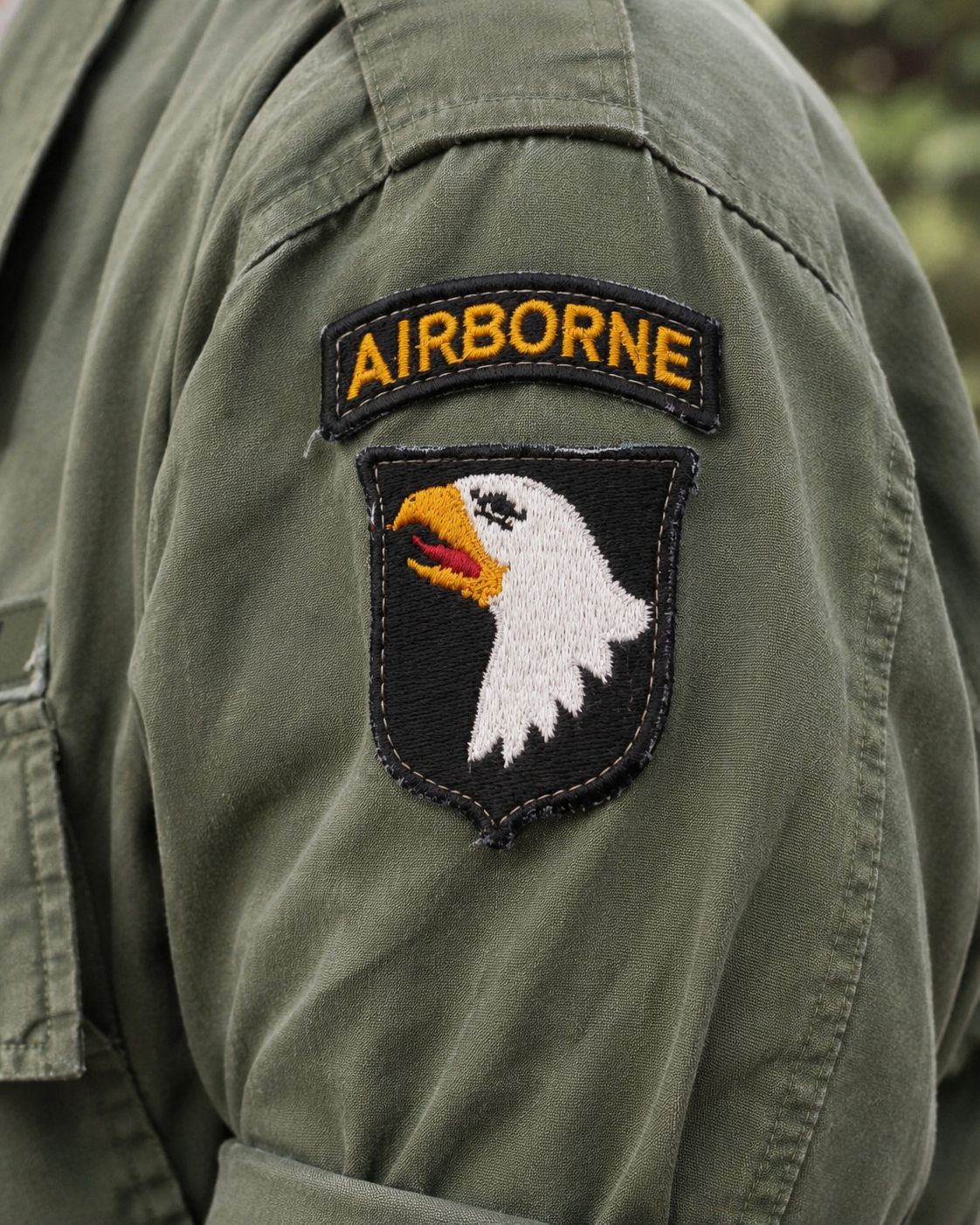
On 29 July 1965, the first major element of the United States Army’s famous 101st Airborne Division arrived in South Vietnam, beginning what would become one of the longest and most demanding periods of combat in the division’s history. The men who landed were from the 1st Brigade of the 101st, the legendary “Screaming Eagles” whose reputation had been forged during the Second World War at Normandy, Operation Market Garden, Bastogne and the advance into Germany. Two decades later, they were entering an entirely different type of war, fought not across the fields and towns of Europe but through jungle, mountains, rice paddies and remote villages. The arrival of the 101st came during a decisive period in the Vietnam War. By the summer of 1965, the United States was rapidly changing its role from primarily advising and supporting the armed forces of South Vietnam to committing large numbers of American combat troops directly to the fighting. South Vietnam was under increasing military pressure from the communist Viet Cong and from regular units of the North Vietnamese Army. The government in Saigon had also suffered years of political instability following the overthrow and assassination of President Ngo Dinh Diem in November 1963. Washington feared that without a major increase in American military assistance, the South Vietnamese government might eventually collapse. President Lyndon B. Johnson and his senior advisers faced an increasingly difficult decision. American military commanders, particularly General William Westmoreland, commander of Military Assistance Command, Vietnam, believed that additional ground forces were required to protect important bases, strengthen vulnerable areas and take offensive action against communist forces. Earlier in 1965 the United States had already begun introducing combat units. US Marines landed at Da Nang in March, initially to protect the important American air base there. In May, the 173rd Airborne Brigade arrived from Okinawa, and additional Army formations soon followed. The deployment accelerated dramatically during July. On 28 July 1965, President Johnson announced that American military strength in Vietnam would be increased from approximately 75,000 to 125,000 men, with further forces to be sent if required. The following day, 29 July, the 1st Brigade of the 101st Airborne Division arrived in Vietnam as part of this rapidly expanding American commitment. The brigade had begun moving from its home at Fort Campbell, Kentucky, during July. Approximately 3,600 men formed the initial force. Unlike the later deployment of the entire division, only the 1st Brigade was initially committed, leaving the remainder of the 101st in the United States. The brigade included three airborne infantry battalions together with artillery, engineers, communications, medical and other supporting elements. Among its principal infantry formations were the 1st and 2nd Battalions of the 327th Infantry and the 2nd Battalion of the 502nd Infantry. Artillery support included the 2nd Battalion, 320th Artillery. These were trained paratroopers accustomed to operating aggressively and independently, characteristics that were considered particularly valuable in Vietnam, where American formations frequently had to operate far from established bases. The 101st did not arrive simply to reinforce an existing defensive line. There was no conventional front in Vietnam comparable with those of the world wars. Communist forces moved through jungle, mountains and rural areas, often avoiding battle unless conditions favoured them. Roads could be ambushed, bases attacked and supply routes cut with little warning. This made control of strategically important ports, airfields and roads essential. One of the most important locations was Cam Ranh Bay on the central coast of South Vietnam. Its enormous natural harbour offered the United States an excellent location for the development of a major logistical base and deep-water port. Aircraft facilities were also being expanded in the area, making Cam Ranh increasingly important to the American buildup. When the 1st Brigade reached the Cam Ranh Bay area on 29 July 1965, one of its immediate responsibilities was therefore security. The Screaming Eagles initially established themselves around Dong Ba Thin on the mainland close to Cam Ranh Bay. The environment immediately demonstrated how different Vietnam would be from their previous training grounds. Engineers preparing defensive positions reportedly encountered ground so hard that explosives were sometimes required before proper positions could be dug. From 29 July into August, elements of the brigade helped establish and defend the perimeter while simultaneously beginning combat patrols and familiarising themselves with the terrain and tactics of the enemy. For soldiers trained primarily for airborne warfare, Vietnam required rapid adaptation. Although the 101st retained its airborne title and parachute traditions, large-scale combat parachute assaults would not become its normal method of fighting in Vietnam. Helicopters were becoming increasingly important to American tactics, allowing infantry to be moved rapidly into areas that might otherwise require hours or days to reach through difficult terrain. The helicopter would eventually transform the 101st itself. During its first weeks in Vietnam, however, the brigade was given several important missions intended to prepare the central region for the arrival of even larger American formations. After securing positions around Cam Ranh Bay and conducting operations southwest of Nha Trang, elements of the brigade moved north towards Qui Nhon and the strategically important Highway 19 corridor. Highway 19 ran inland from the coastal region towards An Khe and the Central Highlands. Maintaining control of this route was essential because the United States was preparing for the arrival of the 1st Cavalry Division, a revolutionary formation built around helicopter mobility. The 101st was tasked with helping secure the An Khe area and protecting the route that would allow men, vehicles, equipment and supplies to move inland. This was a significant responsibility. Roads were particularly vulnerable in Vietnam. Dense vegetation and mountainous terrain provided excellent positions for Viet Cong and North Vietnamese forces to conduct ambushes before disappearing into the countryside. The paratroopers therefore carried out patrols, sweeps and security operations designed to prevent communist forces from interfering with the American buildup. The 1st Brigade soon earned the nickname “The Nomads of Vietnam” because of the frequency with which it moved around the country. Rather than remaining permanently attached to one location, it was repeatedly deployed wherever American commanders believed an experienced mobile infantry formation was required. This mobility brought the brigade into increasingly serious combat. During the following years, the men of the 101st participated in numerous operations against Viet Cong and North Vietnamese forces, gradually learning the difficult realities of jungle warfare. Enemy units frequently avoided direct confrontation with superior American firepower, instead relying upon ambushes, mines, booby traps, snipers and carefully prepared defensive positions. American airborne soldiers who had been trained to close aggressively with the enemy had to learn patience as well as aggression. Movement through jungle could be painfully slow. Visibility might be measured in metres rather than hundreds of metres. Heat, humidity, insects, disease and exhaustion could be almost as relentless as enemy action. Soldiers frequently carried heavy loads of ammunition, water, grenades, radios and equipment while operating for days away from established bases. Helicopters became the lifeline of such operations. UH-1 Huey helicopters carried infantry into landing zones, evacuated casualties, delivered ammunition and supplies and provided command and control. Artillery could be established at temporary firebases, while helicopter gunships and fixed-wing aircraft provided supporting fire. The experience gained by the 101st during these operations would eventually help reshape the division from a traditional parachute formation into one of the world's foremost helicopter-borne assault formations. For more than two years, the 1st Brigade fought in Vietnam without the remainder of the division. That changed during late 1967 when the rest of the 101st Airborne Division was ordered to South Vietnam. Its deployment dramatically increased the division’s presence just as the war was approaching one of its most violent periods. Within weeks came the Tet Offensive of January 1968. Communist forces launched widespread attacks across South Vietnam, striking cities, military installations and government centres. Elements of the 101st became involved in fighting stretching from the region around Saigon northwards towards Quang Tri Province. The division subsequently became heavily associated with northern South Vietnam, particularly the area around Hue, Phu Bai and the A Shau Valley close to the border with Laos. The A Shau Valley became one of the most dangerous areas faced by American forces. Surrounded by mountains and covered in dense jungle, it provided an important corridor through which North Vietnamese troops and supplies could move from the Ho Chi Minh Trail into South Vietnam. The 101st repeatedly operated there. One of its most famous actions came in May 1969 during fighting for Hill 937 in the A Shau Valley. The battle became known as Hamburger Hill because of the intensity of the combat. American troops, including elements of the 101st, repeatedly assaulted strongly fortified North Vietnamese positions in extremely difficult terrain before eventually capturing the summit. The battle became controversial in the United States because of the casualties involved and growing public questioning of the strategy being followed in Vietnam. By then, the nature of the division itself had changed. In 1968 the 101st was redesignated the 101st Airborne Division (Airmobile), reflecting its increasing dependence upon helicopters rather than parachutes to deliver its soldiers into battle. This transition ultimately led to the modern 101st Airborne Division (Air Assault). Despite the change in battlefield methods, the division retained its airborne identity, Screaming Eagle insignia and traditions inherited from the Second World War. The division continued combat operations as American policy gradually shifted towards “Vietnamization”, under which South Vietnamese forces were expected to assume greater responsibility while American troops withdrew. Units of the 101st continued fighting in some of the most difficult regions of the country. During 1971 its aviation and support elements were involved in supporting Operation Lam Son 719, the South Vietnamese attempt to strike North Vietnamese supply networks inside Laos. By early 1972, most of the division had withdrawn from Vietnam and returned to Fort Campbell. Its involvement had lasted almost seven years from the arrival of the 1st Brigade on 29 July 1965. The significance of that first deployment extended far beyond the history of the 101st itself. It occurred at the precise moment when the United States was moving towards full-scale ground warfare in Vietnam. During 1965 American troop strength increased at extraordinary speed. What had begun as an advisory mission was becoming a major conventional military commitment involving hundreds of thousands of American servicemen. For the Screaming Eagles, Vietnam also represented an extraordinary transformation. The division that had parachuted into Normandy on D-Day and dropped into the Netherlands during Operation Market Garden entered Vietnam still strongly associated with the parachute battlefield. The conditions it encountered there demonstrated the potential of another form of vertical warfare: the helicopter. Over the next several years, helicopters increasingly became the division’s principal means of moving soldiers rapidly across the battlefield, inserting troops directly into remote landing zones and extracting them when operations were complete. That experience ultimately created the modern air-assault role for which the 101st became famous. When the soldiers of the 1st Brigade arrived in Vietnam on 29 July 1965, however, none could know how long their division would remain or how dramatically the war would change it. They had been sent initially to protect strategically important bases and routes during the expanding American military buildup. Within a short time they were conducting offensive sweeps through jungle and mountains, hunting enemy formations and protecting the arrival of yet more American troops. The deployment marked the beginning of a new chapter for one of America's most celebrated military formations. The Screaming Eagles had gone from the skies over Normandy and Holland, through the defence of Bastogne and into Germany. Twenty years later, on 29 July 1965, the 101st Airborne Division began another war thousands of miles from Europe, entering a conflict that would prove longer, politically more divisive and in many ways more difficult than anything the division had previously experienced.