On this day in military history…
The Battle of the Slopes, fought from 20–22 June 1967 near Đắk Tô in Kontum Province, was one of the most savage and haunting small-unit actions of the Vietnam War. Taking place in the steep, jungle-covered highlands of South Vietnam’s Central Highlands, it did not achieve the later fame of battles such as Hill 875, nor was it a massive set-piece engagement by Vietnam War standards. Yet for the men of the 173rd Airborne Brigade, it became one of the most terrible experiences of the conflict. In a matter of hours on the slopes of Hill 1338, a U.S. rifle company was torn apart by North Vietnamese regulars who knew the ground, had carefully prepared the battlefield, and understood exactly how to use the jungle to isolate and destroy an enemy force.
The battle belonged to the wider struggle for the Central Highlands. This region, close to the borders of Laos and Cambodia, was of enormous military importance. The Ho Chi Minh Trail and associated base areas allowed North Vietnamese forces to move men and supplies through remote border country, while the highlands themselves formed a natural route toward South Vietnam’s coastal provinces and interior towns. Đắk Tô, with its airstrip and Special Forces camp, sat in a dangerous position. It was both a shield and a target: a place from which U.S. and South Vietnamese forces could watch the border approaches, and a place the North Vietnamese could attack in order to draw allied units into terrain of their choosing.
By 1967, the war in the highlands had changed character. American soldiers who had become used to hunting Viet Cong guerrillas in other parts of South Vietnam were increasingly meeting disciplined North Vietnamese Army regulars. These were not lightly armed local fighters who struck and vanished after a few shots. They were trained infantrymen, often operating in battalion and regimental strength, who built bunker systems, studied American habits, used mortars and machine guns effectively, and were willing to fight at close range. Their method in the highlands was often to pull U.S. units into remote jungle, separate them from artillery and helicopter support as much as possible, and inflict casualties before withdrawing across the border or into concealed base areas.
The 173rd Airborne Brigade, known as the Sky Soldiers, had already built a proud combat reputation in Vietnam. It had been the first major U.S. Army ground combat formation sent to South Vietnam in 1965, and its paratroopers had fought in places such as War Zone D, the Iron Triangle, and during Operation Junction City. In February 1967, elements of the brigade had even made the only major combat parachute jump of the Vietnam War. But the move into the Central Highlands exposed the brigade to a different enemy and a different kind of war. The hills around Đắk Tô were not open country. They were steep, wet, tangled, and broken by draws, ridgelines, elephant grass, and triple-canopy jungle. Visibility could shrink to a few yards. Radios were essential. Casualty evacuation was difficult. A company could feel close to help on the map and yet be terribly alone in the jungle.
Operation Greeley began in June 1967 after North Vietnamese attacks and shelling around Kontum, Tân Cảnh, and Đắk Tô. The 2nd Battalion, 503rd Infantry of the 173rd Airborne was sent into the area to search for enemy forces south of the Đắk Tô camp. The battalion’s mission sounded familiar enough: move through the jungle, locate enemy units, destroy base areas and supplies, and prevent attacks on the camp and nearby installations. Yet the North Vietnamese were not merely hiding. They were watching. They were tracking American movements and waiting for opportunities to strike isolated units.
The centre of the coming battle was Hill 1338. Its slopes overlooked the Đắk Tô area, and in the language of infantry warfare the hill mattered because whoever controlled the high ground could observe, conceal, and channel movement. The fight became known as the Battle of the Slopes because it was not a clean battle for a summit in the traditional sense. It was a fight on the side of a mountain, among trees and tangled undergrowth, where men struggled uphill and downhill through a battlefield they could barely see.
Alpha Company, 2nd Battalion, 503rd Infantry, commanded by Captain Frederick J. Milton, moved into the area in the days before the main disaster. The company searched the slopes and ridges for signs of the enemy. For a time, the patrols found little. That was often the most unnerving feature of jungle war. Silence did not mean absence. A unit could pass near concealed positions without knowing it, or could be allowed to move forward because the enemy wanted it deeper inside the trap. The Americans were aggressive, but the North Vietnamese had the advantage of preparation and concealment.
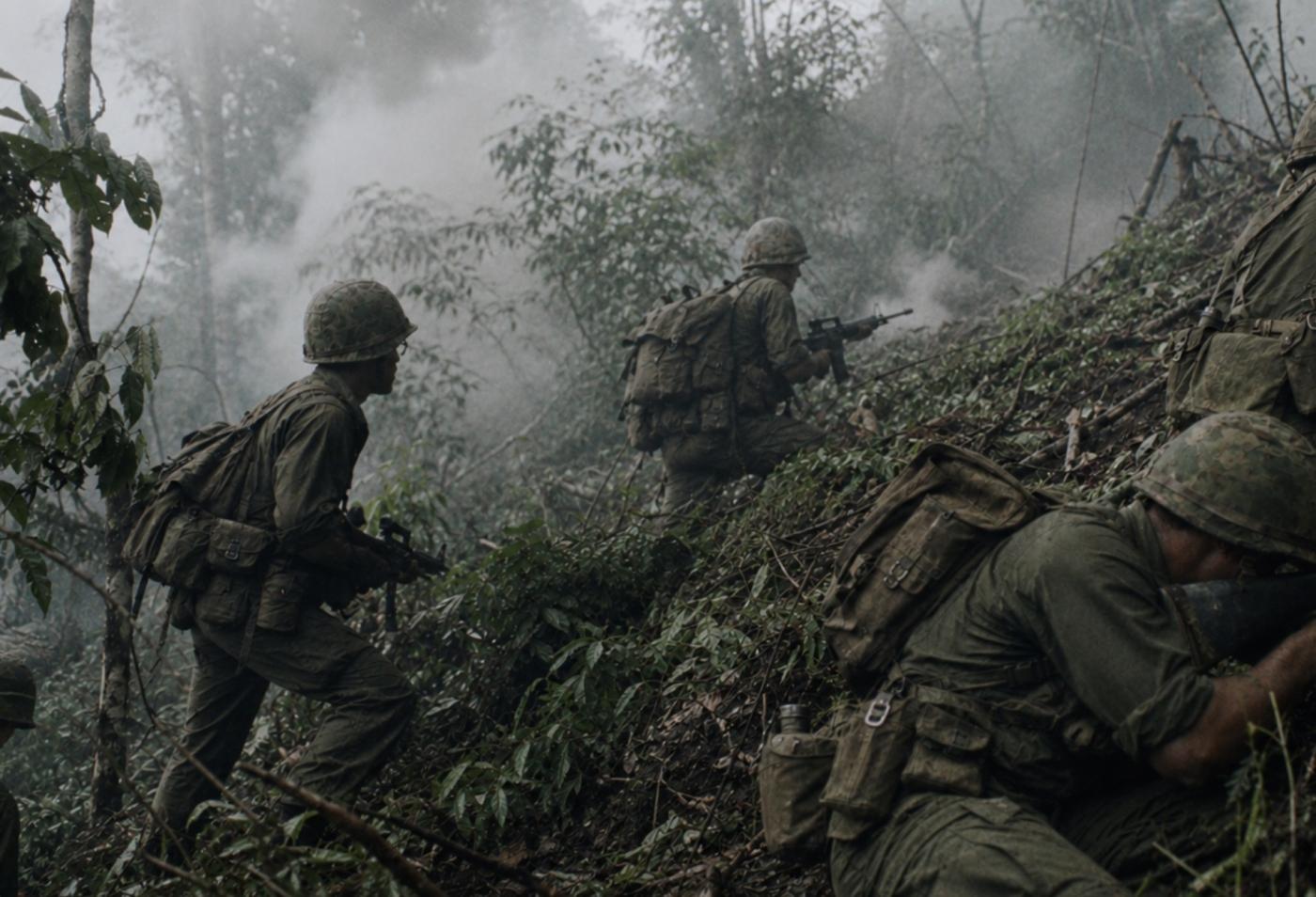
On 22 June 1967, after several days of operations that had begun on 20 June, Alpha Company moved out on what might have seemed another search-and-destroy sweep. Instead, it collided with a powerful North Vietnamese force, commonly identified with elements of the 24th Regiment. The opening burst of fire was devastating. The lead elements were hit hard, and the company began to fragment under pressure. In jungle combat, once a formation breaks into separated groups, command becomes a desperate matter of radio calls, shouted orders, and instinct. Men cannot easily see where the rest of the company is. A platoon may be only a short distance away and yet unreachable. Wounded men may lie in the open while enemy soldiers fire from hidden positions only yards away.
The North Vietnamese attacked with a violence and confidence that shocked the paratroopers. Automatic weapons, grenades, and close-range fire tore into Alpha Company. The terrain magnified the confusion. The slopes made movement exhausting. The vegetation concealed enemy positions and made it hard to bring American firepower to bear. Artillery and air support, so often decisive in Vietnam, were difficult to use when American and enemy soldiers were dangerously close together. The fight became intimate, confused, and brutal.
Accounts from survivors describe scenes of extraordinary courage amid chaos. Medics crawled forward under fire to reach wounded men. Soldiers tried to form defensive pockets, drag comrades back, and hold fragments of the company together. Radio operators became lifelines. Officers and NCOs tried to determine where their platoons were and how much of the company still existed as a fighting force. Some men were killed before they had any clear idea where the enemy fire was coming from. Others survived by crawling through the jungle, hiding among foliage, or being carried out by comrades.
One of the darkest features of the battle was what American troops later reported finding among the dead and wounded. When relief forces reached the battlefield, they discovered evidence that some wounded Americans had been killed at close range after the main fighting had passed over them. Such accounts made the battle especially bitter in the memory of the 173rd Airborne. The Battle of the Slopes was not remembered simply as a tactical defeat or a bloody ambush. It was remembered as a scene of close-quarter killing, helplessness, and horror on a jungle hillside.
Reinforcements fought to reach the trapped company. Other elements of the battalion pushed toward the sound of the guns, while artillery and air power were brought in as far as the situation allowed. The North Vietnamese eventually broke contact and withdrew, but they had achieved their immediate purpose. Alpha Company had been shattered. The exact casualty figures vary depending on the source and whether they refer only to Alpha Company or to the wider engagement, but the losses were appalling. Around three-quarters of Alpha Company became casualties. Many accounts state that the company began the day with just over 130 men in the field and lost 76 killed and 23 wounded in only a few hours. Broader summaries often give total U.S. losses in the battle as 79 killed. Whatever figure is used, the meaning is the same: one rifle company had been nearly destroyed.
The North Vietnamese also suffered losses, but their casualties are harder to establish. As in many Vietnam War battles, U.S. estimates of enemy dead varied widely and were often based on fire missions, blood trails, captured equipment, or later assessments rather than bodies actually counted on the ground. The enemy’s ability to remove dead and wounded from the battlefield made certainty difficult. American troops did find enemy bodies and equipment, but the central fact was that the North Vietnamese force had escaped after inflicting a terrible blow.
The aftermath of the Battle of the Slopes reached beyond the men who fought there. It forced U.S. commanders to recognise how dangerous the Đắk Tô region had become. The fight showed that North Vietnamese regulars were operating in strength near the border and that they were willing to engage American airborne infantry on carefully chosen ground. It also foreshadowed the larger battles that would come later in 1967, especially the November fighting around Đắk Tô and Hill 875. The Battle of the Slopes was, in that sense, an early warning. The highlands were not a quiet backwater. They were becoming one of the major killing grounds of the war.
The battle also reveals something important about the wider strategy of 1967. North Vietnamese forces increasingly sought to draw American units away from populated areas and into remote border regions. There, U.S. firepower still mattered, but the enemy could choose the time and place of contact, prepare bunkers, exploit jungle cover, and withdraw toward sanctuaries. These border battles helped stretch American and South Vietnamese forces and formed part of the military pressure that preceded the Tet Offensive of 1968. The Battle of the Slopes was not Tet, but it belonged to the same strategic landscape: a war of movement, deception, and attrition fought on ground where the enemy believed American advantages could be blunted.
For the 173rd Airborne, the battle became part of its hard-earned legend. The Sky Soldiers continued to fight in Vietnam for years, and the brigade would suffer heavily again at Đắk Tô later in 1967. But Hill 1338 remained a wound of its own. The men who survived carried memories of a company walking into the jungle and being almost wiped out on a mountainside. The battle’s name sounds almost understated, even geographical, but behind it lies one of the most intense company-level disasters suffered by U.S. forces in Vietnam.
Today, the Battle of the Slopes is remembered less widely than Khe Sanh, Ia Drang, Hamburger Hill, or the Tet battles, but it deserves attention because it captures the Vietnam War at its most unforgiving. It was a battle of terrain, intelligence, overconfidence, courage, and ambush. It showed how quickly a routine search mission could become a fight for survival. It showed how the jungle could swallow command and control. It showed the professionalism and ruthlessness of North Vietnamese regular forces in the Central Highlands. Above all, it showed the human cost paid by ordinary infantrymen who climbed a hill in June 1967 and found themselves in one of the most brutal small battles of the war.