On this day in military history…
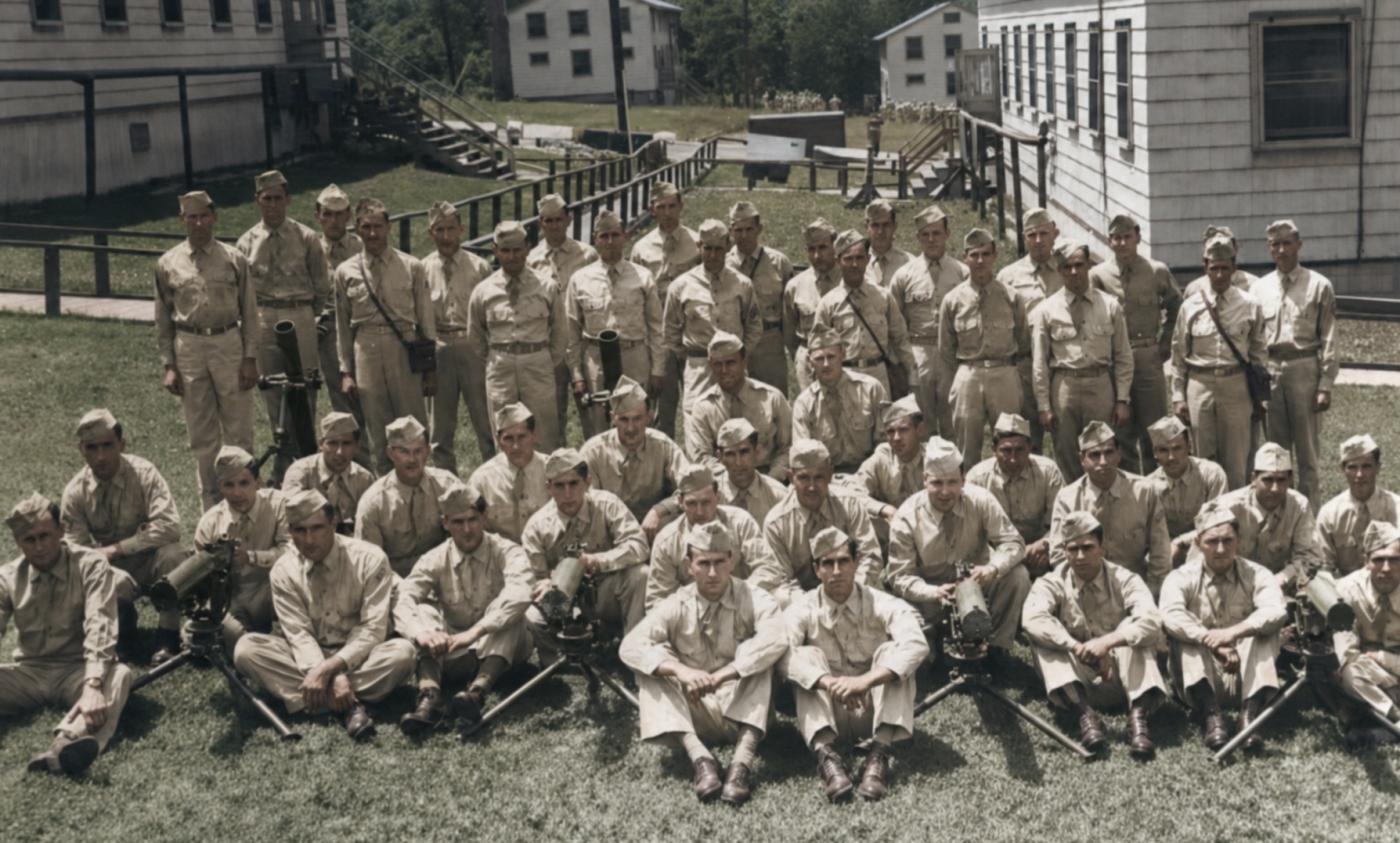
On 19 June 1942, in the wooded hills of Maryland near the Pennsylvania border, the United States Army opened one of the most unusual and important training schools of the Second World War. It was called the Military Intelligence Training Center, and it was based at Camp Ritchie. At first glance, Camp Ritchie looked like an ordinary army post, tucked away in a quiet rural setting. In reality, it became a secret wartime school where thousands of soldiers were trained in the new, urgent craft of battlefield intelligence.
The opening of Camp Ritchie came at a critical moment. The United States had entered the war only six months earlier, after the Japanese attack on Pearl Harbor in December 1941. American forces were now preparing to fight across several continents, but the Army faced a serious problem. It needed men who could understand enemy languages, read captured documents, question prisoners, interpret maps, identify enemy units, and turn fragments of information into useful intelligence for commanders in the field. Modern war was not only a contest of tanks, aircraft, ships, and artillery. It was also a contest of knowledge. The side that knew more about the enemy’s movements, intentions, morale, and weaknesses had a better chance of winning.
Camp Ritchie was chosen because it offered isolation, space, and security. The site had originally been connected with the Maryland National Guard and was later leased by the Army for wartime use. Its location helped keep the work discreet. This was important because the men trained there would often deal with sensitive information, secret methods, and captured enemy material. The camp’s remoteness also made it easier to create a controlled training environment where realistic exercises could be carried out away from public attention.
The man closely associated with the opening of the centre was Colonel Charles Y. Banfill. On 19 June 1942, he presided over the activation of the Military Intelligence Training Center. The first small class of student soldiers began training a little later, on 27 July 1942. That first class had only 36 students, all of them officers, but the school grew rapidly. Before long, Camp Ritchie was taking in officers and enlisted men from across the United States Army, and by the time the centre closed in October 1945, roughly 19,000 military intelligence specialists had passed through its gates.
The most famous graduates became known as the Ritchie Boys. The name came simply from the place where they trained, but it soon came to represent something extraordinary. Many of these soldiers were immigrants or refugees from Europe, especially German-speaking Jewish men who had fled Nazi Germany, Austria, and other parts of Nazi-controlled Europe. Some had escaped persecution only a few years earlier. Some had left family members behind. Some had seen the rise of Hitler first-hand. Now, wearing American uniforms, they were being trained to return to Europe and help defeat the regime that had driven them out.
This made the Ritchie Boys different from ordinary soldiers. They did not just know the German language; they understood German culture, slang, geography, institutions, accents, and habits of thought. They could tell where a prisoner might be from by the way he spoke. They could read between the lines of a captured letter. They could recognise the significance of a unit badge, a field-post number, a railway reference, or a casual remark made by a captured soldier. Their knowledge was personal, practical, and often irreplaceable.
Training at Camp Ritchie was demanding and highly specialised. Students learned interrogation techniques, counterintelligence, map reading, order of battle analysis, terrain intelligence, document interpretation, photo interpretation, psychological warfare, and the structure of enemy armies. They studied German military organisation in detail, learning how divisions, regiments, battalions, and specialist units were arranged. They learned how to identify enemy equipment and uniforms. They were taught how to question prisoners without wasting time, how to separate truth from rumour, and how to produce reports that commanders could actually use.
The training was not purely academic. Camp Ritchie used realistic exercises to prepare soldiers for the confusion of combat. Mock German villages were created. Instructors and trainees sometimes wore enemy uniforms for training purposes. Students practised interrogating prisoners, reading captured maps, working under pressure, and building an intelligence picture from incomplete clues. They had to learn speed as well as accuracy, because battlefield intelligence often had value only if it reached the right people quickly.
One of the most interesting aspects of Camp Ritchie was the way it turned outsiders into assets. Many refugees had arrived in America with accents, foreign education, and painful memories of Europe. In ordinary military life, those differences might have made them stand out awkwardly. At Camp Ritchie, those same differences became valuable tools. A man who had once been chased out of Germany because he was Jewish might now be asked to explain German army slang to American officers. A refugee who had lost his home could become the soldier who helped identify an enemy unit before it struck. The Army needed precisely the knowledge these men carried inside them.
The work of the Ritchie Boys was often dangerous. Many were sent close to the front lines after graduation. Some landed in Normandy after D-Day. Others served in Italy, France, Germany, and other theatres. They questioned prisoners of war, interviewed civilians, studied captured documents, monitored enemy morale, and helped commanders understand what was happening beyond the front. In fast-moving campaigns, even a small piece of intelligence could matter. A prisoner might reveal that his unit was short of fuel. A captured document might show the location of a command post. A civilian might know which bridges had been mined. A radio broadcast or leaflet might help persuade enemy soldiers to surrender.
Their language skills also made them valuable during the liberation of German territory and concentration camps. Some Ritchie Boys were among the American soldiers who encountered the evidence of Nazi crimes directly. For men who had fled antisemitic persecution, this must have been an especially heavy experience. They had returned not as victims, but as soldiers, translators, interrogators, and witnesses. After the fighting ended, some Camp Ritchie graduates also helped with occupation duties, denazification, war-crimes investigations, and the gathering of evidence for trials.
Camp Ritchie was not made up only of German-speaking Jewish refugees. The school trained a wide range of intelligence personnel, including order of battle specialists, photo interpreters, linguists, counterintelligence personnel, and general intelligence soldiers. Some trainees had backgrounds in other European languages. Others had skills in analysis, teaching, law, journalism, or military organisation. The camp also trained people for work connected to psychological warfare and information operations. The common purpose was to produce soldiers who could convert knowledge into military advantage.
The existence of the school reflected a major change in the American Army. Before the Second World War, military intelligence had often been treated as a smaller specialist function. The scale of the war changed that. Armies were moving across vast distances, using complex communications, mechanised units, air power, and rapidly shifting fronts. Commanders needed intelligence officers who could keep up. Camp Ritchie helped create that professional intelligence capability at speed.
There was also an element of irony in the story. Nazi Germany had driven out many of the very people who would later help defeat it. Hitler’s persecution forced scientists, writers, lawyers, teachers, linguists, and young students to flee Europe. Some of those refugees reached the United States, joined the Army, and were sent to Camp Ritchie. The Nazi regime had treated them as enemies and outsiders; the American Army used their knowledge as a weapon against Nazism itself.
For many years after the war, the story of Camp Ritchie remained relatively little known. Intelligence work is often secret by nature, and many veterans did not speak widely about what they had done. Some felt their contribution had been overshadowed by more visible forms of combat. Others simply returned to civilian life. Yet their influence was considerable. They helped shape wartime intelligence, postwar occupation work, and the later development of American intelligence methods during the Cold War.
The Ritchie Boys’ contribution has become much better known in recent years through books, interviews, documentaries, museum work, and historical research. Their story appeals not only because it is about espionage and intelligence, but because it is also about identity, exile, revenge, service, and moral courage. Many of these men had every reason to fear Europe, yet they returned to it in uniform. They fought not only with rifles, but with memory, language, and understanding.
Camp Ritchie closed its wartime intelligence school in October 1945, after the defeat of Germany and Japan. By then, it had trained thousands of specialists who had served across the war. The camp itself later became Fort Ritchie and remained in military use for decades, but its wartime role remains its most remarkable chapter.