On this day in military history…
The Six-Day War of June 1967 was one of the shortest wars of the twentieth century, yet few conflicts have changed the political map so dramatically in so little time. Fought from 5 to 10 June 1967, it involved Israel on one side and Egypt, Jordan, Syria, and, to a lesser extent, other Arab states on the other. In less than a week, Israel destroyed much of the Egyptian, Syrian, and Jordanian air forces, captured the Sinai Peninsula and Gaza Strip from Egypt, the West Bank and East Jerusalem from Jordan, and the Golan Heights from Syria. The war transformed Israel from a small state living within narrow and vulnerable borders into the dominant military power in the region. It also placed millions of Palestinians under Israeli control and created political questions that still shape the Middle East today.
To understand why the Six-Day War happened, it is necessary to go back to the creation of Israel in 1948 and the first Arab-Israeli war. When Israel declared independence in May 1948, armies from neighbouring Arab states entered the former British Mandate of Palestine. Israel survived and expanded beyond the borders proposed by the United Nations partition plan. Hundreds of thousands of Palestinians became refugees, an event Palestinians remember as the Nakba, or catastrophe. The armistice lines drawn in 1949 were not accepted as permanent borders by the Arab states. Egypt controlled Gaza, Jordan controlled the West Bank and East Jerusalem, and Israel controlled West Jerusalem and the rest of the territory it had captured. No peace treaty followed. Instead, the region entered a long period of hostility, raids, reprisals, border incidents, and political bitterness.
The 1956 Suez Crisis was another important step toward the 1967 war. Egypt’s president, Gamal Abdel Nasser, had become the leading figure of Arab nationalism. He nationalised the Suez Canal in 1956, provoking Britain, France, and Israel to launch a military campaign against Egypt. Israel captured the Sinai Peninsula but later withdrew under pressure from the United States and the Soviet Union. After the crisis, United Nations peacekeepers were placed in Sinai, and the Strait of Tiran, Israel’s access route from the Red Sea port of Eilat to the wider world, was reopened. For Israel, freedom of navigation through the strait became a vital security and economic interest. For Egypt and other Arab nationalists, Israel’s very existence remained unacceptable.
By the mid-1960s, tension was rising again. Palestinian guerrilla groups, especially Fatah, carried out raids into Israel, often from bases in Syria, Jordan, or Lebanon. Israel responded with military reprisals, sometimes against villages or positions in neighbouring countries. Syria and Israel clashed repeatedly over the demilitarised zones near the Sea of Galilee and over water resources. Water was a major issue because Israel was building its National Water Carrier, which moved water from the north to the rest of the country, while Arab states considered schemes to divert the headwaters of the Jordan River away from Israel. These disputes were not just technical matters; they were tied to survival, agriculture, settlement, national pride, and sovereignty.
Syria was one of Israel’s most hostile neighbours at the time. Syrian positions on the Golan Heights overlooked Israeli communities below, and artillery exchanges became frequent. In April 1967, a serious air battle took place after clashes along the Syrian front. Israeli aircraft shot down several Syrian MiG fighters, some of them near Damascus. This humiliated Syria and increased pressure on Egypt to show support for its Arab ally. The Soviet Union, which backed both Egypt and Syria, then passed warnings to Egypt that Israel was preparing an attack on Syria. Whether the Soviet warning was sincere, mistaken, exaggerated, or politically motivated has been debated, but it helped trigger the crisis.
Nasser faced a difficult situation. He had built his reputation as the champion of Arab nationalism, but Egypt’s army was heavily committed in Yemen, where it was fighting a costly civil war. If he did nothing after warnings that Syria might be attacked, he risked looking weak. In May 1967, he ordered Egyptian forces into Sinai, demanded the withdrawal of the United Nations Emergency Force, and closed the Strait of Tiran to Israeli shipping. The removal of the UN force shocked Israel because those peacekeepers had been part of the post-1956 security arrangement. The closure of the Strait of Tiran was even more serious. Israel had previously declared that closing the strait would be considered a cause for war.
Nasser’s moves were hugely popular across much of the Arab world. Crowds celebrated. Radio broadcasts and political speeches used dramatic language about defeating Israel. Other Arab governments were drawn into the crisis. Egypt and Jordan signed a defence pact shortly before the war. Iraq and other Arab states promised support. Yet behind the public confidence, Arab military coordination was poor. Egypt’s forces in Sinai were large but badly organised for the kind of fast modern war that was about to unfold. Jordan’s King Hussein was cautious, but he feared being accused of betraying the Arab cause if he stayed out. Syria was militant in rhetoric but not fully prepared for the consequences.
Israel, meanwhile, felt increasingly trapped. Its borders before 1967 were narrow, especially in the centre of the country, where the distance from the Mediterranean coast to the Jordanian-held West Bank was only a few miles. Israeli leaders worried that waiting too long would allow Arab armies to complete their mobilisation and perhaps attack first. The public mood in Israel became anxious, even fearful. Many Israelis believed they were facing a threat to the country’s survival. There was also intense debate inside the Israeli government. Prime Minister Levi Eshkol hesitated at first, hoping diplomacy might reopen the Strait of Tiran, but pressure grew from the military and from political opponents who argued that Israel could not afford to wait.
The United States tried to prevent war, but it was cautious. President Lyndon B. Johnson was already deeply involved in the Vietnam War and did not want a new Middle Eastern conflict. Washington explored the idea of an international naval effort to reopen the Strait of Tiran, but this plan did not come together quickly enough. Israel concluded that diplomacy was failing and that its military advantage might decline if it delayed. The decision was made to strike first.
On the morning of 5 June 1967, Israel launched Operation Focus, one of the most successful air attacks in military history. Israeli pilots flew low to avoid radar and attacked Egyptian airfields while many Egyptian aircraft were still on the ground. Runways were cratered with special bombs, and aircraft were destroyed before they could take off. The Egyptian air force was devastated within hours. Israel then attacked Jordanian, Syrian, and Iraqi airfields after those countries entered the fighting. Air superiority was the key to the entire war. Once Israel controlled the skies, its ground forces could move quickly and with far less fear of enemy air attack.
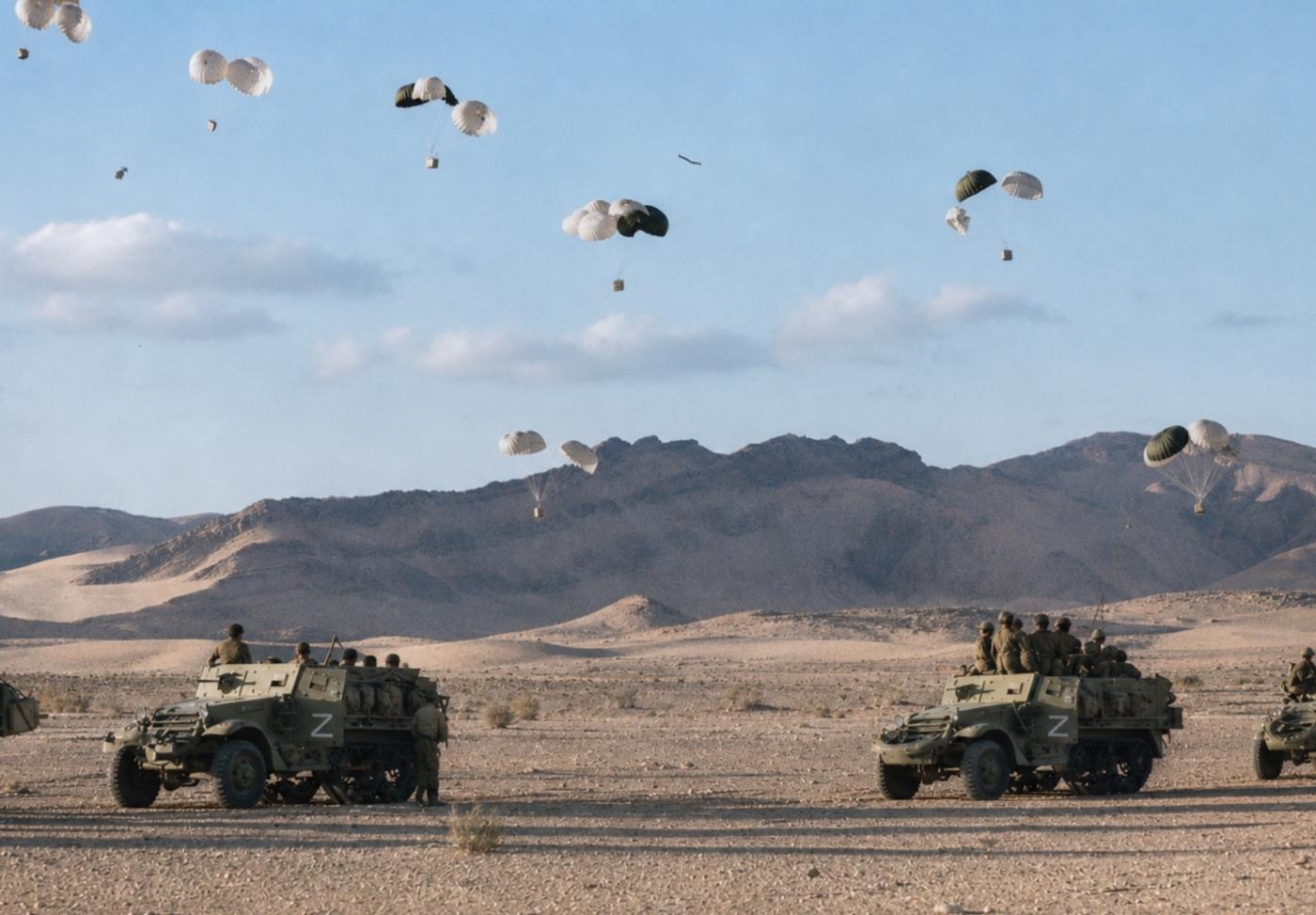
In Sinai, Israeli forces advanced rapidly against Egyptian positions. The fighting was fierce in places, especially around fortified areas such as Abu-Ageila, where Israeli combined arms tactics, including armour, infantry, artillery, engineers, and air support, were used effectively. Egyptian command and communications began to collapse. Confusing orders, panic, and poor coordination caused many Egyptian units to retreat in disorder. Israel pushed across Sinai toward the Suez Canal. Thousands of Egyptian soldiers were killed, captured, or left stranded in the desert. By the time the fighting ended, the whole Sinai Peninsula was in Israeli hands.
The Jordanian front produced some of the most emotionally powerful moments of the war. Israel initially sent messages urging Jordan not to join the fighting, but Jordanian forces opened fire in and around Jerusalem and attacked Israeli positions after receiving reports, many of them inaccurate, that Egypt was doing well. Israel responded with force. Fighting in Jerusalem was intense, especially around Ammunition Hill, a heavily defended Jordanian position. Israeli paratroopers fought their way into East Jerusalem and entered the Old City. On 7 June, Israeli forces reached the Western Wall, one of Judaism’s holiest sites, for the first time since 1948. For many Israelis and Jews around the world, this was an overwhelming symbolic moment. For Palestinians and the wider Arab world, it marked the beginning of Israeli control over East Jerusalem, a deeply contested issue that remains central today.
In the West Bank, Jordanian forces fought in several areas but were quickly overwhelmed. Israeli troops captured Ramallah, Nablus, Bethlehem, Hebron, Jenin, and other towns. By the end of the fighting with Jordan, Israel controlled the entire West Bank. This changed the Palestinian question profoundly. Before 1967, the West Bank had been under Jordanian rule and Gaza under Egyptian rule. After the war, both came under Israeli military occupation. The future of these territories became one of the world’s most difficult and enduring political problems.
The Syrian front was the last major phase of the war. At first, Israel concentrated on Egypt and Jordan. Syria shelled northern Israeli settlements from the Golan Heights, but Israeli leaders were divided over whether to attack the heights. The Golan was a formidable position, with steep slopes and fortified Syrian defences. However, after Egypt and Jordan were defeated, Israel turned north. On 9 June, Israeli forces began their assault. The terrain made the attack difficult, but Syrian morale and command weakened. By 10 June, Israeli troops had captured the Golan Heights. Syria accepted a ceasefire soon afterward.
The war ended after only six days, but the scale of the change was enormous. Israel had gained control of territory several times larger than its pre-war size. Sinai gave Israel strategic depth against Egypt. The Golan Heights gave it high ground over Syria. The West Bank and East Jerusalem placed the historic heartland of biblical Israel and many Palestinian population centres under Israeli rule. Gaza, crowded and poor, also came under Israeli occupation. The military victory was stunning, and many Israelis saw it as a miraculous escape from danger. In the Arab world, the defeat was traumatic. It became known as the Naksa, or setback, and it shattered the prestige of Nasser and the promise of pan-Arab nationalism.
One of the most interesting aspects of the Six-Day War is that it was both expected and unexpected. Many observers knew the crisis was dangerous, but few expected Israel to win so quickly or so completely. Arab public rhetoric before the war was confident, even threatening, but actual military readiness did not match the speeches. Israel’s military planning, intelligence, training, and mobilisation were far more effective. The Israeli air force had rehearsed attacks on enemy airfields in great detail. Pilots were trained for rapid turnaround, allowing aircraft to land, refuel, rearm, and take off again quickly. This meant Israel could strike repeatedly with a relatively small air force.
Another important feature is the role of misinformation. Egypt and Jordan believed inaccurate reports about the early course of the war. Jordan entered the conflict partly under the impression that Egypt was successfully attacking Israel, when in reality the Egyptian air force had already been badly damaged. Arab command structures were poor, and political pressure often distorted military decisions. The war shows how dangerous false information can be during a crisis, especially when leaders feel trapped by public promises and alliances.
The war also had a major Cold War dimension. The Soviet Union supported Egypt and Syria, while the United States was increasingly sympathetic to Israel, though America did not directly fight in the war. Both superpowers wanted influence in the Middle East, and both feared a wider escalation. After the war, the United States became even more central to Israeli security and diplomacy, while the Soviet Union rearmed Egypt and Syria. The conflict helped set the stage for the War of Attrition between Egypt and Israel and later the Yom Kippur War of 1973.
The human cost was severe. Although the war was short, thousands of soldiers were killed, especially on the Arab side, and many civilians were affected. Large numbers of Palestinians were displaced, some for the second time since 1948. The war deepened the refugee crisis and intensified Palestinian nationalism. Before 1967, many Arab governments claimed to speak for Palestine. After 1967, Palestinian organisations increasingly argued that Palestinians themselves had to lead their struggle. This helped raise the profile of the Palestine Liberation Organization and groups such as Fatah.
The capture of East Jerusalem had particular religious and political importance. Israel later expanded the municipal boundaries of Jerusalem and declared the city its united capital, a claim not recognised by much of the international community. The Old City contains sites sacred to Jews, Muslims, and Christians, including the Western Wall, the Temple Mount or Haram al-Sharif, the Al-Aqsa Mosque, the Dome of the Rock, and the Church of the Holy Sepulchre. Control of these places made Jerusalem an even more sensitive issue than before. Israel allowed the Islamic religious authorities to continue administering the Muslim holy sites, but sovereignty and access remained deeply disputed.
The aftermath of the war produced one of the most important diplomatic documents in modern Middle Eastern history: United Nations Security Council Resolution 242. Passed in November 1967, it called for Israeli withdrawal from territories occupied in the conflict and for every state in the area to live in peace within secure and recognised boundaries. The wording became famous and controversial, especially because arguments developed over whether it required withdrawal from all the territories or from territories as part of a negotiated settlement. The basic formula of land for peace shaped later diplomacy, including Israel’s peace treaty with Egypt.
Egypt eventually recovered Sinai not by another decisive military victory but through a combination of war and diplomacy. In 1973, Egypt and Syria launched the Yom Kippur War to regain territory and restore honour after 1967. Although Israel ultimately repelled the attack, Egypt’s initial success helped change the diplomatic situation. This led to negotiations, the Camp David Accords, and the 1979 Egypt-Israel peace treaty. As part of that peace, Israel returned Sinai to Egypt. Gaza, the West Bank, East Jerusalem, and the Golan Heights remained far more difficult issues.
The Six-Day War also changed Israeli politics and society. The victory produced confidence, pride, and a sense of military superiority, but it also created a moral and political dilemma. Israel now ruled over a large Palestinian population that did not have Israeli citizenship. Some Israelis saw the captured territories as bargaining chips for peace. Others saw them as historically and religiously part of the Jewish homeland and began pushing for settlement. The settlement movement grew over time, especially in the West Bank and Gaza, creating facts on the ground that made future peace negotiations much more complicated.
For Arab states, the defeat forced a painful reassessment. At a summit in Khartoum in August 1967, Arab leaders issued the famous position often remembered as the three noes: no peace with Israel, no recognition of Israel, and no negotiations with Israel. Yet in practice, Arab policy later became more flexible. Egypt eventually made peace with Israel. Jordan followed in 1994. The Palestinians entered negotiations with Israel in the 1990s. Still, the shock of 1967 remained a turning point. It weakened the dream of a united Arab military victory and strengthened separate national strategies.
Militarily, the war is often studied as an example of pre-emption, air superiority, intelligence preparation, rapid mobilisation, and combined arms warfare. Operation Focus showed how a well-planned first strike against enemy airfields could decide a campaign before ground battles fully developed. The Sinai campaign showed the importance of speed, initiative, and command flexibility. The fighting in Jerusalem demonstrated the difficulty of urban warfare and the power of symbolic objectives. The assault on the Golan Heights showed the risks and rewards of attacking fortified high ground.
Yet the war is also a warning about the dangers of crisis escalation. No single cause fully explains it. It happened because of long-term hostility after 1948, unresolved refugee and border issues, Arab rejection of Israel, Israeli security fears, Palestinian guerrilla attacks, Syrian-Israeli clashes, Soviet warnings, Egyptian mobilisation, the withdrawal of UN peacekeepers, the closure of the Strait of Tiran, alliance politics, nationalist rhetoric, and failed diplomacy. Each side made decisions it considered defensive or necessary, but those decisions narrowed the space for compromise. By early June 1967, leaders on all sides were operating under pressure, fear, pride, and incomplete information.
The Six-Day War is therefore remembered in very different ways. For many Israelis, it was a war of survival that ended in an astonishing victory and reunited Jerusalem under Israeli control. For many Arabs and Palestinians, it was a devastating defeat that brought occupation, displacement, and humiliation. For military historians, it was a brilliant campaign of speed and air power. For diplomats, it created the framework and the obstacles for decades of peace efforts. For the people of the region, it was not truly over after six days. Its consequences continued through the War of Attrition, the Yom Kippur War, the rise of the Palestinian national movement, the settlement issue, the peace treaties with Egypt and Jordan, the Oslo process, and the continuing conflict over land, sovereignty, security, and national identity.
The most important thing about the Six-Day War is that its brevity is misleading. The fighting lasted less than a week, but the war reshaped the Middle East more than many conflicts that lasted for years. It redrew borders, changed alliances, altered military thinking, transformed Israeli and Arab politics, and placed the Palestinian question at the centre of international diplomacy. It began as a crisis over security, deterrence, prestige, and access to the Strait of Tiran, but it ended by creating a new regional reality. More than half a century later, the political and human consequences of those six days remain unresolved.