On this day in military history…
By the morning of 29 May 1982, the Battle of Goose Green had reached its decisive stage. The previous day had seen fierce fighting across open and exposed ground as 2 PARA pushed forward against Argentine positions around Darwin and Goose Green. Lieutenant Colonel H. Jones had been killed during the battle, a moment that has rightly become one of the most remembered episodes of the Falklands War. But after his death, the responsibility for carrying the battalion through to victory passed to Major Chris Keeble.
Keeble took over command at a moment of great pressure. The battalion had suffered casualties, the men were tired, and the Argentine force still held a strong position with far greater numbers than the British attackers. It would have been easy for confusion or hesitation to take hold, but Keeble steadied the situation. He understood that 2 PARA still had the initiative, but he also knew that another direct assault into Goose Green could be costly.
His leadership at this point was calm and practical. Rather than allowing emotion to dictate the next move, he assessed the condition of both sides. The Argentines had been hit hard by the fighting, and their morale had clearly been shaken. They had seen the determination of the Paras, and they knew the British were prepared to continue. Keeble recognised that this was the moment to turn battlefield pressure into surrender.
Instead of simply ordering another attack, he opened the way for negotiation. His message to the Argentine commander was firm and direct. The defenders were to surrender, leave their positions, lay down their weapons and give up the settlement. The warning was clear: if they refused, the attack would continue and the consequences would be severe. It was not an empty threat. 2 PARA had already shown what it was capable of, and the Argentines knew they were facing soldiers who would keep coming.
This was a crucial act of command. Keeble was not showing weakness by offering terms; he was using strength intelligently. He gave the enemy a way out while making it obvious that further resistance was hopeless. In doing so, he saved lives on both sides and avoided what could have become a bloody final assault on Goose Green itself.
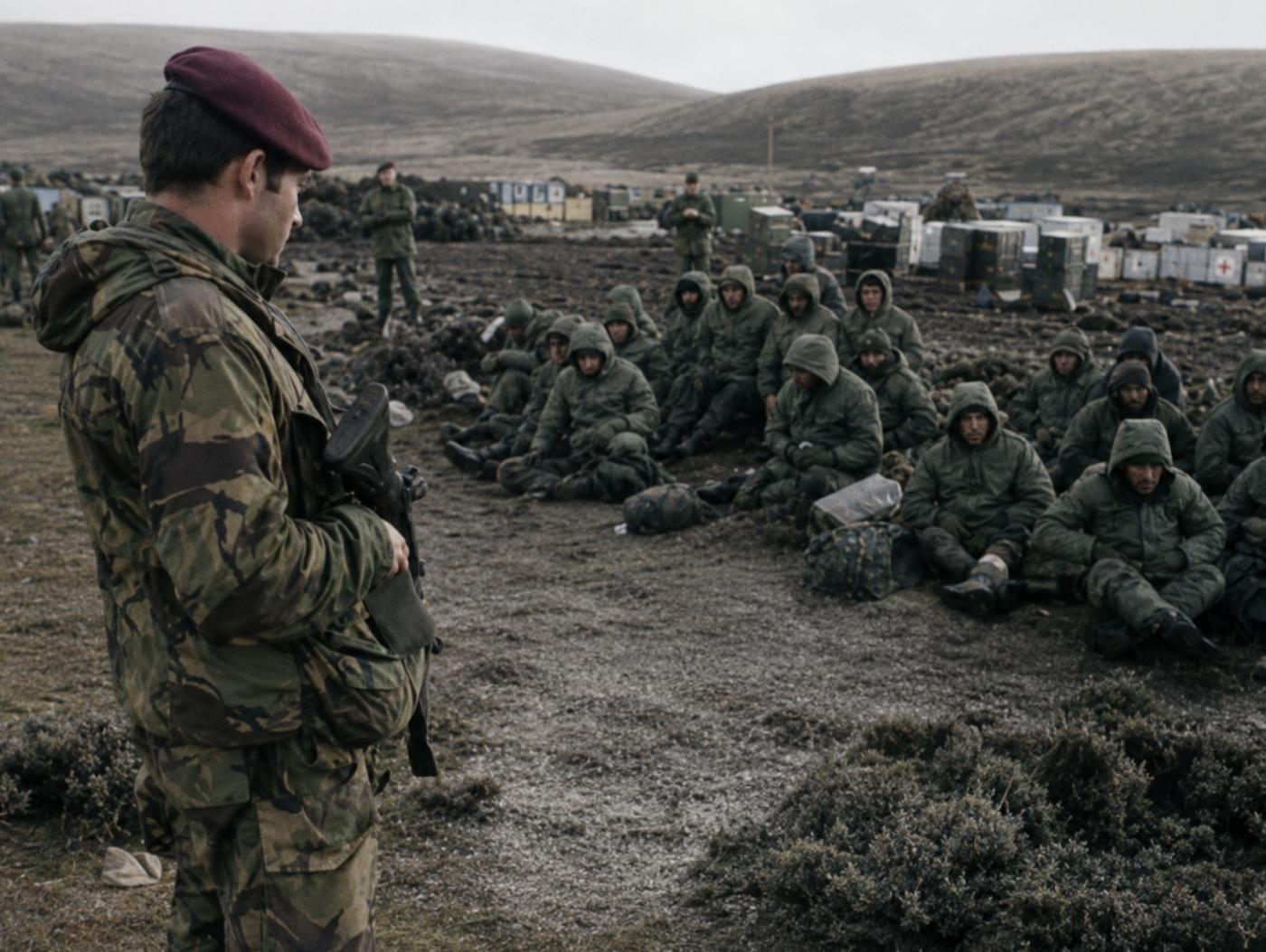
On 29 May, the Argentine surrender began. What followed was remarkable. British soldiers who had expected further fighting instead saw large numbers of Argentine troops begin to emerge and give themselves up. The scale of the surrender surprised many who witnessed it. This was not a handful of men abandoning a position. It was a large body of troops, far more numerous than the British force that had attacked them, laying down their arms.
Around a thousand Argentine troops surrendered at Goose Green. For 2 PARA, the sight must have been extraordinary. They had gone into battle heavily outnumbered, fought through difficult ground and determined resistance, lost comrades, and then watched a much larger enemy force give itself up. It showed how completely the battle had turned. Numbers alone had not decided the outcome. Determination, aggression, morale and leadership had.
Keeble’s role in this moment deserves real attention. He inherited command in the middle of a dangerous and emotionally charged battle. He had to restore balance, maintain pressure, judge the enemy’s state of mind, and then decide how best to finish the fight. A less controlled commander might have pushed straight on and paid heavily for the victory. Keeble chose a better route. He kept control of the battlefield and used the threat of further force to bring about surrender.
The surrender at Goose Green became one of the most important British victories of the Falklands campaign. It cleared Darwin and Goose Green, removed a major Argentine position south of the San Carlos beachhead, and gave British forces a much-needed boost in confidence. It also proved that 2 PARA, despite the loss of its commanding officer, remained disciplined, aggressive and capable of completing the mission.
Major Chris Keeble’s command on 29 May was a display of judgement as much as courage. He did not simply continue the battle; he ended it at the right moment and on British terms. By accepting the surrender of such a large Argentine force, he secured the objective, protected civilians, reduced further casualties and delivered a victory that echoed far beyond the settlement itself.
H. Jones’ death remains central to the story of Goose Green, but the battle’s conclusion belongs in large part to Keeble. He took command in crisis and brought the fight to a decisive finish. On 29 May 1982, at Goose Green, a British battalion that had been outnumbered and tested to the limit stood victorious as around a thousand Argentine troops laid down their weapons.