Britains Oldest Military Button Maker
For more than three centuries, the name Firmin has been closely associated with the uniforms, buttons, badges and ceremonial insignia of Britain’s armed forces. To generations of soldiers, sailors and airmen the company name may have appeared only as a tiny maker’s mark stamped on the reverse of a button, yet behind that mark stands one of the longest and most remarkable traditions in British military manufacturing. Firmin became one of the great specialist makers of military buttons and uniform accoutrements, supplying items that helped identify regiments, corps, ranks and branches of service throughout periods of enormous change in the British Army and the wider armed forces.
The origins of the business are generally traced back to the seventeenth century, when button making was still a highly skilled craft carried out by specialist metalworkers. Uniforms were becoming increasingly standardised, particularly as European armies developed permanent standing forces with distinctive national and regimental dress. Buttons were far more than simple fasteners. Their design, material and decoration could show the wearer’s regiment, status or government service, making them an important part of military identity.
Firmin established itself in London, where proximity to government departments, military tailors and the headquarters of the armed forces offered considerable advantages. London was at the centre of the British military clothing trade, with specialist manufacturers producing everything from sword belts and helmets to lace, buckles, buttons and badges. Over time Firmin developed the skills and manufacturing capacity required to produce large quantities of highly detailed metalwork while maintaining the standards expected by military customers.
The company became particularly well known for its buttons. During the eighteenth and nineteenth centuries, British military uniforms became increasingly elaborate and regimentally distinctive. Infantry regiments, cavalry units, artillery formations and specialist corps often carried their own numbers, crowns, royal cyphers, animals, weapons or heraldic devices on their buttons. This created a huge demand for manufacturers capable of producing accurately stamped and finished designs.
For the collector today, the reverse of an old British military button can sometimes be almost as interesting as the front. Firmin maker’s marks appear in several different forms depending on the period of manufacture and the company’s trading name and address at the time. Variations such as Firmin & Sons and other associated company markings can help enthusiasts and historians approximately date an item. Changes in London addresses and business titles are therefore useful clues when studying surviving uniforms and loose buttons.
The expansion of the British Empire brought further opportunities. British soldiers were stationed throughout India, Africa, the Middle East, Asia and other parts of the world, and the armed forces required enormous quantities of uniform fittings. New regiments and locally raised units created additional demand for distinctive insignia. Buttons carrying regimental numbers, royal crowns and national or colonial symbols were produced in huge variety.
During the Napoleonic Wars, the Victorian period and the great imperial campaigns of the nineteenth century, military dress remained an essential part of regimental pride. A soldier’s uniform immediately identified his service and often his individual regiment. Buttons were therefore carefully designed and controlled. Officers might wear higher-quality gilt buttons, while other ranks received more practical versions suited to mass production and military service.
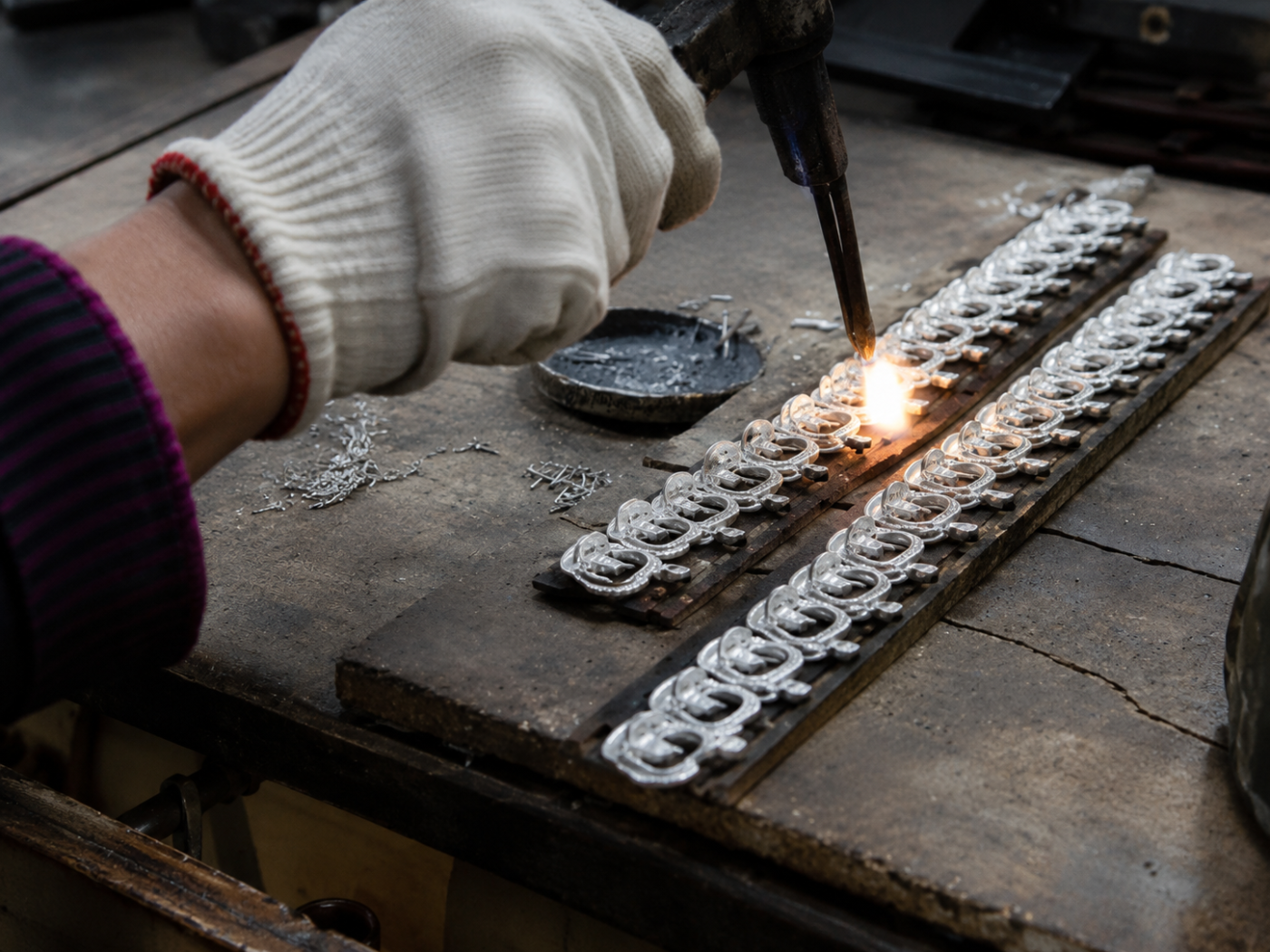
Manufacturing methods also developed considerably. Early buttons could involve separate pieces of metal, hand finishing and soldered components. Later industrial techniques allowed detailed designs to be pressed or stamped into metal with remarkable consistency. Dies were created for particular regiments or government departments, and large production runs could then be manufactured efficiently.
The quality of the die work was particularly important. Even a small button might contain a remarkably complicated design, including crowns, wreaths, royal monograms, regimental numbers and finely detailed animals. A lion, eagle, sphinx or other emblem had to remain recognisable despite being reproduced on a relatively small surface. Companies such as Firmin developed considerable expertise in producing this miniature military artwork.
Firmin’s work was not confined entirely to buttons. Over the years the firm became involved in the manufacture of many forms of uniform insignia and ceremonial metalwork. Cap badges, collar badges, shoulder titles, helmet plates, belt fittings and other items associated with military and official dress have all formed part of the wider tradition of specialist manufacture connected with the company.
The arrival of the First World War created unprecedented demands on British military clothing manufacturers. The rapid expansion of the British Army after 1914 required millions of uniforms and vast numbers of buttons and badges. The small pre-war professional army was transformed into a mass citizen force. Existing regiments expanded, new service battalions were created and men from across Britain and the Empire entered military service.
Although wartime uniforms were far less decorative than the brightly coloured dress of the Victorian Army, buttons and badges remained essential. Khaki service dress still carried the symbols of the regiment and the Crown. General Service buttons bearing the royal arms became common, while many units continued to use their own distinctive patterns.
The huge demand of wartime inevitably required production on an industrial scale. Manufacturers capable of maintaining quality while supplying government contracts played an important role in keeping the expanding armed forces equipped. Millions of apparently ordinary items such as buttons were needed, and without them uniforms could not be completed and issued.
The interwar period brought another change in military fashion, but the traditions of regimental insignia survived. Ceremonial uniforms, officers’ dress and walking-out uniforms continued to make use of highly finished buttons and badges. Military manufacturers therefore had to balance large-scale practical production with the specialised craftsmanship required for prestigious ceremonial items.
The Second World War once again created enormous demand. Britain mobilised millions of men and women across the armed forces and supporting organisations. The Army, Royal Navy and Royal Air Force all expanded dramatically, while numerous auxiliary organisations, civil defence services and government departments also required uniforms and insignia.
Buttons manufactured during this period are now widely collected. Some remain attached to original battledress blouses, greatcoats and service dress uniforms, while countless loose examples have survived in collections, old sewing tins and military surplus stocks. Turning one over and discovering a Firmin maker’s mark provides a direct connection with one of Britain’s best-known military suppliers.
The company’s long association with the armed forces continued after 1945. Although military uniforms gradually became simpler and less decorative for everyday wear, ceremonial traditions remained extremely strong. British military pageantry still relies heavily on elaborate dress uniforms, particularly among Guards regiments, Household Cavalry units, bands and those performing royal and state ceremonial duties.
In these uniforms the smallest details matter. A polished button, correctly designed badge or precisely manufactured piece of insignia forms part of a tradition stretching back centuries. When hundreds of soldiers appear on parade, the visual effect depends upon every piece of uniform being produced to an exact standard.
Firmin has also been associated with the production of insignia and ceremonial items beyond the ordinary military sphere, including police, government and official organisations. The same specialist metalworking skills required to manufacture military badges can be applied to buttons, medals and insignia used by many uniformed services.
One of the most fascinating aspects of Firmin’s history is the way the company has survived enormous changes in both warfare and manufacturing. When the early business was established, the British Army fought with flintlock muskets and cavalry charges remained central to warfare. The firm later witnessed the industrial revolution, the expansion of the British Empire, two world wars, the jet age and the development of modern professional armed forces.
Throughout all of these periods the basic need for military identity remained. Weapons and equipment changed almost beyond recognition, but soldiers continued to wear badges and buttons that represented their unit and service. A modern military button may be manufactured using methods far removed from those of the eighteenth century, yet its purpose remains closely connected to the same traditions.
The survival of old Firmin buttons also makes the company particularly interesting to military historians and collectors. A single button discovered on an old battlefield, recovered from a former barracks or found in a box of family possessions can sometimes help identify a uniform or establish the approximate period in which it was manufactured.
Regimental button collecting has developed into a specialist field in its own right. Designs changed when monarchs changed, when regiments were renumbered or amalgamated and when new crowns and royal cyphers were introduced. The crown of Queen Victoria, for example, differs from the crowns and cyphers associated with later monarchs. Manufacturers’ marks provide another layer of evidence.
Firmin’s various marks and addresses can therefore become valuable dating tools. Collectors carefully examine the wording stamped into the back of a button and compare it with known company history. This is particularly useful when the same or similar button design remained in use for many years.
The construction of a button can also provide clues. Early examples may have different shanks, backplates and methods of assembly compared with twentieth-century examples. Finishes ranging from gilt and silver plate to brass and bronzed surfaces can reflect the intended uniform and status of the wearer.
Officers’ buttons were often produced to an exceptionally high standard, particularly for full dress uniforms. The crispness of the design, depth of the relief and quality of the finish demonstrate the importance placed on military appearance. In some cases these small objects can be viewed as miniature examples of British heraldic art.
Firmin’s reputation ultimately rests on this combination of tradition and precision. Military insignia cannot simply look approximately correct. Regimental devices and royal symbols have to be reproduced accurately. For units with centuries of history, even minor details can carry deep significance.
A crown, wreath, battle honour or animal emblem may represent traditions inherited through generations of soldiers. When a regiment is amalgamated, elements from earlier units are sometimes incorporated into new badges and buttons, creating complicated designs filled with historical meaning. The manufacturer is responsible for turning these traditions into a durable physical object that can be worn on a uniform.
For this reason the history of Firmin is also part of the wider history of the British military uniform. Its products have been worn during periods of war and peace, on distant imperial campaigns, on parade grounds and during some of the most important state ceremonies in British history.
Countless servicemen will have polished buttons made by the firm without ever giving much thought to the company that produced them. To the soldier preparing for inspection, the button was simply another piece of kit that had to shine. To the historian today, however, that same button can tell a much larger story.
It may identify a regiment that no longer exists, carry the cypher of a long-dead monarch or bear a maker’s mark from an old London address. It may have been worn on an officer’s scarlet tunic, a Victorian cavalry uniform, a First World War service dress jacket or the ceremonial uniform of a modern soldier.
Few British manufacturing names can claim such a long connection with the visual identity of the armed forces. Firmin’s contribution is found not in great weapons or military vehicles but in the smaller details that generations of servicemen have carried on their uniforms.
Those details are easy to overlook, yet they form an important part of military history. Buttons and badges represent loyalty, regiment, monarch and service, and the craftsmen who produced them helped create the distinctive appearance for which the British armed forces became famous throughout the world.
Today, surviving Firmin military buttons remain a familiar sight in collections and museums. They are often inexpensive compared with medals or weapons, but historically they can be every bit as fascinating. Each carries a small piece of the story of the unit that wore it and of the company that manufactured it.
From the earliest days of specialist button making to the highly controlled manufacture of modern ceremonial insignia, the Firmin name has remained closely tied to British uniform tradition. Its longevity reflects both the quality of its workmanship and the enduring importance of military identity.
A tiny maker’s mark on the back of a brass button may seem insignificant, but in the case of Firmin it represents centuries of British craftsmanship and an extraordinary connection with the men and women who have served in uniform. Through war, empire, technological revolution and changing military fashion, the company’s products have remained part of the fabric of Britain’s armed forces, making Firmin one of the most important names in the long history of British military buttons and insignia.