Alan Deere
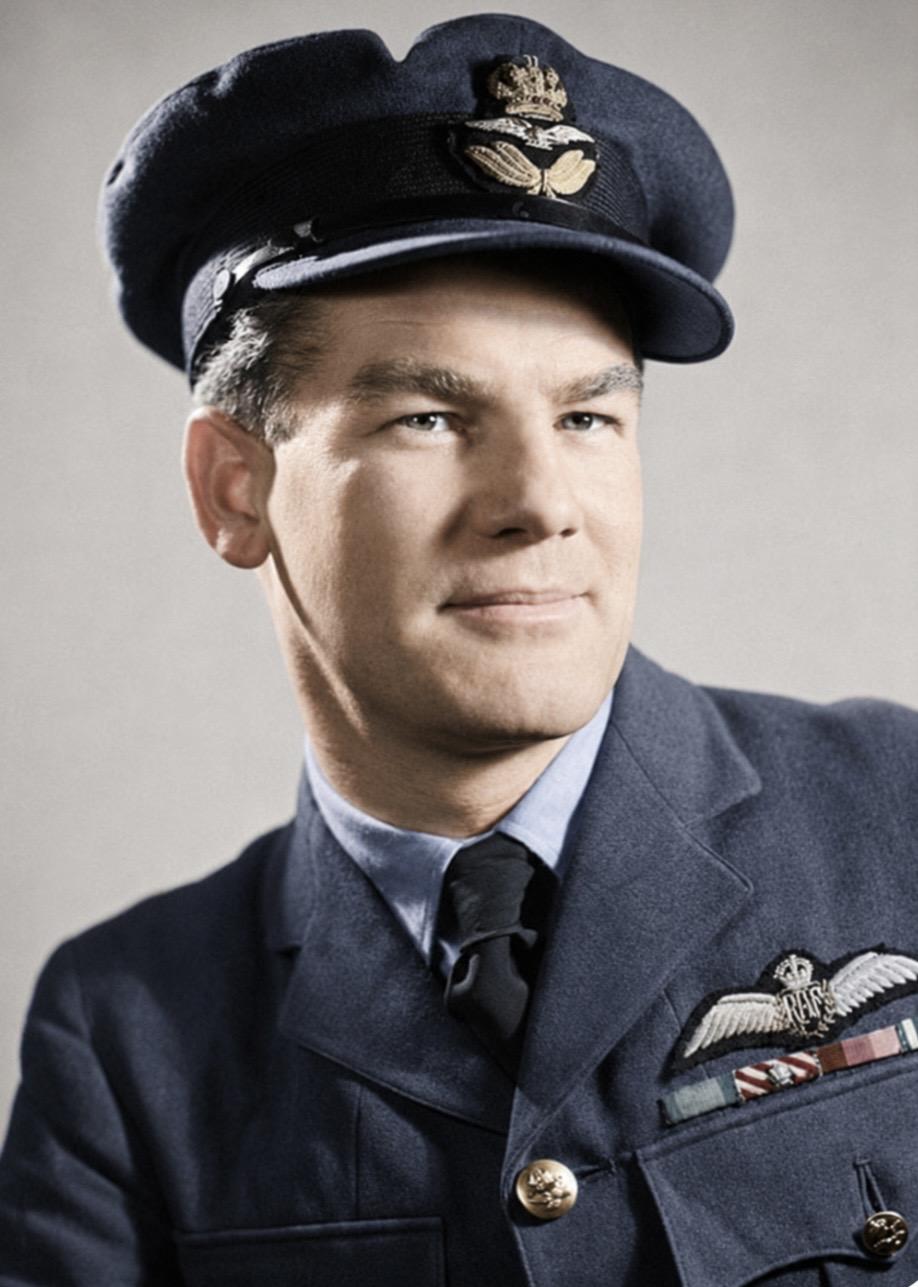
Alan Christopher Deere, better known as Al Deere, was one of the most famous New Zealand fighter pilots of the Second World War. He became closely associated with the Supermarine Spitfire, the aircraft that came to symbolise the Battle of Britain and the defence of Britain in 1940. Deere was admired not only for his fighting skill but also for his extraordinary luck. He survived so many crashes, forced landings, near misses and combat escapes that he later called his autobiography Nine Lives.
Deere was born in New Zealand on 12 December 1917. Some accounts list Auckland as his birthplace, while others connect his birth and childhood strongly with Westport on the South Island’s west coast. What is clear is that he grew up in New Zealand in a hardworking family. His father, Terrence, worked for New Zealand Railways, and the family later moved to Wanganui. Deere’s upbringing was not that of a privileged officer but of a determined young man from a practical background. He attended school in Wanganui and became known for being active, competitive and tough. He played sport, boxed, and showed the confidence and physical courage that later helped him as a fighter pilot.
His first fascination with flying began when he was still young. Like many boys of his generation, he was captivated by the sight and sound of aircraft, which were still exciting and comparatively rare machines in New Zealand during the 1920s and 1930s. One important moment came when he had the chance to go up in an aircraft during a visit by the famous Australian aviator Sir Charles Kingsford Smith. That flight made a deep impression on him. From then on, Deere wanted to fly, not merely as a passenger but as a pilot.
After leaving school, Deere worked briefly as a shepherd and then as a law clerk. These jobs were respectable, but they did not satisfy his ambition. He wanted the air. In the mid-1930s he discovered that the Royal Air Force in Britain was accepting applications from young men from the Dominions, including New Zealand. This was his opportunity. His father was not enthusiastic about the idea, perhaps because flying was dangerous and because joining the RAF meant going to the other side of the world. Deere, however, was determined. He applied for a short-service commission, passed the selection process, and sailed for Britain in 1937.
When Deere arrived in Britain, he entered RAF training at a time when Europe was moving steadily towards war. Germany was rearming under Adolf Hitler, and the RAF was expanding quickly because Britain knew it would need modern aircraft and trained pilots. Deere learned to fly in RAF training aircraft and proved himself capable. He was commissioned and eventually posted to No. 54 Squadron RAF. At first the squadron flew Gloster Gladiators, biplane fighters that already looked old-fashioned compared with the latest German aircraft. Then came the machine that would define Deere’s career: the Supermarine Spitfire.
The Spitfire was fast, elegant and highly manoeuvrable. Designed by R. J. Mitchell, it had a slim fuselage, elliptical wings and a Rolls-Royce Merlin engine. For a young fighter pilot like Deere, it was a thrilling aircraft to fly. It demanded skill, but it rewarded pilots with speed, climb and turning ability. Deere took to it naturally. By 1940, as Germany launched its attacks in Western Europe, he was a trained Spitfire pilot in one of the RAF’s front-line fighter squadrons.
His first major combat came during the Battle of France and the fighting over Dunkirk in May 1940. The RAF sent fighters across the Channel to protect British and Allied forces as the German advance drove them back towards the coast. Deere quickly found himself in intense combat against German fighters and bombers. It was a brutal introduction to modern air war. Pilots had to make decisions in seconds, identify enemy aircraft, watch their fuel, stay with their formation and survive attacks from above or behind.
Deere proved aggressive and skilful. He shot down enemy aircraft and became an ace during this period. But he also discovered how thin the line was between survival and death. In one famous incident, his Spitfire was damaged and he had to make a forced landing on a beach. He survived, but the episode added to the growing legend of his luck. Deere was not reckless in the careless sense, but he was bold and determined, and he often found himself in the middle of the action.
After the evacuation from Dunkirk, Britain stood alone against Nazi Germany. The Luftwaffe began its campaign to gain air superiority before any possible invasion. This became the Battle of Britain. Deere and No. 54 Squadron were based at places including RAF Hornchurch and RAF Manston, close enough to the south-east of England to meet German raids coming across the Channel. The days were exhausting. Pilots were scrambled again and again, climbing rapidly to intercept formations of bombers escorted by Messerschmitt fighters.
During the Battle of Britain, Deere’s reputation grew. He was credited with shooting down more enemy aircraft, but he was also shot down or forced down several times himself. NZHistory notes that during the Battle of Britain he was shot down three times, and on another occasion his Spitfire crashed during take-off while his airfield was under attack. These were exactly the kinds of experiences that later made the title Nine Lives so appropriate. Deere seemed to survive situations that should have killed him.
One of the most remarkable things about Deere was that he kept returning to combat. A pilot who had been shot down, injured or badly shaken could easily lose his nerve. Deere did not. He continued flying, continued leading, and continued fighting. This resilience was one of the qualities that made him valuable to the RAF. The Battle of Britain was not won by machines alone. It was won by pilots who could endure fear, fatigue and repeated danger, and still take off when the scramble bell rang.
Deere was awarded the Distinguished Flying Cross for his courage and skill, and later received a Bar to the DFC, meaning he was awarded the honour a second time. His decorations reflected both his combat success and the respect he had earned as a fighter pilot. By the end of 1940, he was already one of the notable New Zealand names in RAF Fighter Command.
Although Deere is best remembered for 1940, his war did not end with the Battle of Britain. He continued to serve in fighter operations and later held command positions. He commanded squadrons and eventually led fighter wings, including at Biggin Hill, one of the most famous RAF fighter stations of the war. Leadership in a fighter wing required more than personal bravery. It demanded tactical judgement, discipline, confidence and the ability to inspire younger pilots. Deere had learned the hard way what air combat required, and he passed that experience on.
By the later stages of the war, Deere had become not just a fighter pilot but a fighter leader. He was involved in operations connected with the air offensive over Europe and the build-up to the invasion of Normandy. His score has been given differently in different sources. Older accounts often credited him with 22 victories, while later research has revised the total to around 17 confirmed victories. Either figure places him among the most successful New Zealand fighter pilots of the war. More importantly, his career shows the strain and danger faced by RAF fighter pilots over several years of continuous conflict.
There are many interesting stories connected with Deere. One concerns his friendship and association with other famous fighter pilots, including Douglas Bader. Bader, who had lost both legs before the war and flew with artificial limbs, was shot down and captured in 1941. Deere later recalled escorting the aircraft that dropped a replacement artificial leg for Bader while he was a prisoner of war. Deere also knew and admired the South African fighter leader Sailor Malan, one of the RAF’s great tactical minds. Men like Deere, Malan and Bader belonged to the small world of experienced fighter pilots whose actions and reputations became part of RAF legend.
Another interesting part of Deere’s story is the connection between his New Zealand identity and his RAF career. He served in the Royal Air Force, not simply in a New Zealand unit, but he remained proudly associated with New Zealand. Like many Dominion airmen, he had travelled halfway around the world to fight in Britain’s air war. His story is a reminder that the Battle of Britain was not fought only by English pilots. New Zealanders, Canadians, Australians, South Africans, Poles, Czechs and others all played important roles in Fighter Command.
After the war, Deere stayed in the RAF. This was a significant choice. Many wartime pilots returned to civilian life, but Deere made the air force his long-term career. He held a range of command and staff appointments and eventually rose to the rank of Air Commodore. He was also appointed OBE and received other honours. His post-war career showed that he was not merely a brave wartime pilot but also a capable professional officer.
In 1959 Deere published his autobiography, Nine Lives. The book became one of the best-known memoirs by a Battle of Britain pilot. Its title captured the public image of Deere as a man who repeatedly escaped death. Yet the book was more than a collection of lucky escapes. It gave readers a pilot’s view of the air war: the fear, excitement, humour, comradeship and loss that shaped the lives of young fighter pilots. It also helped preserve the memory of the men who flew Spitfires in 1940.
Deere retired from the RAF in 1967. He remained in Britain and continued to be involved with RAF life, including sport. He was often consulted by historians, writers and broadcasters because he had been at the centre of some of the most dramatic air fighting of the Second World War. He lived long enough to see the Battle of Britain become part of national memory, with the Spitfire transformed from a wartime weapon into an icon.
Alan Deere died of cancer in the United Kingdom on 21 September 1995, aged 77. In a final tribute that suited his life perfectly, his ashes were scattered over the River Thames from a Spitfire. It was a fitting farewell for a man whose name had become inseparable from that aircraft.