173 Airborne Sky Soldiers
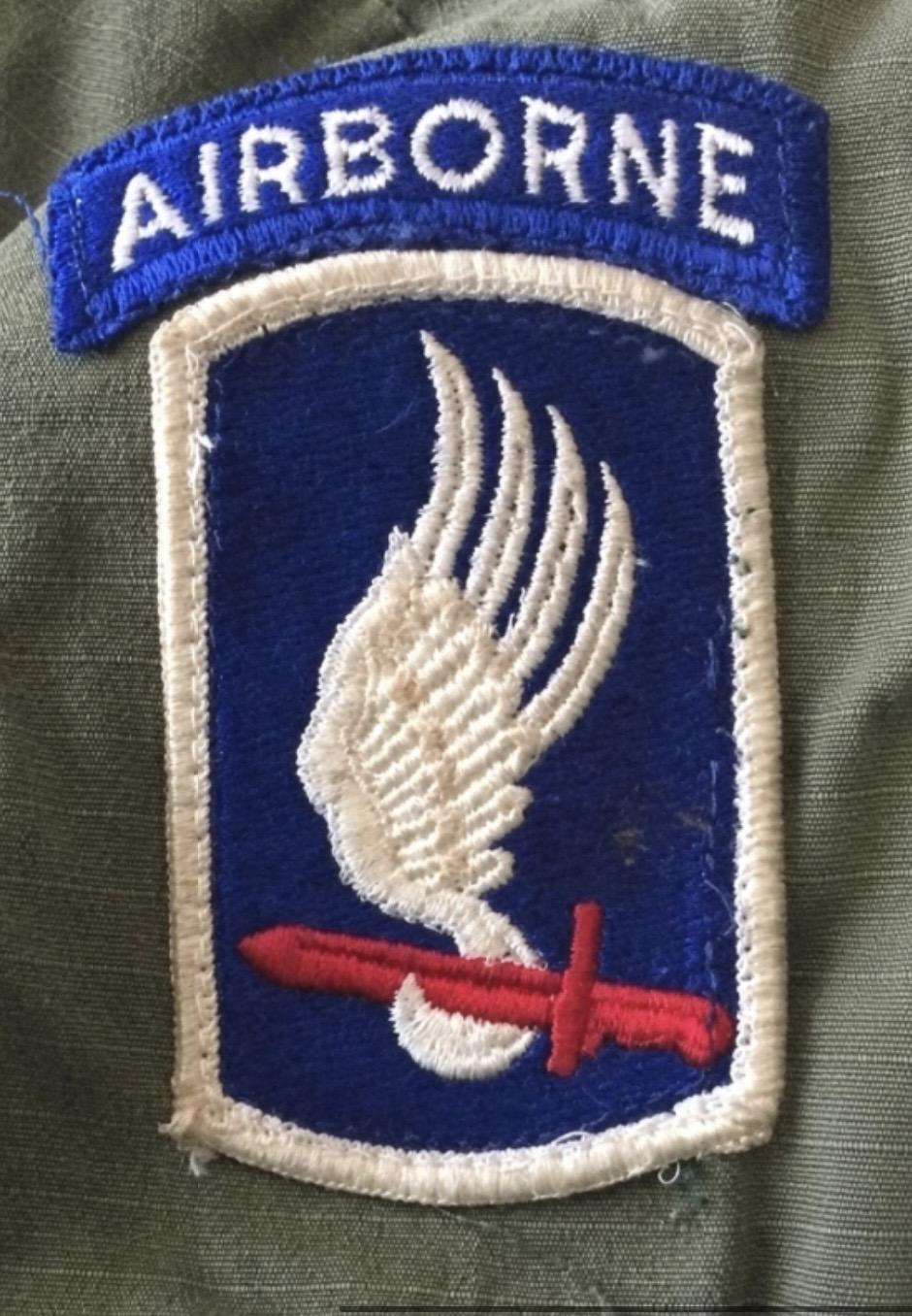
The 173rd Airborne Brigade, known as the “Sky Soldiers,” is one of the best-known airborne formations in the United States Army. Today it is a forward-based American airborne force in Europe, stationed mainly in Vicenza, Italy, and Grafenwöhr, Germany. Its job is to be ready to move quickly, enter a crisis area at short notice, seize ground, work with allied forces, and provide a fast American military response across Europe, Africa, and the Central Command region. Although many people think of the 173rd mainly because of Vietnam, its roots go back much further, to the First World War.
The unit was first constituted in 1917 as the 173rd Infantry Brigade and assigned to the 87th Division. It deployed to France in 1918, but the war ended before it became famous as a combat formation. After returning to the United States, it was demobilized in 1919. The brigade’s identity appeared again in later Army reorganisations, but the 173rd as most people know it was truly born on 26 March 1963, when it was activated on Okinawa as the 173rd Airborne Brigade Separate. This meant it was not just a normal brigade inside a larger division. It was designed as a separate, self-contained, rapidly deployable airborne force for the Pacific.
Its location on Okinawa was important. During the Cold War, the United States needed troops in the Pacific who could respond quickly to trouble in Asia. The 173rd was created to fill that role. It trained for parachute assault, rapid deployment, jungle fighting, and independent operations. Because it was a separate brigade, it needed more of its own support than a brigade inside a division usually had. It had infantry, artillery, engineers, support troops, and other elements that allowed it to operate as a compact but powerful combat force.
The nickname “Sky Soldiers” came from Nationalist Chinese paratroopers during early exercises in Asia. They called the American paratroopers “Tien Bien” or “Tien Bing,” generally translated as “Sky Soldiers,” because of their airborne role and frequent parachute training. The name stuck and became part of the brigade’s identity. Among soldiers, the brigade also became known informally as “The Herd,” a nickname still associated with 173rd veterans.
The modern 173rd is an airborne light infantry brigade. That means its soldiers are trained to fight on foot, move fast, deploy by aircraft, and, when required, parachute into an objective. Airborne soldiers normally complete basic Army training and their job training first, then attend the U.S. Army Basic Airborne Course at Fort Moore, Georgia, formerly Fort Benning. That course lasts about three weeks and teaches military parachuting in stages: ground training, tower training, and jump week. Soldiers who complete it earn the parachutist badge and become qualified airborne troops.
After joining the 173rd, training continues constantly. The brigade is forward-based in Europe, so much of its regular training takes place in Italy and Germany. Vicenza, Italy, is the brigade’s main home, with major facilities including Caserma Del Din and Caserma Ederle. German-based elements train around Grafenwöhr and Hohenfels, two of the most important U.S. Army training areas in Europe. The brigade also trains with NATO allies and partner nations in exercises such as Saber Junction, Swift Response, airborne drops, airfield seizure drills, live-fire training, mountain and urban operations, and joint operations with U.S. Air Force aircraft such as C-130s and C-17s.
The exact number of soldiers in the 173rd changes with Army reorganisations, deployments, and manning levels. A good public estimate for the brigade in recent years is roughly 3,000 to 3,500 soldiers, often given as about 3,300 paratroopers. It is not a division-sized force; it is a brigade combat team or mobile brigade combat team, much smaller than a division but designed to be faster and easier to deploy. Its strength is not just numbers. Its value lies in readiness, airborne qualification, forward location, and the ability to move quickly with trained infantry, artillery, engineers, reconnaissance, and support troops.
The brigade’s first great test came in the Vietnam War. In May 1965, the 173rd became the first major U.S. Army ground combat unit sent to South Vietnam. It arrived at Bien Hoa and soon entered heavy fighting. The brigade operated in some of the hardest terrain of the war, including jungle, highlands, and areas dominated by Viet Cong and North Vietnamese Army forces. Its soldiers fought in major actions including Operation Hump, Operation Marauder, Operation Crimp, Operation Silver City, Operation Attleboro, Operation Junction City, Operation Francis Marion, and the Battle of Dak To.
Operation Hump on 8 November 1965 became one of the brigade’s most remembered battles. Soldiers of the 1st Battalion, 503rd Infantry Regiment were heavily engaged by Viet Cong forces in War Zone D. Dozens of Sky Soldiers were killed in one day of fighting. The battle later entered popular memory through the song “8th of November” by Big & Rich, based on the experience of 173rd veteran Niles Harris.
Operation Junction City in 1967 was another major moment in the brigade’s history. During that operation, the 173rd carried out the only major combat parachute jump by U.S. forces in the Vietnam War. The jump took place in February 1967 and was intended to place airborne troops quickly into the operational area. It showed that the brigade was not airborne in name only; it was still prepared to conduct parachute combat operations when commanders believed the mission required it.
The Battle of Dak To in late 1967 was one of the fiercest battles the 173rd ever fought. The fighting around Hill 875 was especially costly. Units of the 503rd Infantry suffered severe casualties while attacking well-defended North Vietnamese positions in brutal terrain. Hundreds of Sky Soldiers became casualties during the battle. For its actions around Dak To, the brigade received the Presidential Unit Citation, one of the highest unit awards in the U.S. military.
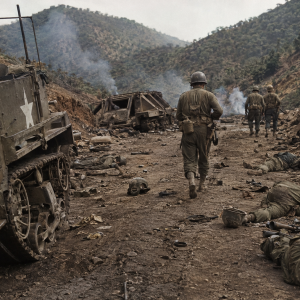
The cost of Vietnam was enormous. From 1965 to 1971, the brigade spent more than six continuous years in combat. Official and memorial sources vary slightly in the exact figures used, but the commonly cited total is around 1,790 Sky Soldiers killed and about 8,500 wounded in Vietnam. The brigade earned 14 Vietnam campaign streamers, four unit citations, and 13 Medals of Honor during the war. That Medal of Honor record is one of the most remarkable parts of the brigade’s history.
After Vietnam, the 173rd was deactivated in 1972. For nearly three decades, the name survived mainly through veterans, memorials, reunions, and Army lineage. Then, in June 2000, the brigade was reactivated at Caserma Ederle in Vicenza, Italy. This gave the U.S. Army in Europe a conventional airborne force again. The reactivated brigade inherited the Sky Soldier legacy and began training across Europe almost immediately.
After the terrorist attacks of 11 September 2001, the 173rd returned to combat. In March 2003, during Operation Iraqi Freedom, nearly 1,000 Sky Soldiers parachuted into northern Iraq in Operation Northern Delay. The airborne assault helped establish a U.S. presence in the north and put pressure on Iraqi forces away from the main coalition advance from the south. It was one of the most significant American combat parachute operations since the late twentieth century and remains one of the defining events of the modern 173rd.
The brigade then served in Iraq during the early occupation period. Its soldiers conducted security, combat patrols, and stability operations during a difficult and dangerous phase of the war. As in Vietnam, the 173rd’s identity was shaped not only by parachute operations but by hard ground combat after the jump was complete.
The brigade’s next major chapter was Afghanistan. In 2005, the 173rd deployed in support of Operation Enduring Freedom along the Afghanistan-Pakistan border. Its troops operated in rugged mountain terrain against Taliban and other insurgent forces. The brigade deployed again to eastern Afghanistan in 2007 and 2008, including operations in some of the most dangerous valleys in the country. During this period, Sky Soldiers fought in places such as the Korengal Valley and other remote areas where small units faced frequent ambushes and intense firefights.
One of the most famous modern Sky Soldiers is Staff Sergeant Salvatore Giunta of the 2nd Battalion, 503rd Infantry Regiment. He received the Medal of Honor for actions in Afghanistan in October 2007, when his squad was hit by an enemy ambush. Giunta became the first living Medal of Honor recipient since the Vietnam War. Other 173rd soldiers from Afghanistan, including Kyle White and Ryan Pitts, also received the Medal of Honor for extraordinary courage in separate actions. These awards linked the modern brigade’s record in Afghanistan to its older reputation from Vietnam.
The 173rd returned to Afghanistan again in 2009 and in 2012. These later deployments involved both combat and the difficult work of training Afghan forces, securing contested areas, reducing the brigade’s footprint, and operating during the changing phases of the war. By the end of its Afghanistan service, the brigade had built a modern combat record that included Iraq and multiple Afghanistan tours, adding to the legacy it had inherited from Vietnam.
The brigade has also been used in European reassurance and deterrence missions, especially after Russia’s actions in Ukraine from 2014 onward. Sky Soldiers participated in training and presence missions with NATO allies in Eastern Europe, including exercises and deployments intended to reassure allies and show that American forces could move quickly across the continent. This role is very different from Vietnam or Afghanistan, but it fits the brigade’s purpose: to be ready, mobile, airborne, and able to integrate with allied armies.
In recent years, the brigade has continued to evolve. It has been described by the Army as the U.S. Army’s contingency response force in Europe, forward-based in Italy and Germany and trained to support U.S. European Command, U.S. Africa Command, and U.S. Central Command. In October 2025, the unit officially transformed from the 173rd Airborne Infantry Brigade Combat Team into the 173rd Airborne Mobile Brigade Combat Team. This change reflects the Army’s wider effort to make some formations more mobile, flexible, and better suited for fast-moving modern operations.
The 173rd’s training today reflects the kind of wars and crises the U.S. Army expects in the future. Its soldiers still practise parachute operations, but they also train in urban combat, anti-armor tactics, drone awareness, communications, casualty care, artillery coordination, air assault, multinational operations, and rapid movement across long distances. Because it is based in Europe, the brigade has frequent contact with allied airborne and light infantry forces, including Italian, German, British, Polish, Baltic, Balkan, and other NATO or partner units.
The brigade’s structure has changed many times over the years, but its core identity remains airborne infantry. Current and recent subordinate elements have included infantry battalions from the 503rd Infantry Regiment, airborne artillery from the 319th Field Artillery Regiment, cavalry or reconnaissance elements, engineers, support troops, and headquarters elements. Some are based in Italy and some in Germany. The precise structure can change as the Army reorganises, but the purpose is consistent: provide a rapidly deployable airborne force with enough combat and support power to act quickly.
One interesting feature of the 173rd is that it has often been asked to do more than its size suggests. In Vietnam it was a brigade fighting a long war across difficult terrain. In Iraq it was used for a major airborne entry into the north. In Afghanistan it operated in remote valleys and border regions where small-unit leadership mattered enormously. In Europe today, it carries symbolic and practical importance because it is already forward-based near potential crisis areas.
Another interesting part of the brigade’s story is its international character. From its early exercises with Nationalist Chinese paratroopers, to Vietnam service alongside Australian and New Zealand units, to modern NATO exercises, the 173rd has often worked closely with allied forces. Its nickname itself came from foreign airborne soldiers. That makes the Sky Soldiers not only an American airborne formation but also a unit with a long history of multinational soldiering.
The 173rd has also left a strong mark on American military culture. Its Vietnam veterans built a powerful identity around sacrifice, airborne pride, and remembrance. Memorials, associations, songs, books, documentaries, and reunions have kept its history alive. The phrase “Sky Soldiers” carries emotional weight because it connects different generations: the Okinawa paratroopers of the 1960s, the Vietnam veterans, the soldiers who jumped into Iraq in 2003, the Afghanistan veterans, and the soldiers training in Europe today.
The brigade’s history is therefore not a simple story of one war or one era. It began as an infantry brigade in the First World War, was reborn as an airborne reaction force on Okinawa in 1963, became famous in Vietnam, disappeared after 1972, returned in Italy in 2000, jumped into Iraq in 2003, fought repeated tours in Afghanistan, and now stands as a forward-based American airborne mobile brigade in Europe. Its soldiers have been used in major wars, counterinsurgency campaigns, deterrence missions, multinational exercises, and rapid-response operations.